
A guide to backcountry skiing near Bozeman
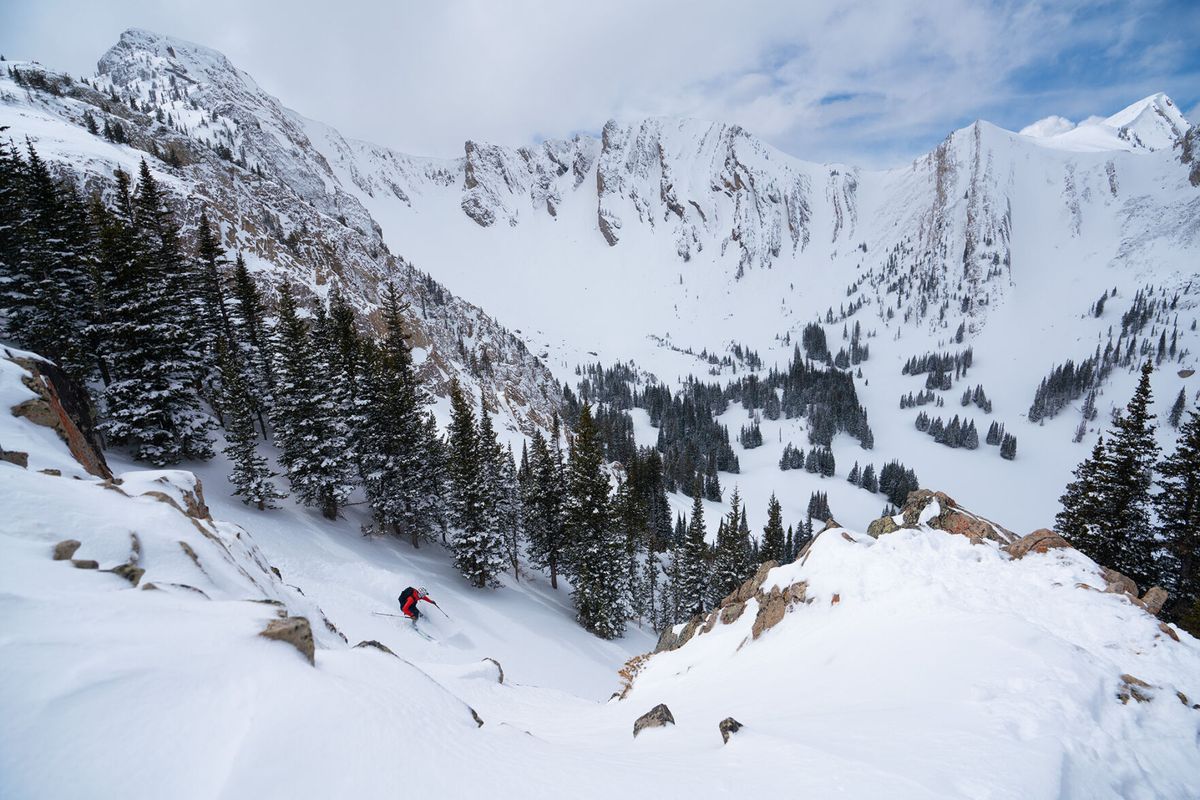
Winter’s frosty chill has taken hold of our valley, and many Bozemanites find themselves cruising the backcountry or learning to backcountry ski. From Bridger Bowl to Big Sky, and everywhere in between, there’s a massive amount of terrain to get outside, learn the backcountry, take in the scenery and grab a few fresh powder turns — with the right education and equipment, of course. In a place where there are mountains as far as the eye can see, choosing a location can sometimes be a little overwhelming for backcountry skiers. Where should I go? What’s safe? Where’s the best snow? These questions, which can appear to have complex answers at first, are really quite easy to answer as long as the proper research is done, but we’ve started it for you.
Education:
There are a few organizations right in our backyard that provide courses about interpreting avalanche forecasts, navigating terrain, and using rescue equipment. The first is the Gallatin National Forest Avalanche Center (GNFAC), which publishes forecasts and weather conditions for the region on its website.
“On our website we have an education calendar that has classes that we offer as well as other local course providers,” said Alex Marienthal, an avalanche forecaster for GNFAC. “People should look there if they're looking into taking classes.”
Next is MSU’s Outdoor Recreation Program (ORP), which also provides education for backcountry travelers, including avalanche rescue courses and free clinics that students can attend to learn how to use avalanche beacons.
“We also have short and long term rentals for avalanche equipment as well as backcountry skis and splitboards. Anyone can come in and rent those out,” said Zoe Peterson, a staff member there.
The ORP offers these resources because, before doing your research, getting the gear together is crucial. The basic essentials for avalanche gear include an avalanche beacon or transponder, a shovel and a probe.
There are many steps to approaching backcountry skiing both in the correct way, and the safest way possible. With resources like the ORP and GNFAC, it’s easy to get the gear and necessary knowledge in a timely manner.
After looking online, another crucial step is getting a strong group. All the research and equipment in the world won’t do you any good if you're headed up alone, or with folks who aren’t properly educated to trek safely through backcountry terrain. Once a solid group of educated people is constructed, all the proper gear is packed and research is completed, you arrive at the best part: getting outside for some turns.
Location:
The local experts had a few recommendations, including History Rock and Bear Canyon, near Bozeman, and Beehive Basin, near Big Sky.
“For a beginner, the greatest one would probably be Bear Canyon. There’s very little avalanche danger. Lick Creek has low avy danger as well and that is up at Hyalite,” Peterson said. “Beehive is intermediate/advanced depending on where you go. It’s great for getting really good turns in for not much of an approach. History Rock has two nice runs that you can do as well.”
For those looking at a longer approach and more challenging terrain, the possibilities around town are almost endless.
“Mount Ellis is a good one,” said Alex Marienthal, an avalanche forecaster for GNFAC. “It’s close to town, but is a little bit of a deceiving tour because it is fairly long. It looks like a little mountain compared to the Hyalite it’s sitting in front of, but it ends up being a 3,000 foot climb to the top and a five mile ski. Even if you go halfway there’s a little bit of meadows and stuff. It’s not the most extreme looking terrain, but it’s definitely still steep enough to slide.”
Other Hyalite options, like Blackmore and Hyalite Peak, have longer approaches and are slightly more complex, Marienthal said.
Forecast:
The first place to look for anyone planning to head out into the wilderness for some turns is online. In the Bozeman area alone, we have many great online resources such as social media accounts and websites.
A great resource to get insight on current conditions is the GNFAC avalanche report, a daily publication on both its social media and website with condition updates for many surrounding areas. The report can even be seen posted at the top of Schlasman’s Lift at Bridger Bowl.
“The main thing we do as forecasters is we issue the daily avalanche advisory, which includes the danger rating for the day and a description of what avalanche conditions are,” Marienthal said. “We also do a lot of general awareness education which provides a lot of free or low cost education through Southwest Montana.”
Research should start days before the trip — not just the morning of. Once your route is locked in, begin looking at the daily report even a week in advance, although it doesn’t hurt to check everyday regardless of whether you're going out of bounds or not.
“It’s definitely key to tune into the avalanche forecast for pretty much anywhere. My number one recommendation would be going to our forecast on mtavalanche.com/forecast and it will go right to the current forecast. That’s gonna give the best idea of what the snowpack is doing out there and I recommend reading the forecast almost daily even if you're not going out. Start checking in a few days before; if you have a tour planned for the weekend start researching the snowpack before the morning of,” Marienthal said.
Regardless of your ability or experience in the mountains, there’s an option for almost everyone to backcountry ski within an hour of Bozeman. It’s important to get a good group, the proper gear and knowledge and just maybe touring the powdery backcountry will suit you more than ripping groomers.

Comments ()