
Actually, We Can Take Action Against Climate Change
When we read news about rising oceans or see pictures of polar bears stranded on melting ice floes, individual action against climate change can seem futile. This relentless doom — with almost no coverage on climate progress — only teaches us to expect failure.
News agencies love to highlight the doomsday deadlines, but tend to be painfully silent about the technological advances we’ve made to slow climate change. Humanity has made progress, and as a community, we are more than capable of taking action.
According to a research article published last year by the World Resources Institute (WRI), we have reached an all-time high of clean energy adoption and private climate investment. In China and Western Europe, electric car sales have surged from just one percent of total sales to over 20 percent today, and the share of solar and wind energy in global electricity has tripled.
Electric vehicles don’t burn gasoline or diesel, unlike traditional cars, which are a major source of emissions. In the U.S., transportation alone accounts for roughly 28 percent of greenhouse gas (GHG) emissions, according to theU.S. Environmental Protection Agency.
GHGs — CO2, methane, nitrous oxide and water vapor — are gases that trap solar heat in the atmosphere. Industrial and agricultural activities, especially the burning of fossil fuels, are the main culprits of GHG emissions.
Gases trapping heat is the primary cause of climate change, and therefore, we must transition to net-zero emissions. Fortunately, we are making progress in this regard. Financing that supports mitigation and adaptation to address climate change spiked in 2024, according to a report from WRI.
The same report said that individual consumers, businesses and institutional investors have committed hundreds of billions of dollars to help transition into net-zero GHG emissions pushing the climate finance market into the trillions.
While private funding alone won’t be enough to stop global warming, it’s a step in the right direction. Innovations such as green hydrogen and electric trucks, among other new developments, have shown us that progress is not just possible, but happening.
“We’ve had a lot of breakthroughs with technology, on things that we could do on that front,” said psychology graduate student Nichole Floener, who studies climate change communication and its effects on attitudes and behavior.
Coverage of this progress has been neglected by media corporations. Instead, headlines center around catastrophic natural disasters that could take place after the five or 10-year mark
“We do see a lot of fear-based messaging,” Floener said. “There’s some [scientific] literature on this learned helplessness actually being correlated with less activity in terms of environmental behavior.”
According to Psychology Today, learned helplessness is a behavior pattern characterized by passiveness to an issue, and is generally the result of encountering repeated negative and uncontrollable outcomes.
Sound familiar? It should, because the lack of promising or positive news regarding climate change breeds this mindset.
If headlines continue to highlight only the negatives and neglect the positives, learned helplessness will persist and climate change will get worse than it already is.
News organizations also have a bad habit of blaming average citizens for climate change. For example, the Straits Times claimed that having a bowl of rice is hurting the climate. Meanwhile, 80 percent of global CO2 emissions come from just 57 companies, according to Smithsonian Magazine.
When people are constantly being told they are to blame for a crisis of this scale, it’s no wonder they feel as if recycling or biking to work is useless. If news outlets covered the larger issue at hand — corporate emissions — the problem would be more manageable at the individual level, allowing citizens to feel hope and do their own part.
Progress is also happening right here in Bozeman. In December 2020, the City of Bozeman adopted a climate plan in hopes of reducing the city’s GHG emissions. According to its 2025Impact Report, Bozeman has reduced GHG emissions by 17 percent per person despite experiencing a 62 percent increase in population from 2008 to 2024.
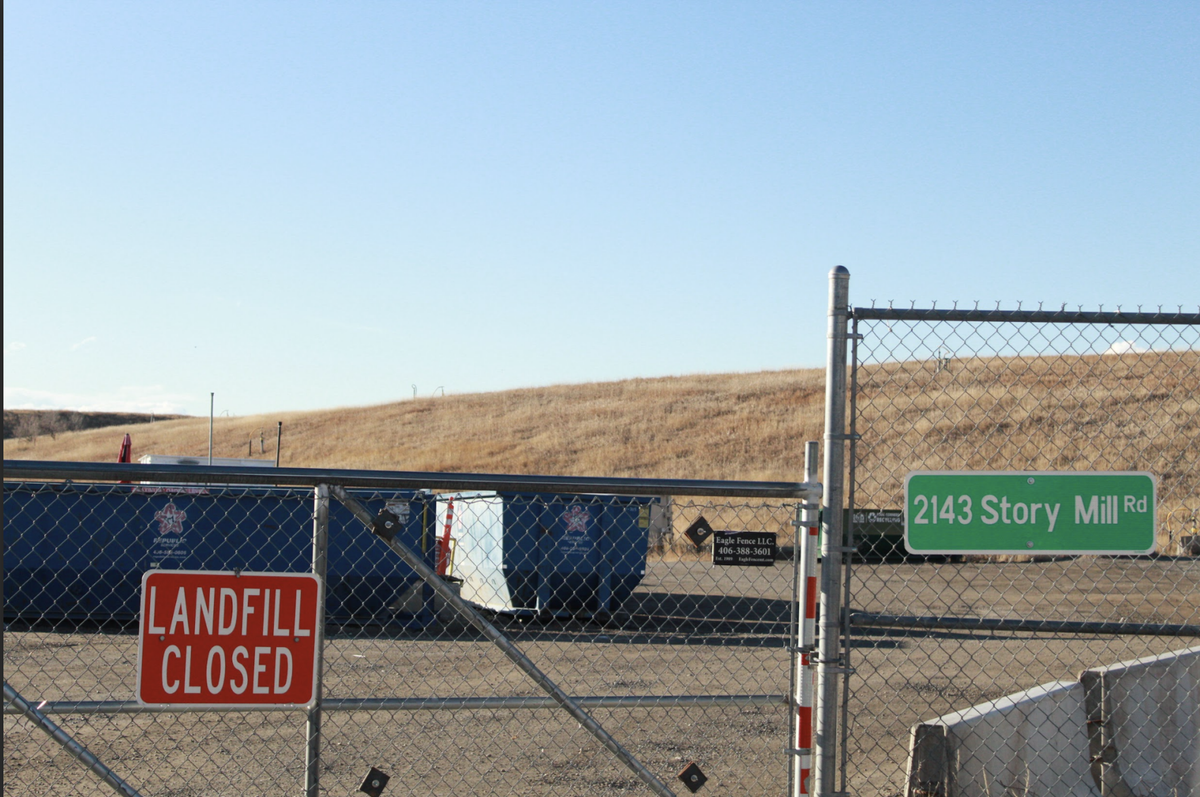
The City of Bozeman also collaborated with Happy Trashcan, a local composting company, to roll out the curbside Organics Collection program in the spring of 2025, according to the report. In addition, last year, Bozeman diverted 477 tons of compost from landfills and avoided emitting 433 tons of CO2.
If that isn’t a step in the right direction, I don’t know what is.
When we think of climate change, most of us — myself included — think nothing is being done to change it. This notion is only egged on by doomsday articles and depressing numbers, but in reality, progress is happening everywhere. We just need to know where to look.
Comments ()