
Are audiences ready for feminism in film?
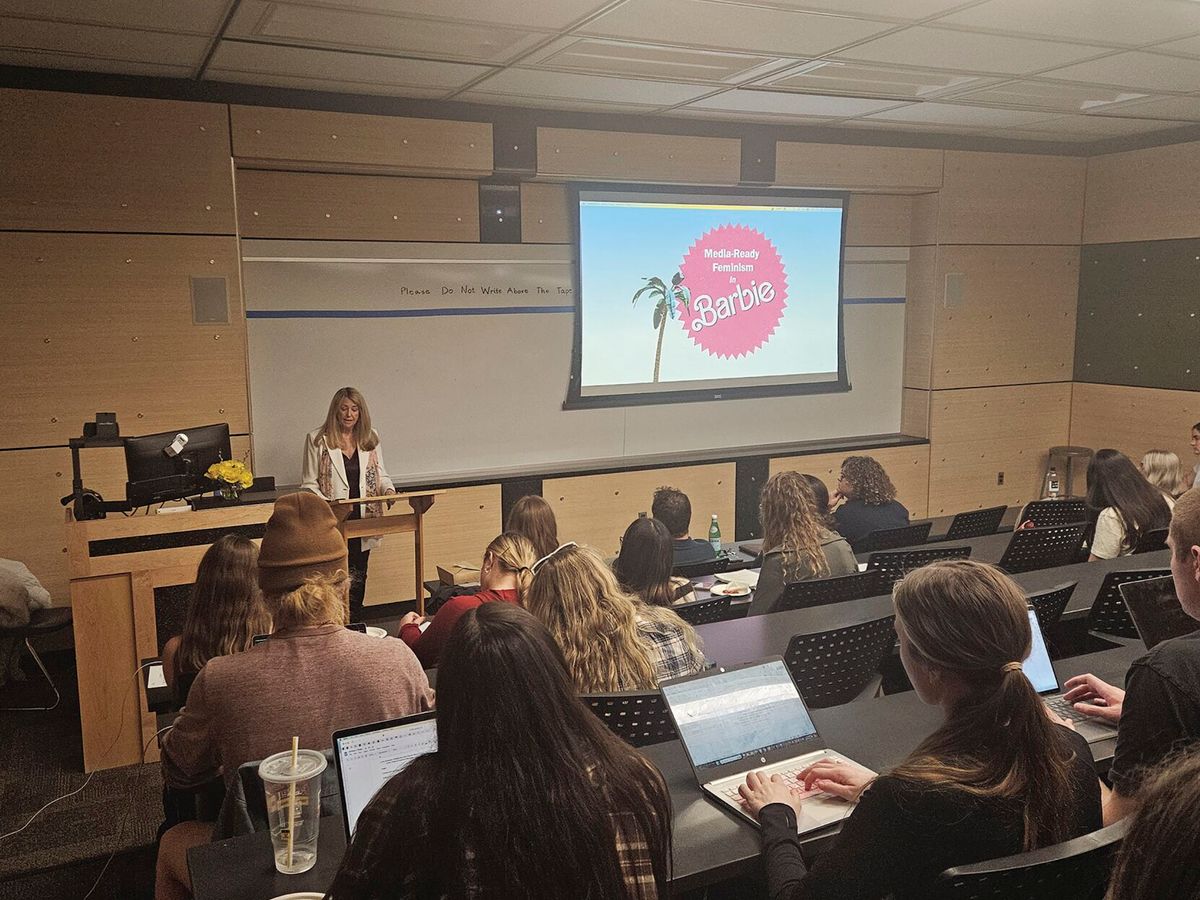
Just last week, MSU hosted a guest lecture from the Old Dominion State. Andrea Press from the University of Virginia introduced a discussion on feminism in Hollywood and the big screen in her lecture, "Is the Feminism of Barbie and Other Popular Media Products Media-Ready: A New Theory of Audience Reception?"
Cody Warner, head of the Department of Sociology and Anthropology said, "Dr. Press is internationally known for interdisciplinary scholarship on the media audience, on feminist media issues, and on media and social class in the U.S."
Drawing on her joint work with Sarah Johnson-Palomaki of the MSU Department of Sociology, Press discussed the evolution of feminist theory in media studies, focusing on the concept of "media ready feminism."
This theory, initially introduced in Press's 2021 book “Media Ready Feminism and Everyday Sexism,” was further expanded upon in her latest collaboration, “Just Impressed,” which explores feminism in contemporary cinema.
Through analyses of iconic figures like Katharine Hepburn, Press showcased how these trailblazing women challenged traditional gender norms and stereotypes, paving the way for future generations of feminist representation on screen. "Hepburn's early work in the genre of the women's film and elsewhere provided a space for proto-feminist challenges to powerful Hollywood sexism, taking seriously the spaces, trials and strengths of the many women making up their audiences,” Press said.
Hepburn's roles, particularly in films like “Sylvia Scarlet” and “Little Women,” embodied a form of femininity that defied societal expectations, blending strength with vulnerability and independence with compassion. Hepburn became a symbol of empowerment for audiences during a time when such portrayals were rare in mainstream cinema.
Furthermore, Press explored film noir as another space where hidden feminism thrived. Despite the prevalence of femme fatale archetypes, she highlighted the nuanced portrayals of women in these films, acknowledging their agency and critiquing how the male gaze often objectified them.
"In this film and several others, Monroe's character demonstrates a keen intellect behind her. The dumb blonde facade is a trait central to Monroe's capacity for subverting traditional gender expectations and is also true of her in real life." Monroe's one-time roommate, Shelly Winter, once noted about Monroe: "If she were dumber, she would have been happier."
Press defines this brand-new movement in cinema as media ready feminism. "We originally developed this theory to explain why the ubiquitous experiences of everyday sexism do not turn all women into radical feminists," Press said.
"Women are conditioned to ignore experiences of everyday sexism, as with experiences of ubiquitous racism. The culture conditions and urges us to ignore, accept and not to act on these experiences."
In recent years, Hollywood has witnessed a resurgence of feminist storytelling, fueled in part by movements like #MeToo and a growing cultural acceptance of feminism. Press highlighted films like “Don't Worry Darling” and the 2019 adaptation of “Little Women” as examples of this newfound feminist consciousness in cinema. Directors like Olivia Wilde and Greta Gerwig reshaped classic narratives to reflect contemporary feminist ideals and audiences.
The focal point of the lecture was the film "Barbie," which Press described as a hybrid of radical feminist critiques and more moderate, liberal feminism.
"The film's plot is whimsical, but its feminist strengths and surprising weaknesses lie more in its radical moments," Press said. We argue that media-ready feminism can give rise to moments of radical feminist breakthrough, with which audiences often resonate, given their ubiquitous experiences with everyday sexism, which define them for these revelations."
Press refers to several noteworthy moments in the film; however, one of the film's standout moments was America Ferrara's impassioned monologue. Her words echoed the sentiments of liberal feminism while critiquing the impossible standards placed on women. "[The monologue] breaks out of that straightjacket in providing a kind of feminist rallying call that echoes a strategy of second-wave consciousness-raising."
As society continues to grapple with issues of gender equality and empowerment, Barbie remains a symbol of resilience and possibility for generations of girls to come. Now, "we look forward to observing how the relationship between cinema and feminism can continue to evolve," Press said.
Comments ()