
Beginner’s guide to carp on the fly
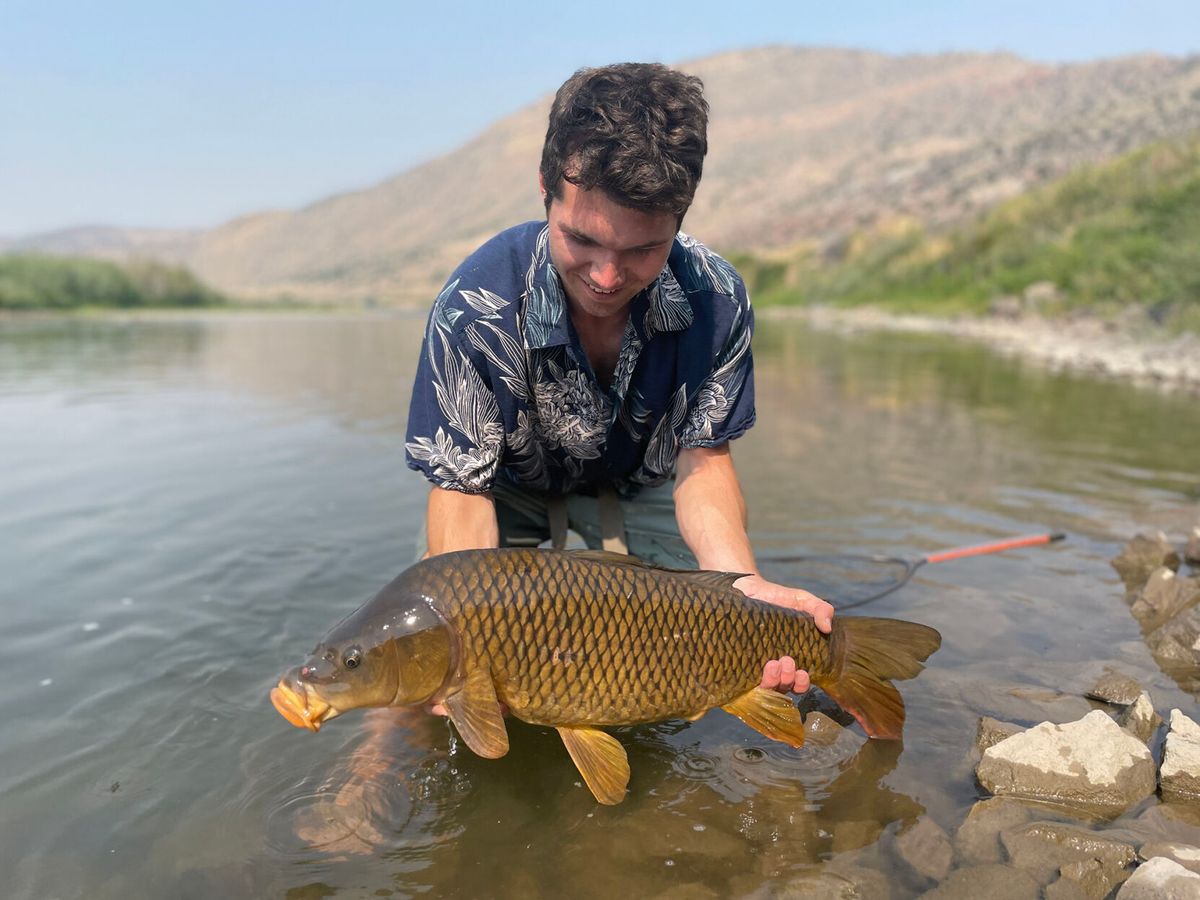
A rust-colored crustacean skitters across algae-covered rocks, scouring crevices for its next meal as a gentle but persistent current glides silently by. A shadow appears, and the shelled critter freezes. An underwater vacuum engulfs him, and he’s quickly captured, crushed, and consumed. The shadow bulldozes on, looking for its next victim. He finds it quickly, but something isn’t quite right. The shadow feels a pinch in his lip, and an invisible force pulling him towards the surface. He panics, fleeing for deep water as a fly angler’s reel screams on the riverbank.
Carp are not native to Montana, or even North America, and are seen by many as a trash-fish at best and an unbearable nuisance at worst. To a fly fisherman, however, they represent one of the most challenging and rewarding quarries found anywhere in freshwater. Carp are primarily bottom feeders, relying on a keen sense of smell as well as sharp eyesight to search out prey. They are typically quite easy to fool with bait such as corn, but convincing one of these highly specialized predators to eat an artificial fly can be incredibly tough.
For much of the year, Southwest Montana is a trout fisherman’s dream, but as late summer drags on, many trout streams overheat, making angling for trout difficult and unethical. Luckily, carp are found in countless rivers, lakes, ditches and ponds throughout the state and they feed actively on even the hottest days.
Carp typically cruise the bottom looking for prey and are not motivated to chase down a fly that is not presented directly in their path. Thus, an angler’s best strategy is to spot an actively feeding carp and drop the fly directly in front of it. This sounds easy enough, but carp are extremely wary and will spook at the slightest disturbance. Anglers must move slowly and methodically when approaching carp and make sure not to land their fly nor any line directly above the fish’s head or back.
Carp flies generally imitate crustaceans, insects, and invertebrates that live along the bottom of the river or lake where carp are found. Flies that ride hook point up are popular since they are much less likely to snag along the bottom. Choosing a fly that generally imitates a likely food item is crucial, but presenting the fly to the fish effectively is far more important. Equally important for pursuing carp is choosing the right fly rod and tippet size. Montana’s carp can grow to immense sizes, and fish over 10 pounds are no rarity. A six to eight weight fly rod will suffice, and tippet no thinner than 2x is the best choice for these powerful fish.
While carp are found all throughout Montana, most carp anglers are not eager to share their favorite spots. Anglers pursuing carp should be ready to do some exploring, looking for fish in ponds and rivers that are deemed too warm for productive trout fishing. For those looking to find carp within a short drive, the Three Forks ponds are a great option, just be prepared to work hard for your fish.
MSU may be Trout U, but carp provide a great change of pace for any angler looking for a challenge.


Comments ()