
Book Review: “Tender is the Flesh"- Morality, indoctrination and cannibalism
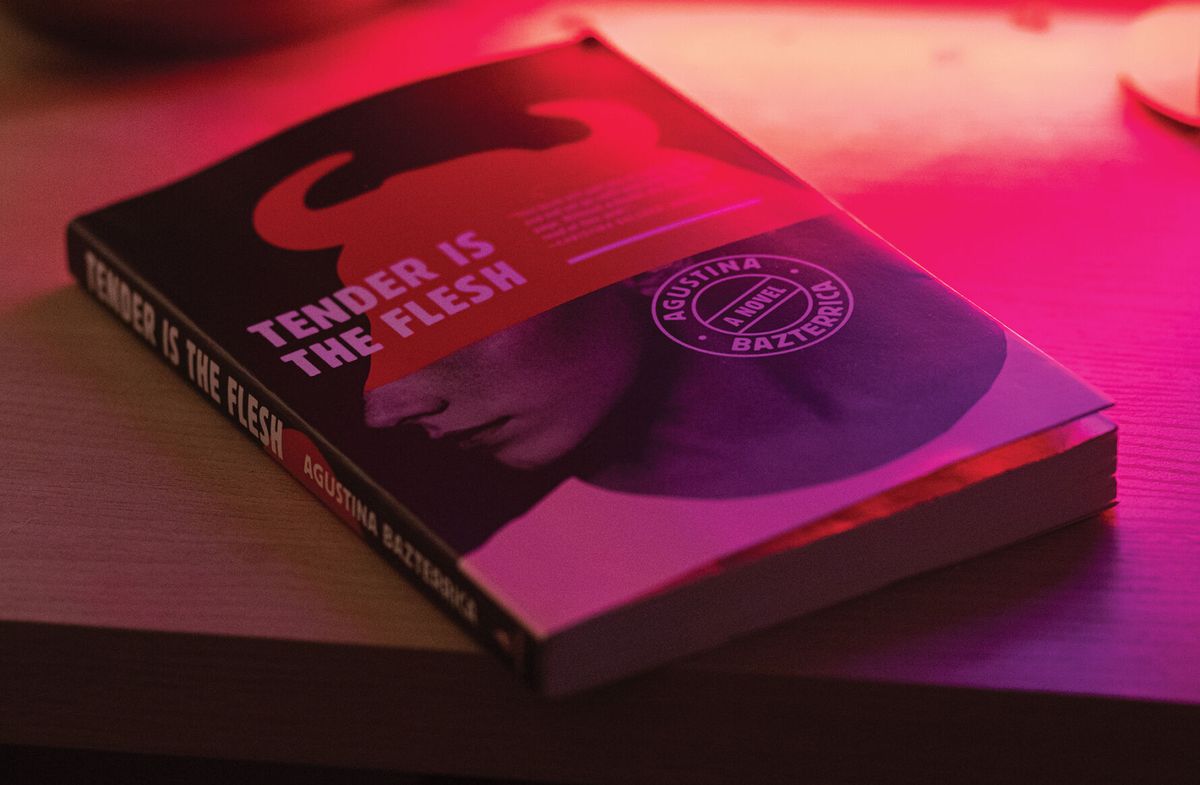
“The words carry the weight necessary to mold us, to suppress all questioning”- Tender is the Flesh.
It has been a long time since I have sat in silent shock, staring blankly at the wall after finishing a novel. “Tender is the Flesh,” by Argentine author Augustina Bazterrica had me doing just that. At only two hundred pages long, Bazterrica does not mince words and instead throws the reader head-first into a world where human cannibalism is legal and industrialized. “Tender is the Flesh” is both sorrowful and gripping, delving into the depths of humankind and examining our selfishness, gullibility and aversion to change and grief.
In Bazterrica’s novel, all animals have become infected with a virus that has made them inedible to humans. Human slaughter and consumption have replaced all industrial meat production. The novel's narrator is Marcos, a meat processing plant manager. "Special Meat" is harvested from genetically engineered humans who are bred, raised and butchered within plants and factories. Through Marcos' eyes, we follow him to a tannery, breeding facility, butcher, experimental laboratory and game reserve. The Meat is called “head” and broken into categories such as "FGP," or First Generation Pure without genetic modification, or "Easy Meat" with a first and last name. Easy Meat comes from human citizens who are killed and sold on the black market. Families must witness cremations to ensure that bodies are not sold on the black market or eaten by "Scavengers" — wild humans living in the forest who rely on disposed of bodies.
Each character we meet portrays a different moral justification. One plant employee responsible for knocking "the head" unconscious before slaughter, says he is helping feed people. A doctor who experiments on live humans, including simulated car crashes and 24/7 nicotine inhalation, says she is helping better humankind through her research. As for Marcos, we are only allowed a glimpse into his feelings toward these individuals. His more profound morals, however, stay hidden from the reader. Even when he is gifted an FGP woman, whom he begins to care for as more than a product, we are left with only his actions and never his emotions. This lack of depth leaves us stranded, reading in search of a character who reassures us that what is going on is evil. A complete transition that appears unchallenged draws parallels to our real world.
The transformation of animals into humans exposes our selfishness. We keep pets and eat animals for our pleasure. We breed and slaughter mammals in a global industry that is accepted as an infinite and untouchable system. This narrative speaks not only to the meat industry but the world. How many laws, systems and industries do we blindly accept and justify to ourselves? How often do we condone evil by turning a blind eye? Earlier this month, an undercover investigator began working for SHEIN, a billion-dollar fast fashion company wildly popular among Millennials and Gen Z for its low prices and constant trendy products. This investigator began working at one of their warehouses in China. Working conditions were abysmal. Employees are given one day off a month and paid less than a dime per garment made. However, even with this information made public, SHEIN still ships over 10,000 products a month. Out of sight, out of mind, we continue to consume.
The book continues to ramp up with horror film-like plot points. Marcos continues to spiral as he grieves a dead son and a father with dementia. With a shocking ending, the story demands us to reflect. There is a morbid truth to Marcos' world, both hypnotic and repulsive. A shocking read, “Tender is the Flesh” quickly reaches the top of my list for 2022.

Comments ()