
Bozeman’s Dying Mall Culture
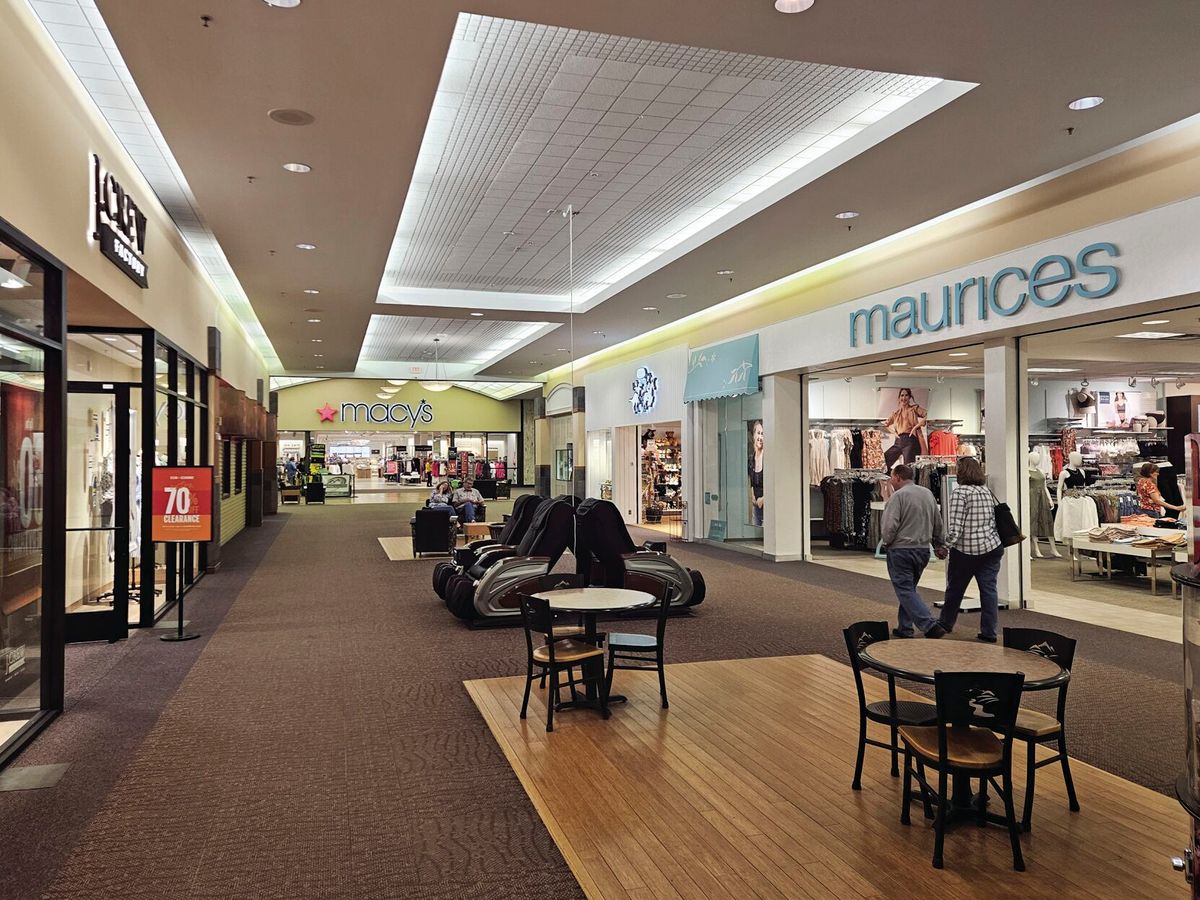
Shopping malls were at peak popularity from the 1980s up until the early 2000s, according to Business Insider. Just 20 years later, they are no longer the social centers of the populace. This is partially a result of the boom in online food delivery and shopping since the COVID-19 pandemic. People are just not as willing to window shop for hours on end when they can have a more streamlined experience on a laptop.
Another issue — which is more obvious in the Gallatin Valley Mall — is that the shop variety attracts both higher-end tourists and college students, which splits the potential audience. Ultimately, malls will develop to cater toward the market they can make money from. As the Gallatin Valley Mall rebrands to Gallatin Crossing, are the mall owners willing to preserve a culture over their ever-increasing bottom line?
The point of a mall is to exist as a space where people can socialize, as well as experience a convenient space for walking, talking, and some side shopping. The Gallatin Valley Mall is fortunate because it offers both a movie theater and a bookstore, which pulls college students to the mall for its intended use as a social space. It is the gravy to the proverbial mashed potatoes. The problem is that currently there are too many stores in the mall that do not cater toward the people who most often walk in them. High-end jewelry stores and Montana gift shops do not exactly appeal to the majority of college students. The mall could have been a space for the youth to define a culture, but it is increasingly obvious that the Gallatin Valley Mall is done functioning as a traditional mall.
In Feb. 2023, phase one of the Gallatin Valley Mall redevelopment was completed with the opening of Whole Foods Market. This addition adds another layer of ambiguity when it comes to whether the Gallatin Valley Mall is attempting to serve as a mall. The majority of the redevelopment plans so far are not associated with making the main building more appealing to customers. In Sept. 2022, the pathway connecting the shopping center to the Barnes & Noble began demolition, influencing the walkability of the shopping center. As of last year, phase two of the redevelopment is underway seeking to create a place for high-end retail, entertainment, medical services and groceries. By the end of phase two, the Gallatin Valley Mall will cease to exist as it rebrands to Gallatin Crossing.
The abandonment and loss of malls across the U.S. is no surprise and seems like a natural economic decision. The issue is that it takes away from the experience of youthful independence that malls provide. Wolf Hansen, a senior in art education, said that “ [the mall closing] affects college students, but more importantly takes away culture from high schoolers.” She also commented on the difficulty of “losing nostalgia” for a place. She reflected that in the past she would “hang out with friends and go to Spencer’s or Joanne’s,” but that those visits are sparse now.
The adoption of high-end stores and a movement away from affordability pushes out the college students. The modernization of their values ultimately leads to an economic business model that leaves no room for the generational nostalgia of hot pretzels and arcade cabinets.
The mall's future is uncertain, but it is clear that students have already begun to no longer see the mall as a place for social gathering. The remodel is further saturating a market of tourism that is already overflowing in Bozeman. Focusing on stores such as Whole Foods limits the availability for interesting local shops in the future. After generations, it seems like the mall is destined to slowly disappear — but we can still enjoy it while it lasts.
Comments ()