
By the Will of the Dog: How one student and eight dogs race across hundreds of frigid miles
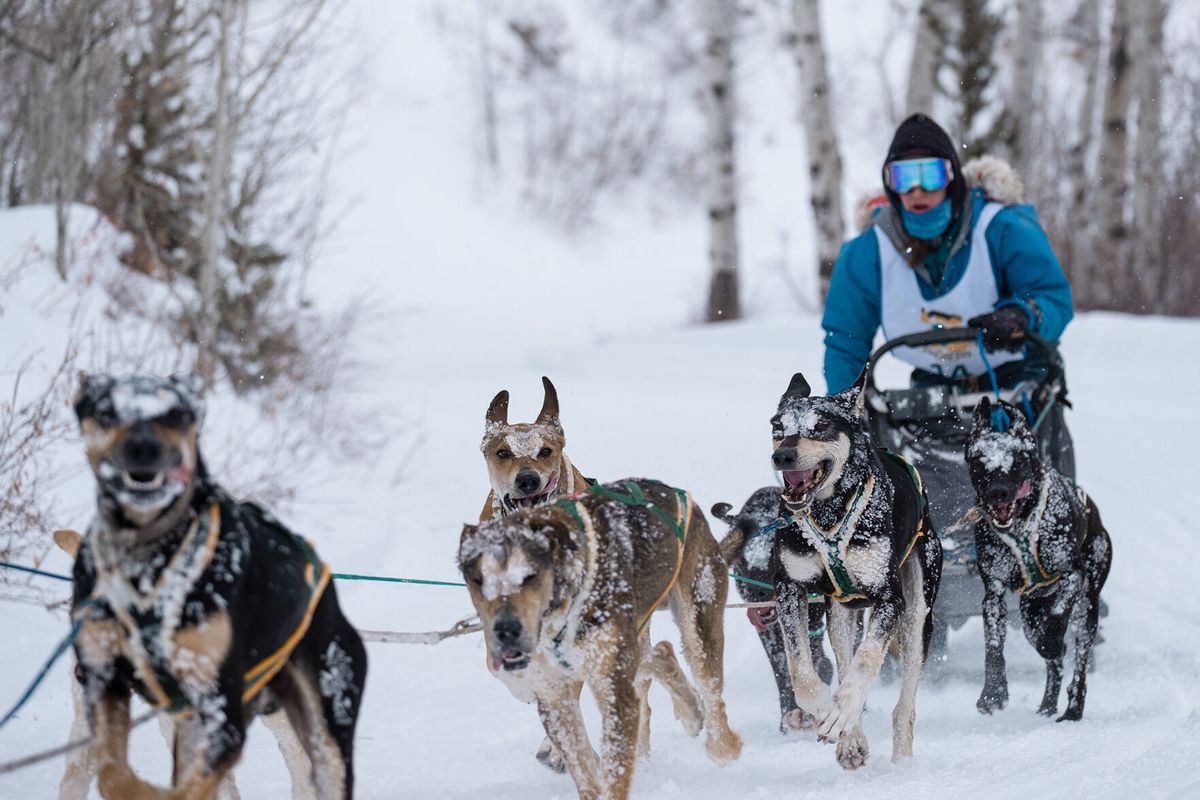
Maria Torgerson, a sophomore in Civil Engineering at MSU, has sled dog racing in her blood.
Growing up in Ellison, MT, Torgerson spent her childhood mushing with her dad and skijoring with her mom and their team of retired sled dogs. She ran her first race – the American Dog Derby in Ashton, Idaho – when she was 16, and completely by chance.
“My dad got talking with some people, we happened to have his old dog sled with us. And I grabbed three dogs off of random trucks and won that race,” she explained.
The following year, Torgerson won the eight-dog class at the Wyoming Stage Stop. The next year she placed fifth in the Wyoming Stage Stop’s main race, which spans a grueling 270 miles over eight days.
Sled dog racing is a sport that is almost impossible to get into without having been born into it. Torgerson explained that being a dog sled racer involves way more than just running the dogs, which in itself is far more complicated than one would think.
To earn success as a sled dog racer means you are also a dog breeder, a veterinarian, a coach, a dietician – the list goes on. Just because you breed two excellent dogs does not mean the puppies will be a good fit, nor does it mean they will cooperate with training.
A musher's worst nightmare would become a reality if the dogs became injured, rendering two years of training obsolete. The kinds of dogs one chooses to breed also determines the types of races the team will excel in.
“The percentage of Husky in the breed depends on how far they're going. Huskies are meant to run five miles an hour for 1000 miles. That's what the Iditarod is meant to do. They're meant to not give up and just keep going.”
She said, “As we have transitioned to the sprint style, we've incorporated more hound into that group. Those dogs don't have to pull that much weight nor do they have to go as far so they don't require as much Husky in the breed.”
The ideal sled dog isn’t necessarily one breed or the other, however. The goal of breeding is to render a result with ideal genes for what the team needs to finish a race stronger than ever before.
In Torgerson’s case, the drive to run for the specified distance, a double coat to keep the dogs warm, and a lack of prey drive so they don’t get distracted or become aggressive with other dogs are all vital qualities.
“You don't want to breed something that isn't supposed to be bred. You don't want to put very much Husky with a hound, you will get dogs that are so messed up, you'll get something that wants to run, from the husky, and [chase and kill], from a pointer or something,” Torgerson said. “You don't want that in your dog breed.”
This selective breeding process doesn’t happen in one or two generations either, “You want to make sure their mental state is okay, " she said. “So it's been a very slow transition and making sure that the dogs that they're breeding are actually maintaining that drive gene and the double, double thick coat in order for them to stay warm in the cold.”
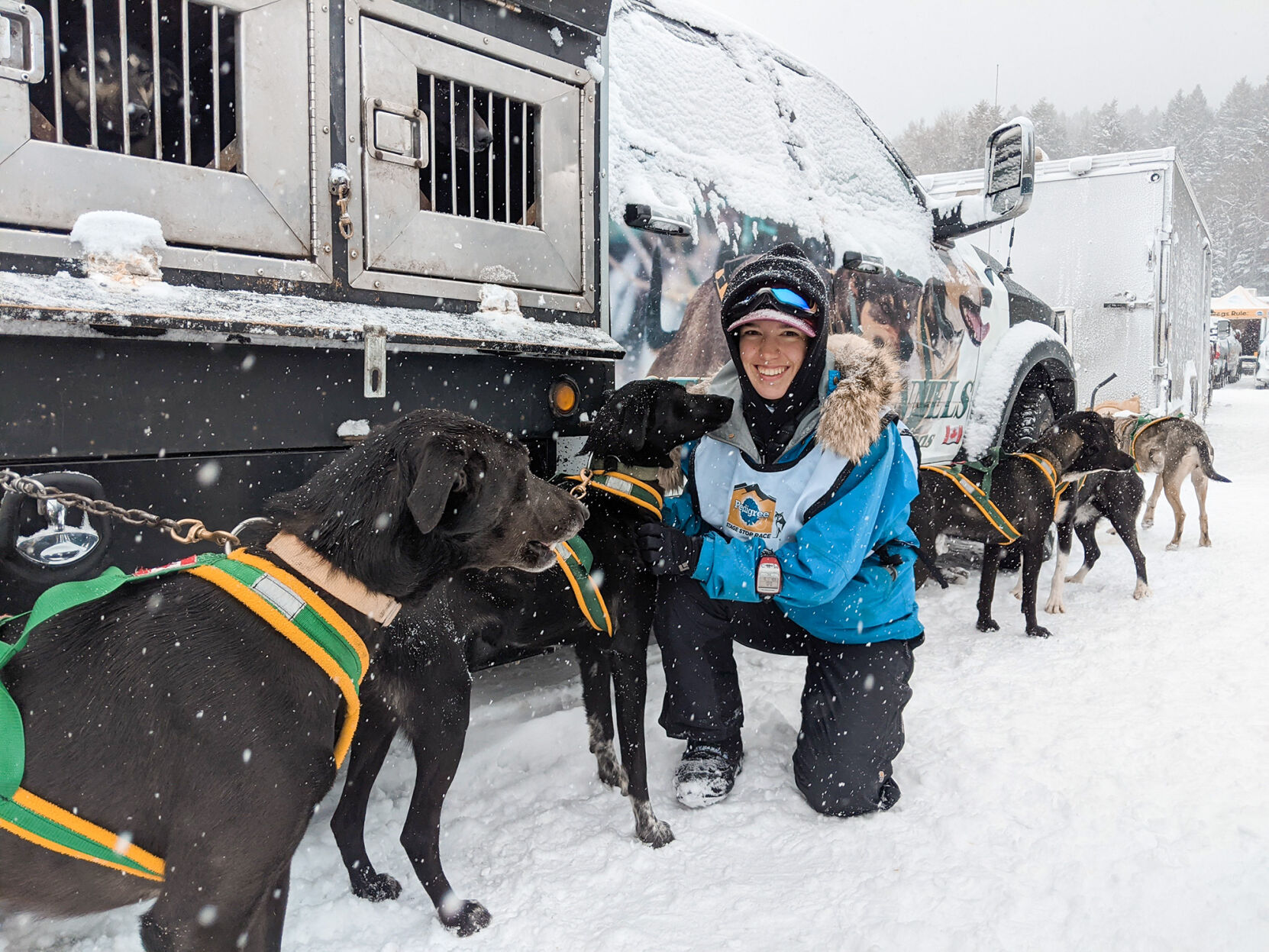
Torgerson is in a very unique situation in that she is a respected musher, but has no kennel of her own. She has gained a reputation in her community through her skills while running, and training with Streeper Kennels in Fort Nelson, British Columbia. Streeper Kennels is one of the top kennels for sprint and mid-distance racing in North America.
Torgerson described what she does as “acting like a jockey for kennels who need a musher. I have been invited to kennels to run their dogs for them in a race if they need somebody else to do it.
As their kennels get larger, sometimes they don't have the people with the experience to be able to do that race and know how to race the dogs,” she said.
Questions about gender are unfortunately inescapable for women in sports, especially niche sports like sled dog racing. However, the idea of gender discrimination is seemingly not a topic of consideration in the eyes of fellow mushers. Instead, the sport as a whole has seen a natural increase in the number of female mushers racing competitively.
Torgerson said that when a layman conjures an image of a sled dog racer in their minds, they would likely think of a big mountain man and his pack of fierce huskies. In reality, while being burly in stature would in theory, keep the musher warmer, the dogs tend to prefer racing with women.
“We have high voices, which dogs instinctively like more, [and] that responds well with a lot of dogs psychologically,” Torgerson said. “ If you're on the back of the sled, talking sweet to them, and being kind to them, they have more confidence. Another thing is you're just naturally smaller. We can build dense muscles without being as heavy as guys. When you're going 35 miles, that makes a huge difference.”
The roles in family run sled dog operations have also changed in the last decade or so, from the man training and racing, to the man training and the woman racing.
“I don't see much of a difference between men and women out there on the trail. Underneath we're all competitive,” Torgerson said. “But never does it stop us from taking care of each other out on the trail. The mushing organizations and the race officials recognize this and they often have a reward and a cash prize for the person who was most helpful out on the trail or did some good deed.”
If there is one certainty regarding mushers, it is their passion for their sport and love for their dogs. “Your reputation is important: but how you treat your dogs is probably the most important thing,” Torgerson said. “No one will have respect for you if you don't treat your dogs well.”
“I have never had a situation where you know of a musher who doesn't treat his dogs well, because one we've got, PETA coming down on our butts like no tomorrow, just because it looks like a shady operation. We have a lot of dogs, we're dirty people and we're not always that educated. But damn, we care about those animals. And those animals care about us. And we're passionately doing something that not a lot of people understand.”
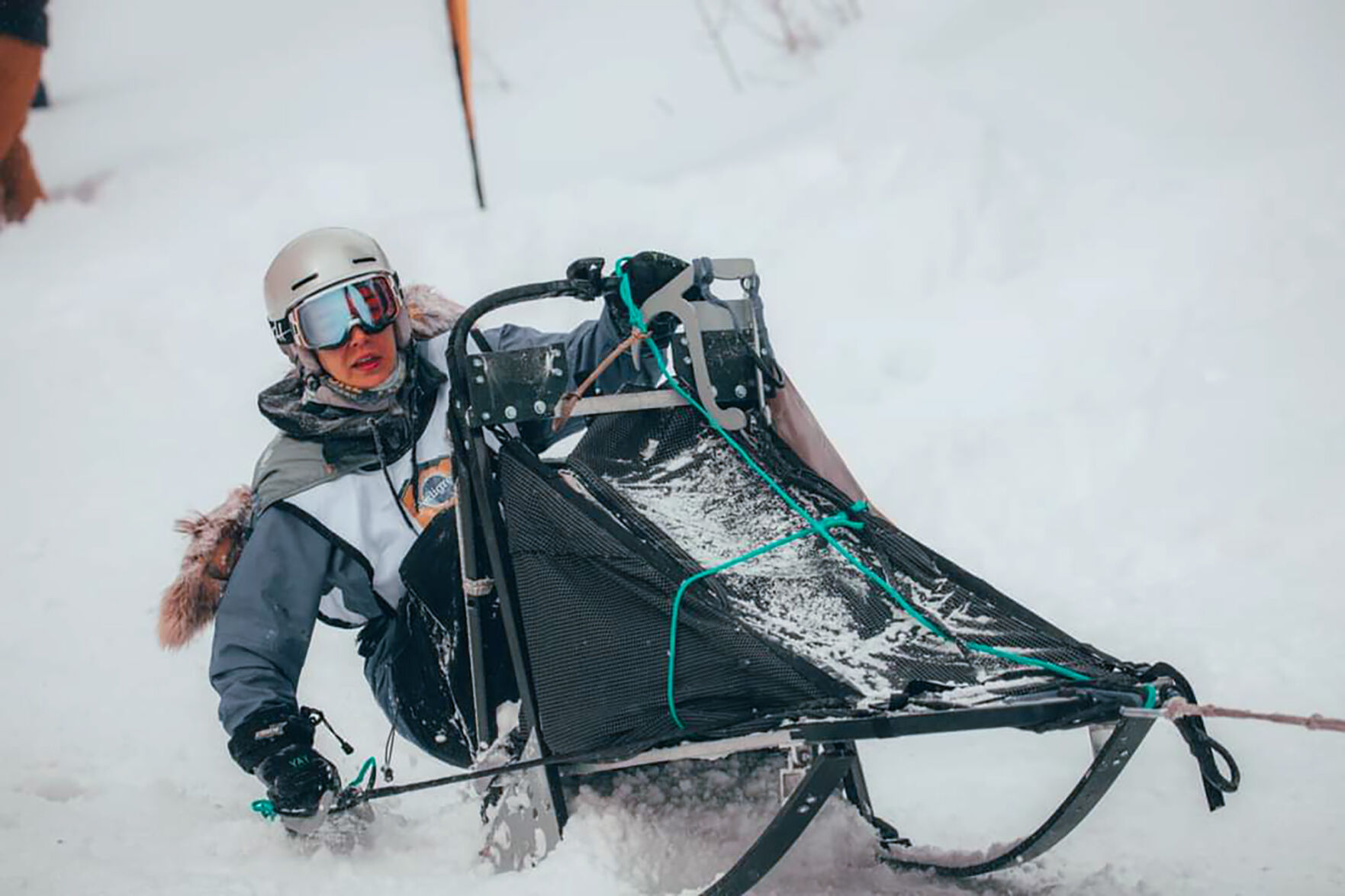
For the past couple years, Torgerson has been building a state-of-the-art dog sled, which she said is one of the biggest innovations in dog sledding in the past fifty years.
She plans to take a year off college starting next spring to mush more seriously and refine her sled design. You can catch her and her team of dogs at the Yellowstone Classic, the Wyoming Stage Stop, and any other races she can get her hands on.
Anyone who has a desire to get into sled dog racing, Torgerson says, should just go talk to mushers after a race. “The Yellowstone special in West Yellowstone is coming up in I think two weeks. I would be running it if I weren’t in school, she said. West Yellowstone is an hour and 40 minutes away, go and talk to these mushers. They are coming from Quebec, Minnesota, Idaho, Northern British Columbia, some are even coming from Alaska. Mushers love their dogs and they want to talk about their dogs.”

Comments ()