
Conservation panelists speak up about development in the Greater Yellowstone Ecosystem
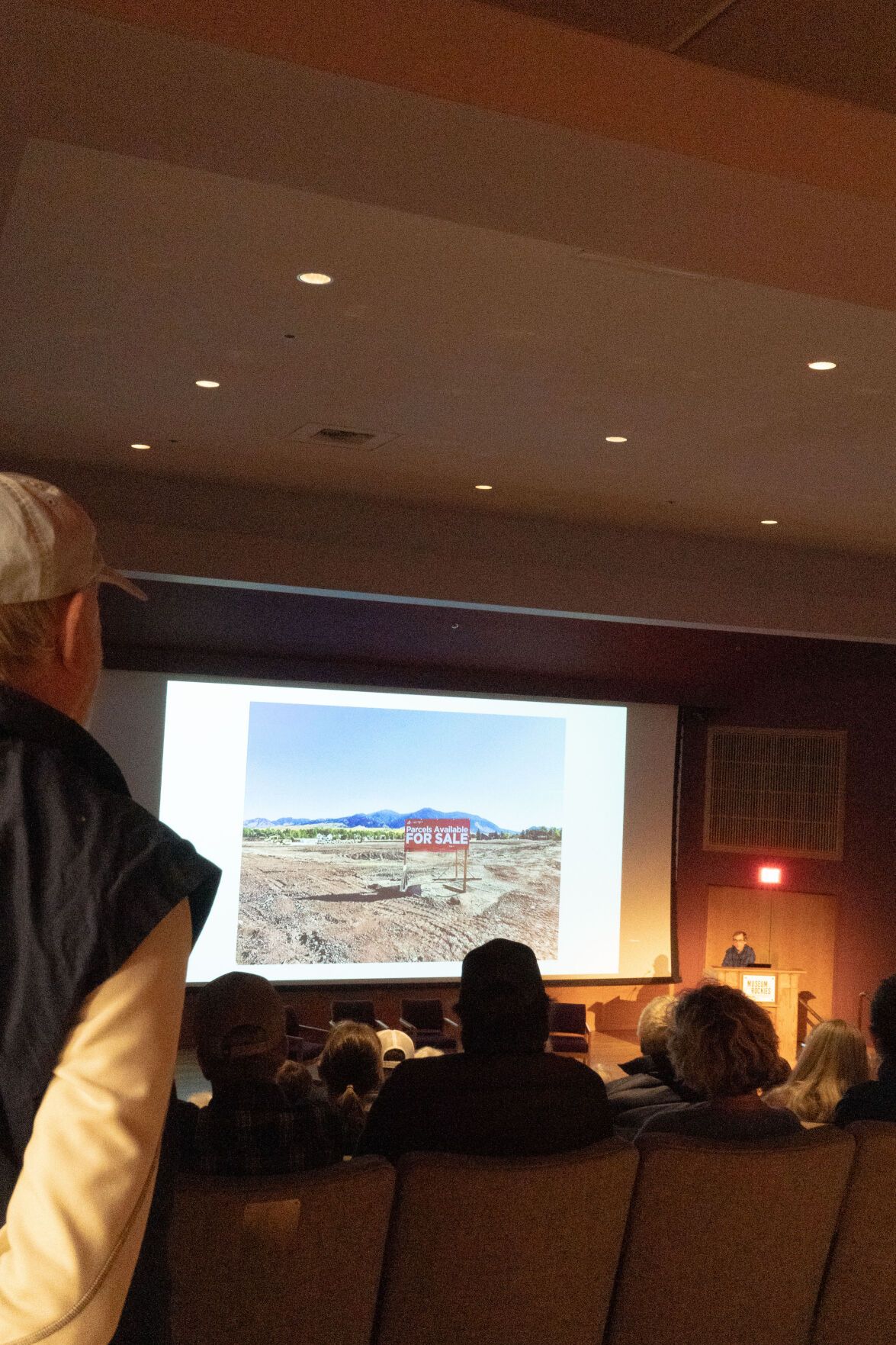
People from Bozeman and across the nation tuned in last Wednesday — virtually and in person — for “Loving Our Wild Backyard: How Can We Save The Mini-American Serengeti?” This talk and panel discussion explored how unchecked human development in the Greater Yellowstone Ecosystem (GYE) is threatening wildlife — and what residents can do to help.
The event, which took place on April 9 in the Museum of the Rockies, was one of the “Wild Talk” discussions presented by Gallatin Valley Earth Day for its “Living with the Land” conservation-focused event series. Award-winning journalist and author Todd Wilkinson led the talk and panel discussion.
At the beginning of the event, Wilkinson described the importance of preserving the GYE and raised a question that lingered throughout the evening. “Why don’t we treat our ancient terrestrial wildlife corridors with the same level of sacred reverence that we offer to wild rivers?” he asked the crowd.
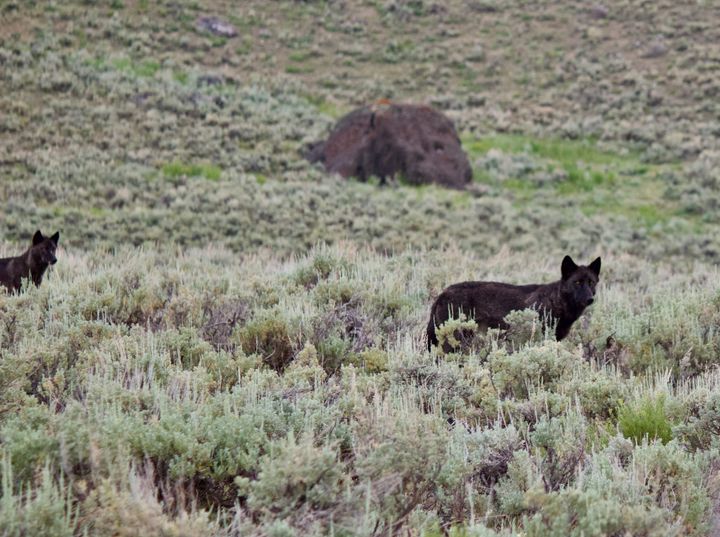
According to Wilkinson, the GYE is the only place in the continental U.S. where all of the fauna present before European colonization still exist. He noted that while there are other beautiful places in the world, many are devoid of their original natural life.
“There is a saying: To whom much is given, much is expected. It means that those who were blessed with more — whether in terms of talents, wealth, knowledge or opportunities — are held to a higher standard of responsibility and accountability,” Wilkinson said during an interview with the Exponent.
Throughout the evening, panelists described the causes of human development in the GYE and explored methods for reducing its environmental impact.
Event panelist Eric Ruark — the director of research and sustainability and director of public relations for the immigration policy advocacy group NumbersUSA — focused on human migration into the area.
“One of the big drivers of this growth is what we would call lifestyle migrants. These migrants are usually overly mobile and are coming here not for jobs necessarily, but because this is a great place to live,” Ruark said.
Former Chair of the Teton County Idaho Commission Cindy Riegel led a discussion about the impact of local politics on conservation, warning that conservationists are losing ground in the GYE due to a lack of organization and engagement.
“I can tell you that the developers are in the front row of local government meetings, often advocating for losing restrictions and allowing leap-frogging developments out onto the landscape,” Riegel said. ”Local elections are a critical piece of the puzzle for protecting the [GYE].”
Randy Carpenter, the executive director of Friends of Park County — an organization focused on safe development and growth for Park County and surrounding communities — spoke about the impact of zoning regulations.
According to the City of Bozeman, zoning is the set of regulations that govern the use of private land. These rules use specific districts drawn onto a map, with each district having its own rules that dictate how property can be used.
Carpenter noted that many counties in Montana do not participate in zoning, which leads to an inefficient use of property. If the state were to implement more zoning strategies, it could help wildlife move more freely throughout the landscape, as development would occur in more compact subdivisions rather than being spread across the area, he said.
“I will say here that the five-acre average lot size in the [GYE], that’s not going to cut it, folks. We cannot keep doing that,” Carpenter said. “We need to be looking at zoning regulations that are more like 40-acre lots required, 80-acre, 160-acre lots, right? This is what the science tells us is needed.”
Event panelist and Gallatin Valley Land Trust (GVLT) Executive Director Chet Work noted that although the GVLT — an organization that maintains Montana’s environment and outdoor recreational spaces — saved 23,000 acres of land in the last four years, there is still more to be done.
Moreover, he said many conservation groups lack the financial resources to go toe-to-toe with bigger development companies, but are nonetheless trying. “The joke was that we’re in a gunfight, [but] we don’t have a gun, we have a knife — and by the way it’s a butter knife. It’s not even sharp enough to hurt someone,” Work said.
In an interview with the Exponent, Wilkinson said that younger generations should want to preserve the GYE.
“You’re being handed this really precious, fragile thing. Are you gonna look back in 20 years or 40 years or 60 years and say, why didn’t I step up when I could make a difference?” he said. “All of us in my generation, we’re waiting to see young people step up, and you guys need to stop making excuses and step up because it’s your world to shape.”
To learn more about Gallatin Valley Earth Day and future “Living with the Lands” events, visit https://www.gallatinvalleyearthday.org/.
Comments ()