
Debra Magpie Earling challenges historical narratives in Stegner lecture
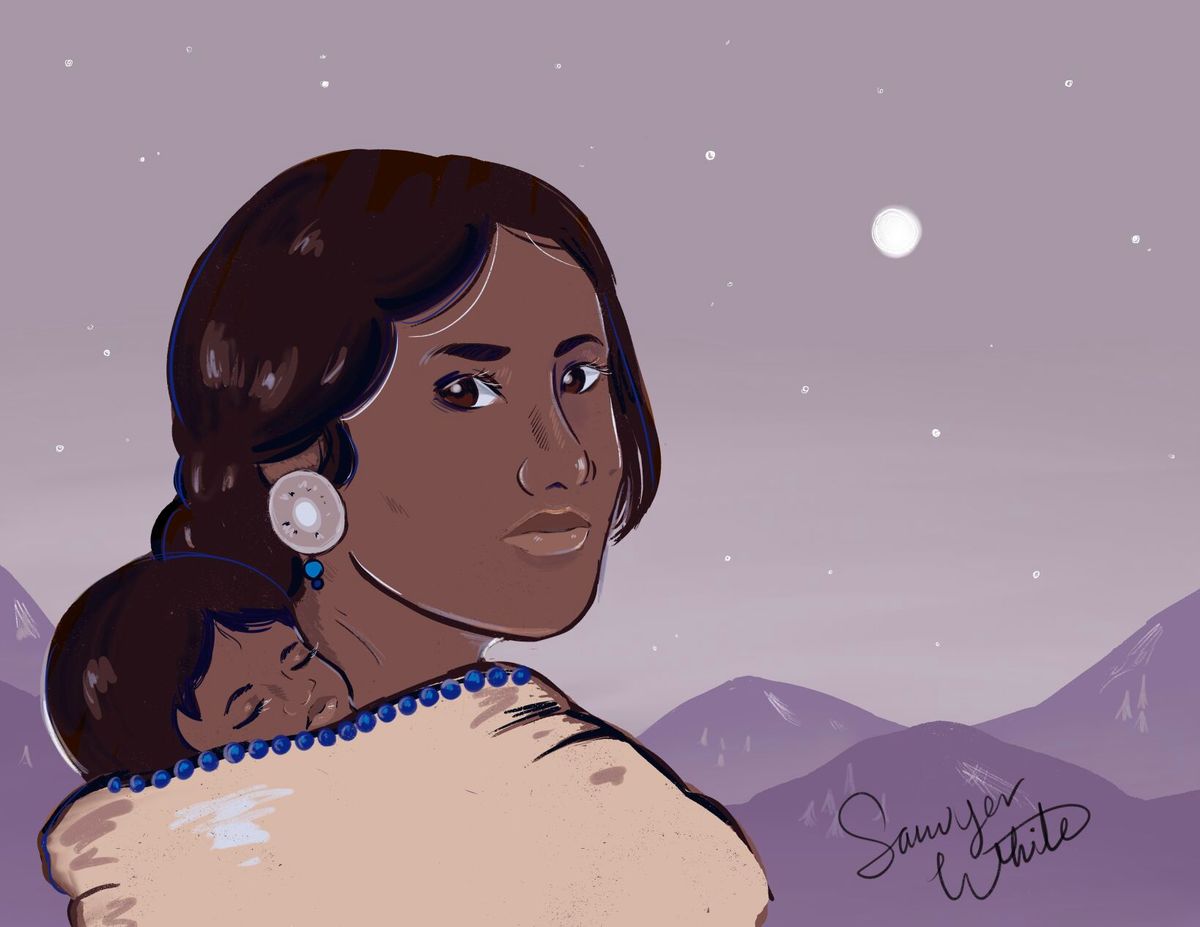
On Thursday, Feb. 22, MSU welcomed Missoula based author and Emeritus professor, Debra Magpie Earling, for the annual Stegner lecture in Norm Asbjornson Hall. The lecture was organized by staff and faculty of the Department of History and Philosophy and Dr. Mark Fiege, the Wallace Stegner Chair in Western American Studies at MSU.
“Wallace Stegner was a writer, historian and essayist,” Fiege said. “He had a very special relationship with [MSU]. Part of the mission – the warrant of the chair, is to organize the lecture every year. I arrived in the position in 2016, and overwhelmingly, [previous] lecturers had been white and male. One of the first things that struck me was, with all these talented Native American writers from Montana, not one has been a Stegner lecturer. So, that is what produced the effort to bring other brilliant voices in.”
In her lecture, titled “Sacajawea, 31 Men, a Baby and a Dog: A Young Woman’s Harrowing Journey Traveling in Bad Company,” Earling read from her historical fiction novel “The Lost Journals of Sacajawea” and challenged considered canonical narratives about the Lewis and Clark Expedition that excluded certain realities about why and how Sacajewa came to serve as a guide to the colonizers.
“Her story is a powerful story,” Earling said. “What I love most about Sacajawea, which [historians] don’t say, is that when she was turned down by the man — who was Lemhi Shoshone — she was supposed to marry at Three Forks because she had a child with a white man, she decided that she wanted to go see the whales. She went and saw the ocean, and she became sovereign at that point. The Hidatsa claimed her, the Lemhi Shoshone claimed her, but she claimed herself.”
“The Lost Journals of Sacajawea” is a fictionalized account aimed at reclaiming Sacajewa from non-Native historians. Earling published the novel in 2010 and recounts experiencing pushback from the public as she attempted to dismantle modern-day narratives that disrespected the pain endured by Native communities.
“We live in a gigantic mythology of Lewis and Clark,” Earling said during her lecture. “When The Lost Journals of Sacajawea was introduced to independent booksellers at a conference in Seattle, one woman waited in line to tell me she supported the idea of the book. She really did, but she couldn't sell it in her store. [The woman said she] lived in a town of Lewis and Clark aficionados, a town that barely held onto library funding. A man had already shouted at her, banged on her window, when she displayed a Love is Love poster. People in her town didn't want woke politics of any sort, they fought any story that challenged their mythology.”
Unfortunately, this is not Earling’s only instance of facing resistance to her work. Her first novel “Perma Red” — which follows a young Native American woman who is pursued by three dangerous men on the Flathead Indian Reservation in the 1940s — is banned in many school districts across Montana.
“I question history and the way we have read these mythologies of the West,” Earling said. “I think it is really important to begin to critically think about history. [The Lost Journals of Sacajawea] is a gateway to investigating more of our history and our place here.”
During her lecture, Earling explained that Sacajewa was a child kidnapped by white men and forced into submission. From Sacajewa’s perspective, Earling writes on page 120 of her novel, “I am only safe beside Charbonneau. I am not safe at all.”
The moving narrative resonated deeply with the audience gathered in Inspiration Hall, which brimmed with students and historians, all focused on examining prior historical paradigms.
“We’re living on stolen land, and we profit off that every day," sophomore Annika Coleman said. “I am so grateful to live in Montana, but [I came to this event] because I can’t appreciate the people before unless I know about them. Education is the best way to open our eyes.”
Reflecting on the event, chairman Fiege emphasized: “All historians and [MSU] itself have a responsibility to study and understand the full history of North America and the American West,” he said. “We have an obligation to question the ways we have narrated that history. We have a responsibility and obligation to see the past through the eyes and experiences of all kinds of different people who were here, first and foremost being Native Americans.”
If you are interested in learning more from Native voices, both of Earling’s novels are available for purchase at the MSU bookstore and online.
“I am [currently] writing a book called Witch,” Earling said. “It’s about Native women who are very powerful and use their medicine for their purposes at their boarding school. So many of these stories are so difficult to tell, so I chose a whimsical and precocious eleven-year-old who is in boarding school with her older sister.”
Comments ()