
Disabled Students Deserve a Fully Accessible Campus
I was labeled physically disabled when I left the hospital after having back surgery at the age of 12. Within six weeks, I was back in middle school. Today, I am thriving at MSU and enjoying activities such as hiking, fishing and digging up dinosaurs, with my only accommodation being that I need to sit when my back aches.
This is not the reality for many disabled students at MSU, for whom the campus can regularly present significant challenges.
According to a 2026 report by The National Disability Center for Student Success, 38 percent of 500 randomly selected student participants identified as disabled. Many frequently cited a lack of access and inclusion to explain their poor grades, transfers or withdrawals.
No young adult or curious high schooler should have to consider leaving or avoiding college due to a lack of support, especially at the cost of pursuing their passion.
“Bozeman is very inaccessible in so many ways,” said Rory Rossi, the president of MSU’s Disabled Students Association (DSA). “Finding community is also very difficult because you have to think about, ‘Is this building wheelchair accessible? Can I come into this place and be confident and safe and comfortable without putting myself at risk?’”
When the Americans with Disabilities Act (ADA) was passed in 1990, the fight for accessible spaces had its first big breakthrough. However, according to Rossi, this law did not apply to any buildings constructed before its passage, including many prominent buildings on campus.
“It’s important to understand that ADA compliance is different from universal accessibility,” said Mike Becker, interim vice president of University Communications. “Buildings that predate the ADA’s passage in 1990 can be considered compliant, though they may be inaccessible to some students.” According to Becker, MSU is actively taking steps toward full ADA compliance.
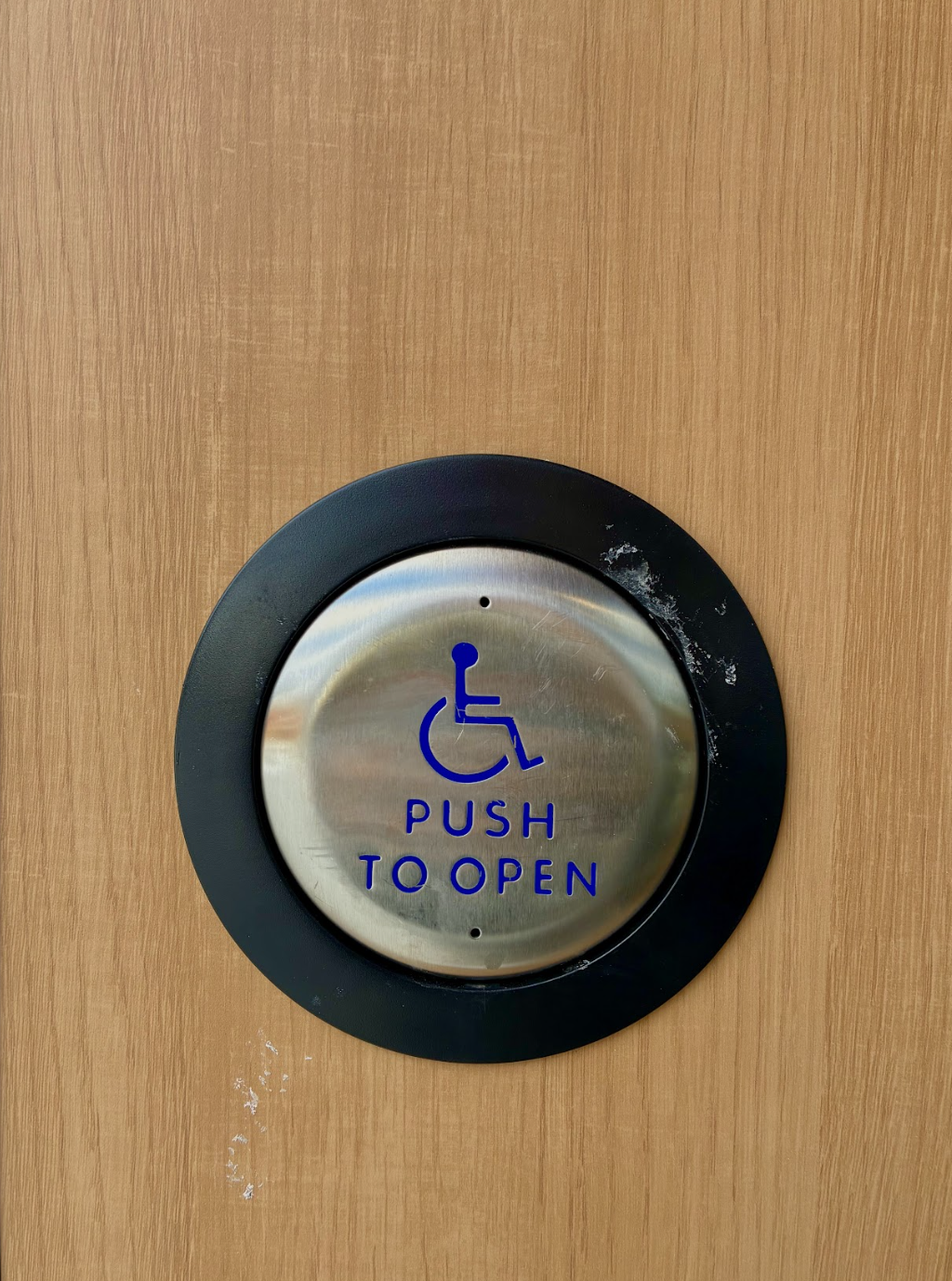
Amidst new constructions on campus, MSU also has a responsibility to maintain the current accessibility services offered to students. According to Rossi, there was an elevator in the SUB that had been out of service for months, along with broken ADA push buttons for doors around campus, causing him to be late for class or stranded in buildings.
Becker said that the lift should now be working thanks to the arrival of a specific part. He did not specify if any ADA push buttons are broken. Though not necessarily unsafe, students missing class due to circumstances outside their control is unfortunate.
Putting aside building accessibility on campus, there’s also the question of curriculum.
“I will not be able to do field [geology] because they simply cannot make it accessible for me and are refusing to do a virtual option. The fact that they are unwilling to even do a virtual option when there have been virtual options in the past is really discouraging,” Rossi said.
According to Becker, for most of MSU's history, classes were offered in person.
“We adapted to online delivery as an emergency measure during the pandemic,” Becker said. “After that two-semester approval expired, MSU returned to pre-pandemic modes for delivering courses.”
MSU is one of the most geologically gifted universities in North America due to its four billion years of natural history and excellent fossil records. It’s field geology course, however, is only offered in person. Because of this, Rossi, a paleontology major, could miss out on one of the most fundamental courses for his career: studying dinosaurs firsthand in our backyard.
In cases such as this, Becker said that any class requiring hands-on data collection is usually not accommodated, but the student requesting an accommodation can still appeal. Field classes are typically called ‘field’ because they require miles of hiking, living in tents and resistance to the rapidly changing weather.
However, for students who can’t live like this, couldn’t there be an exception to the historic rule?
Overall, to make campus more accessible, Rossi suggested adding more ramps to buildings, including more than one elevator in every building and telling incoming students what options they have if they’re not only disabled, but also for students injured during the semester.
Though MSU is making a stand against inaccessibility — asBecker notes, the University has made consistent progress in increasing campus accessibility over the past two decades — there are still areas for improvement.
“There are some offices that do some really, really great work and do their best to make sure things are accessible. However, on the whole, I feel like MSU lets their disabled students down,” Rossi said.
Increasing accessibility for disabled students is an ongoing process.Without a more inclusive campus, we risk losing some of our best students.
Comments ()