
Eighth annual African Cultural Night celebrates unity
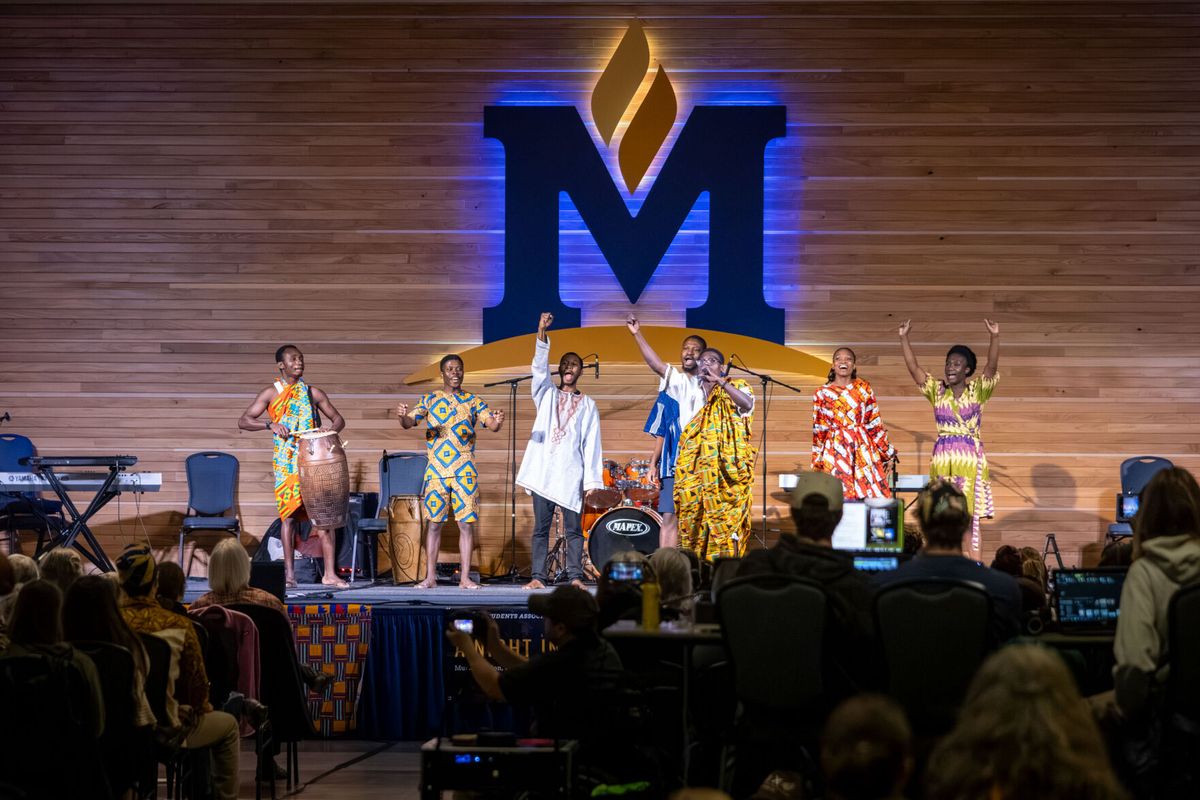
While MSU’s catering team prepared jollof — a traditional Ghanaian dish — and brewed a dark-red hibiscus drink, attendees of the eighth annual African Cultural Night filled the Strand Union Building ballrooms.
Members of the African Student Association (ASA) hosted multiple events during Sunday’s celebration, including a poetry reading, a drama performance and an inclusive fashion parade.
This year's theme was “Wazobia,” a term commonly used to symbolize Nigerian unity. It is a combination of words from Nigeria’s three major languages: “Wa” in Yorùbá, “Zo” in Hausa and “Bia” in Igbo, which all translate to “come.”
“So the theme is not only unity in the abstract, it's an invitation — come, come closer, come in, come with us,” said Dean of International Programs Sally Mudiamu in her speech at the beginning of the night.
“Unity doesn't happen by accident. It must be built intentionally, relationally and sometimes courageously. I've seen what happens when people stay in their silos."
After Mudiamu’s speech, members of the ASA performed a short drama titled “The Drum that Calls Us Home.” The play follows a village that descends into chaos after an evil force steals a drum. The loss of the drum ignites confusion, anger and fear in the villagers.
According to Prince Asamoah, the president of the ASA, drums have historically been used in African celebrations as sirens to bring people together.
“This drama is just portraying that the rhythm of the drum is what keeps Africa together,” he said. “And so as we saw, the drum got lost — the warriors needed to get the drum back. When the drum was lost, there was chaos. We saw the villagers arguing among each other — and we found the drum. The drum brought everyone back together.”
Shortly after the performance, the ASA held a fashion show featuring traditional clothing from various African countries, including South Africa, Ghana and Nigeria. Members of the ASA first modeled their countries' clothing, followed by a fashion contest for non-Africans wearing African-inspired outfits.
“My favorite part was the fashion parade for the non-Africans,” said Ifeoluwa Afolayan, the MC for the program. “I love the energy the people brought because when it was time for [the contest,] the clapping was so energetic.”
Afolayan said that seeing non-Africans celebrating and engaging with African culture was beautiful.
“Africa is a culture that celebrates everyone that is present,” she said. “So whether you are an African or non-African, as far as you hear the rhythm, you move your body; as far as you see the food, you eat and enjoy it — that's beautiful.”
MSU President Brock Tessman and his family made an appearance at Sunday’s program. He said it was his first African Cultural Night, and he was very impressed with the work students put into making it happen.
“I see it as an honor to be here,” he said.
ASA Faculty Advisor Israel Borokini said Tessman’s appearance was significant.
“It speaks a lot of volumes to how much he values diversity on campus — how much he values different people and different institutions on campus, and also gives him the opportunity to immerse himself into the campus community,” Borokini said.
According to Mudiamu, African Cultural Night encourages people to come together and celebrate diversity.
“Unity begins with a choice: Do we invite people in? Do we create opportunities where others can come closer, contribute fully and belong?” she said. “I believe that unity is one of the most important forms of leadership that we can practice right now.”
Afolayan said that she hopes more people show up in the future.
“Everyone is welcome here and you are free to come here,” she said. “We want to see faces and we want to see different African attires, because it's more colorful and beautiful when we come together.”
Comments ()