
Excitement builds for 2024 powwow
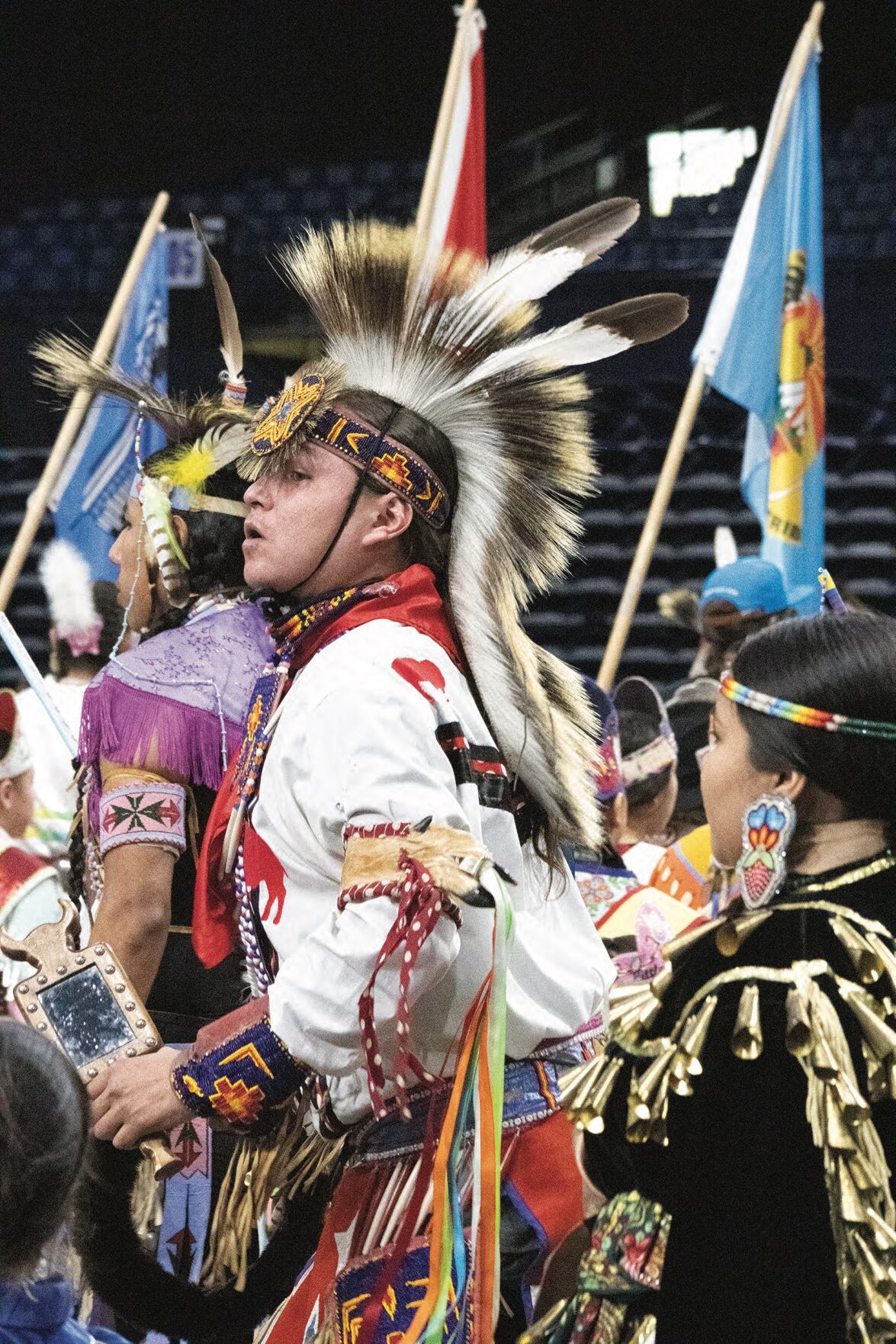
Next weekend, the MSU community will gather in the Brick Breeden Fieldhouse for the 47th annual American Indian Council (AIC) Powwow. Each year, crowds flock to witness the dance competitions based on different traditional dances.
The AIC of MSU is a non-profit, student-led organization “that works here on the MSU campus for indigenous student advocacy within the MSU community,” organization Co-President Riley Werk said.
Werk said that in order to do this, the AIC works to model what higher education can look like to Indigenous students. “Just allowing them representation to see what it means to be [successful] in college, and bringing that culture into western society [‘s ideas] of college education,” she said.
Werk grew up on the Fort Belknap Indian Reservation in north-central Montana and is a transfer student from the University of Montana. “I just needed to find my head,” she joked, saying that she always knew she was going to end up at MSU. Werk is currently studying to be an English and native language teacher.
“My plan is to teach in rural reservation schools or minority and Indigenous-based schools. Because of my experiences being a student on the reservation and wanting to encourage other students to keep going to school,” she said.
Every year, the AIC’s powwows have free admission and are intended to be a celebration where Indigenous and non-Indigenous students alike can interact with and experience “the beauty of our cultures, people and the meaning behind everything [displayed in the powwow,]” Werk said.
Planning for the next powwow begins as soon as the previous year’s ends. As the leadership of the AIC changes, student leaders prepare the next year’s council for success. Werk described how the previous council works on fundraising and grant writing each spring after the powwow.
“It's a fun job, but it is a lot that you have to really consider and invest a lot of time in.”
Werk emphasized the many cultures represented each year, saying that people have come to participate from Canada, Arizona, Florida, Hawaii, as well as overseas.
Dancers will register for the different competitions on the first day of the powwow, March 29. After the competitions, competitors will gather and dance to the flag song, which “talks about honoring our veterans and our warriors that we had in the past and as well as the ones that we still have, and just our victories that we've had so far as people in our nation,” Werk said.
There are two or three rounds of competition for each category. The dance categories differ based on sex. Women’s dance categories are jingle, fancy and traditional. Men’s categories are traditional, grass, prairie chicken and fancy. There are also categories for younger dancers: teens, juniors and tiny tots.
“That one's a little harder to judge. Because they just kind of bounce up and down,” Werk said about the youngest dancers. The tiny tot category is sponsored by community members every year and the dancers are awarded candy. “We'll have one poor, poor soul in the middle who has a bucket of candy they spill on the ground. And those kids go crazy, it’s the cutest thing.”
There are also special dances on the second day of the powwow in which MSU families and students can dance within an existing category or one that isn’t a part of the program. This year, the Tiny Tot Princess will wear Southern attire and do what’s called a hat and boot dance.
There is also a royal court with members who nominate themselves and participate in an application process. Miss Indian MSU is a student at the university, while Miss Teen MSU, Junior Miss MSU and Tiny Tot MSU are members of the community that compete in the pageant.
“College powwows are completely different from others because not only is it way bigger, but it's just so much more diverse and [there are different] people every year. So it keeps you on your toes,” Werk said.
Werk encouraged anyone who is able to attend the event to go. “Indigenous people are still here, and we're doing the best that we can to really be present and active [while] continuing to share the beauty of our culture with other people.”

Comments ()