
Extreme History Project pieces together the lost story of Lizzie Williams
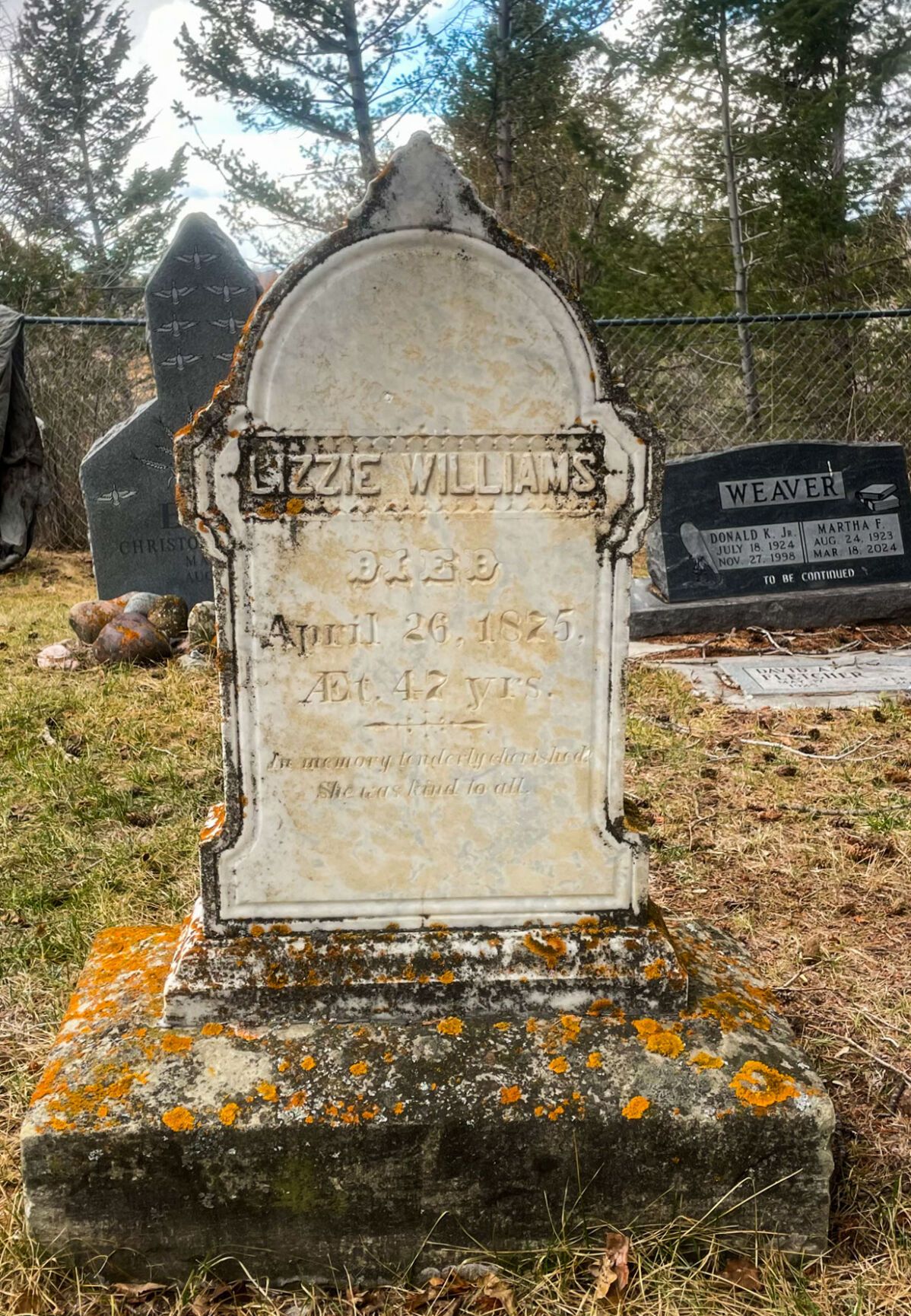
In Downtown Bozeman, where Altitude Gallery and Main Street Quilting Company now sit, there was once a restaurant owned by Lizzie Williams, the first recorded Black woman to own a business in Bozeman.
Not a lot is known about Williams. She was born — likely into slavery — in Kentucky sometime around 1832, according to Crystal Alegria, director of the Extreme History Project.
Williams arrived in Bozeman in 1869 and became one of 13 black community members among the 400 people living here at the time.
“Now, Montana and Bozeman are very white,” Alegria said. “But that is not our history — our history is a diverse community with people from all over the world, living here and working together and figuring it out.”
The Extreme History Project is a local museum in downtown Bozeman that focuses on bringing history to light in engaging and accessible ways,according to its website. Alegria said the project focuses on telling stories of Bozeman’s history that have been previously overlooked.
Williams’ story is no different. A quick Google search of her name yields only a few primary documents, most of which were collected by the Extreme History Project.
According to Alegria,marriage records place Williams in Central City, CO, before she arrived in Montana. There, she married a man named James Williams sometime in the early 1860s and worked in his barber shop. Eventually, they moved to Montana after hearing that gold had been discovered here.
The pair settled down in Helena for a few years before splitting up. Newspaper clippings show that Williams then moved to Springville, Montana — a mining town that no longer exists — by herself. There, she operated a hotel and restaurant for a few years. She eventually left and moved to Bozeman in 1869.
“She settled here, and she had money somehow — maybe from Springville, maybe from Helena — and she was able to purchase a couple lots on Bozeman’s Main Street, right in the heart of [it],” Alegria said.
Once in Bozeman, Williams started a hotel and restaurant, similar to her prior work in Springville. Alegria said primary documents from the time indicate that she was a good cook and some referred to her as “Aunt Lizzie.”
“You know, people still talked down to her and treated her like a Black woman would be treated at that time, which probably was awful,” Alegria said. “But they talk about how good her cooking is and how she was part of the community, and she was a business owner.”
In 1874, Williams fell ill. Alegria said the illness was most likely cancer, but this has not been confirmed. According to her, it was during this time that Williams started to get her affairs in order. She legally separated from James and composed her will.
Williams left half of her property to her daughter Rebecca, who lived in St. Louis, MO. The other half went to her friend’s sister, Edmonia Lewis, who was a famous sculptor living in Rome at the time.
Williams died in Bozeman on April 6, 1875. Alegria said she was only 41 or 42.
“We’ll never be able to know Lizzie Williams in her entirety,” Alegria said. “But we are able to piece her life back together so we can better understand where and how she lived.”
Comments ()