
First Indigenous Knowledge Exchange Study Abroad program plans trip to New Zealand this spring
“As a person, I'm deeply tied to my culture. Everything I do is a product of where I was brought up,” said James Vallie, a chemical engineering Ph.D candidate and enrolled member of the Crow Nation. “I've learned so much in science and Western academia, but the more I'm learning this, it's kind of — it's not taking me away from my culture, but it's making me more hungry to balance that.”
In two months, 18 Indigenous undergraduate and graduate students and three trip leaders will head to New Zealand — known as Aotearoa to the Māori, the Indigenous people of New Zealand — to experience a two-week exchange of culture and knowledge. Vallie is one such student who will attend the trip, which has been organized through the Indigenous Knowledge Exchange Study Abroad program (IKE).
The concept of an IKE dates back generations, according to Assistant Dean of the Honors College Steven Davis. This program was initially supported by the Office of International Programs and Director of the Bracken Center in the Jake Jabs College of Business and Entrepreneurship Toby Blake. It was also made possible following contributions from the Department of Native American Studies, the Center for American & Indian Rural Health Equity, the College of Education, Health and Human Development and the Honors College, according to Davis.
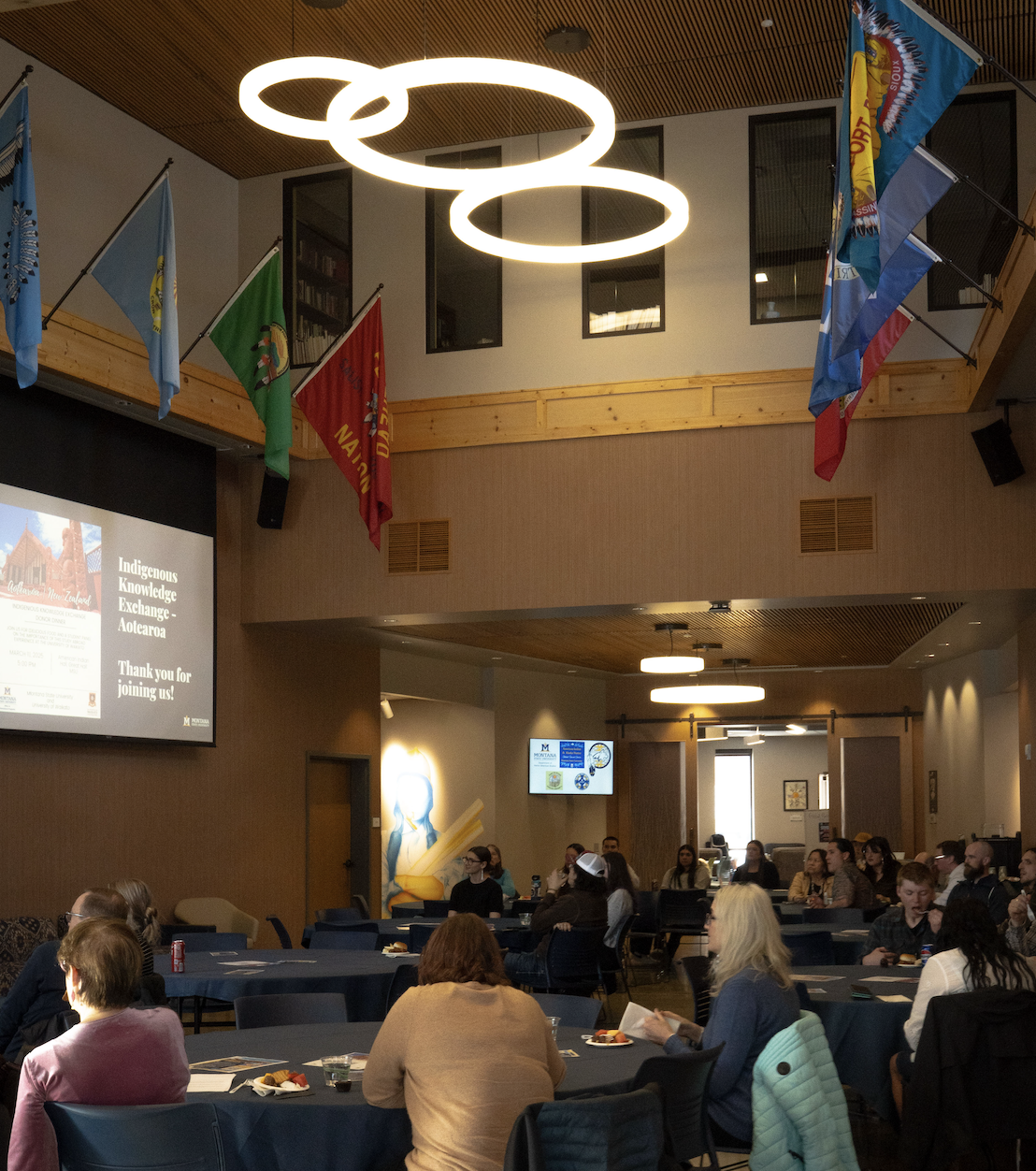
This trip will be MSU’s first iteration of an IKE program. To honor contributors, the program held a dinner on March 11 in the American Indian Hall. The dinner featured a student panel that answered audience questions and discussed their reasons for going.
After being nominated to apply for the trip by a member of staff or faculty, students had to submit an application by the due date, according to the trip's informational flyer. The majority of students represent different Indigenous tribes and intend to share aspects of their individual tribe backgrounds with the Māori, according to Isabella Mesa, an undergrad pre-nursing student and enrolled member of the Redwood Valley Little River Band of Pomo Indians.
“I'm very excited to learn about their connection to the land,” she said. “I am very in tune with my connection to the land, especially back at home because there's the ocean. That's one thing that I really think is unique [about] being from California, meeting Montana natives — [there's] no ocean here, so they don't have that connection to the ocean.”
She expressed her desire to encounter similarities between Māori culture and her own. “They're very traditional and very in touch with their culture there,” she said. “There's a lot of us that are coming from different places [and] that have different cultural beliefs. We're just coming together as one group to achieve this one main goal — which is to gain knowledge from these people that also have a completely different culture from us.”
Vallie expressed interest in learning how Māori students balance their work in academia while also reclaiming their cultural identity. “This is where, hopefully, I'll learn something or maybe some strategies on how they incorporate their cultural identity into their academic writing,” he said. “Because I'm working on my thesis now, and as far as science goes — heavy-duty science — I don't want to leave my cultural identity out of my thesis.”
He emphasized his determination to seek ideas from the Māori on integrating his culture into his research.
“If I wasn't Indigenous, I probably would have just moved on to the next project, but I was stubborn too — I'm real stubborn,” he said. “For me to go and enrich myself for two weeks, I want to ask these guys some stuff, I want to bring this up and say, what do you think about that?”
“Because I've been only surrounded by highly academic — Western academic people — which is great. I've bounced great ideas off of them, but also I'm lacking in that cultural exchange on how they do this. So maybe I'll see that in New Zealand,” he said.
To learn more about study abroad programs, visit https://www.montana.edu/international/studyabroad/index.html.

Comments ()