
Forest Service reorganization sparks confusion and concern
“Caring for the land and serving people.” Since the mid 1980s, these words have been the motto of the U.S. Forest Service (USFS). In a National Public Radio 1A podcast episode on April 15, current USFS Chief Tom Schultz said that message still stands, even amid recent reorganization plans.
The USFS was first established in 1905 and currently manages 154 national forests and 20 national grasslands, according to its website. These lands, totaling over 190 million acres, are currently maintained by nine regional offices, all of which are planned to close, according to a March 31 press release by the USDA.
According to Schultz, the full reorganization will take place over the next year, though no specific dates have been provided.
“I think it’s just really unknown,” graduate student Malia Naumchik said. “It feels very uncertain and it’s been feeling that way for a while now.”
The reorganization will transfer management to a state-based organizational model, designed to shift authority closer to the field, according to the USDA press release. 15 state directors — including one in Helena — will serve as national leaders overseeing operations in one or more states.
Mary Erickson, a retired forest supervisor for the Custer-Gallatin National Forest, said that while she agrees decisions are better made at the ground level, the reorganization as a whole is unnecessary.
“People shouldn’t buy into that logic with the reorganization, because all you have to do is redelegate those things back to the forests or back to the ranger districts,” she said. “You don’t have to reorganize offices and move people around to bring those decisions back to the ground.”
Erickson said she fears that shifting to a state-based model will politicize positions in the USFS that should be nonpartisan.
“On one hand, the idea of having a stronger connection with the state that a particular national forest is in could be good,” she said. “But, I think what we’ve learned from the BLM — the BLM has state directors — is that those positions have gotten highly politicized over time.”
In addition to closing regional offices, the Forest Service will also move its headquarters from Washington, D.C. to Salt Lake City, according to the USFS.
This moves leadership further from its work, not closer to it, according to Erickson.
“[Washington, D.C. is] where Congress is,” she said. “That’s where all these other agencies are, and that’s really where you need to be in answering questions and advocating for the agency and the agency's needs.”
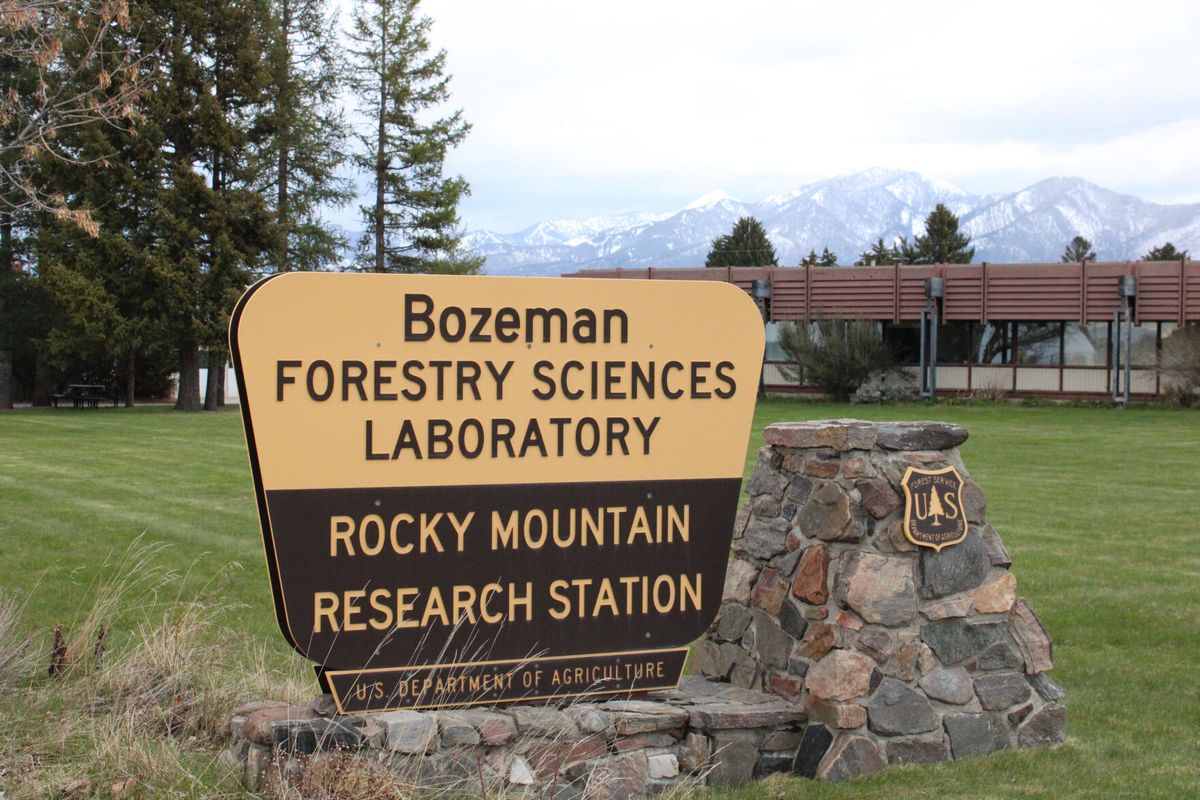
According to an April 3 article from The New York Times, 57 of 77 Forest Service research facilities will close due to the reorganization, including the Bozeman Forestry Sciences Laboratory on campus.
These closures will not eliminate science positions, cancel research programs or reduce the national research footprint, according to the USFS. However, some scientists have expressed concern regarding their ability to continue research if forced to relocate.
Naumchik and fellow graduate student Lauren Gedlinske said one of the reasons they chose MSU was because of its connection to the Forest Service.
“My goal after graduation was to have a federal research position,” Gedlinske said. “That seems really up in the air right now, as a lot of those positions are being destroyed across the country — terminated. If that had not been an option for me, I don’t know whether or not I would have started my degree here.”
Gedlinske, a fifth-year Ph.D candidate in the Department of Ecology, studies how variation in floral scent influences plant reproductive success and pollinator responses. She said that if the Bozeman lab were to close, she would likely have to discard her old samples, which date back to 2021.
“The sort of adage in science is to not ever get rid of any of your samples or data until everything that you want published is published,” Gedlinske said. “So it could possibly limit what I’m able to publish. It would make it hard, if not impossible, to openly share my data and my methods so that people can reproduce the science that I’ve done.”
Naumchik said the closure could change what research she is able to conduct.
“It’s just hard because we don’t have the same lab capacities as the Forest Service lab does,” she said. “I’m supposed to be doing kind of really sensitive processing of DNA samples, and so the lab we have on campus is just not as equipped to do that as the Forest Service lab is.”
Both Naumchik and Gedlinske are co-advised by Laura Burkle, a professor in the Department of Ecology at MSU, and Justin Runyon, a research entomologist at the Bozeman lab.
Runyon said he has three main areas of focus for his research at the Forest Service: pollinators, bark beetles and invasive plants. The information gathered from these studies helps inform land management decisions in Bozeman and across the country.
“It’s common for national forests to go to Forest Service researchers and say, ‘I’ve got this management problem, how can you help?’ Sometimes the answer is out there,” Runyon said. “It’s already published in scientific papers, and as researchers, we can find and then interpret the science. If the answer isn’t known, we can then design and do research to get an answer.”
Because different habitats and forest types require different management priorities, having place-based research is important, according to Runyon.
“Having these research labs and scientists sort of scattered across the county can be beneficial because where you go matters and every place tends to be a bit different,” he said.
While the future of the Bozeman lab is still uncertain, Runyon said he has been reassured that his research will continue.
“If they move forward and close this facility, I would just need to find another place, maybe on campus, where I can work,” he said.
Gedlinske said collaboration between institutions is important for doing better science and dispersing research to those who can apply it. “It would be a huge shame to lose this space,” she said.
“I’m really concerned about the research side of this because that feels like the place where the public might not notice the importance of science and long-term science,” Erickson said.
Though she retired from the USFS in 2023, Erickson said she still has many connections within the agency.
“They really talk about how this reorganization has been vetted internally — like people internally have worked on this and really been a part of this,” she said. “I would really push back on that notion. The plan was not done at the ground level. People at the ground level haven’t been having input into this. It’s been really designed at the national level.”
Jono McKinney, president and CEO of the Montana Conservation Corps, said his team is still waiting to see what the impacts of the reorganization may be for the Forest Service.
“Our priority is to support the agency as best we can with the services of our AmeriCorps field crews and individual placement positions,” he said.
Runyon said research has been part of the Forest Service’s mission since its beginning. According to him, one of the best parts of his job is that his research is driven by land managers' needs.
“It’s a really great feeling to know that you helped address a problem and that your research is being used to improve our public lands,” he said.
To learn more about the research conducted at the Bozeman Forestry Science Laboratory, visit https://research.fs.usda.gov/rmrs/labs/locations/bozeman-forestry-sciences-laboratory.
To read the full USDA press release, visit https://www.usda.gov/about-usda/news/press-releases/2026/03/31/usda-prioritizing-common-sense-forest-management-moves-forest-service-headquarters-salt-lake-city.


Comments ()