
Hibernating animals out and about early this year
When we think of spring, we think of groggy bears crawling out of their dens, warmer days and the soft songs of birds whistling through the trees. For many of us, these familiar signs mark the turning of the seasons. However, the birds and bears aren’t the only creatures hoping to refuel after a long winter's rest. Numerous creatures partake in winter hibernation whom you may find stepping, hopping, crawling or flying into sight as you hit the trails this spring.
Although hibernation often involves some level or state of sleep, not all creatures who enter hibernation are limited to their desired resting place — such as a den or nest. When bears enter hibernation in the early stages of winter, they pass into a voluntary, lighter state of sleep known as torpor, which lowers their body temperature, pulse rate and respiration. As for nutrients, bears and several other animals burn through the fat or nutrients they store in the summer and fall.
Bears may enter in and out of torpor throughout winter, moving around in their dens or, on occasion, venturing out, according to an article by Patrick Sather on a-z-animals.com. Don’t forget to watch for cubs this spring as you venture into the forest, as bears tend to give birth during hibernation. If a mother bear sees you as a threat, which can happen if you get too close to her cubs, the chances of an attack increase.
This year, the Montana Department of Fish and Wildlife reported that bears all over western Montana emerged from hibernation nearly a month early due to high temperatures and low snow levels, according to Peter Christian’s March 4, 2024 article. Other animals, such as the hummingbird, followed suit.
Birds, much like bears, enter torpor — but for shorter periods, ranging from several hours to several days. Hummingbirds often enter torpor to survive cold nights, which we experienced far less of this year. Instead of mid-April, hummingbirds took to the sky in March and brought their lovely chorus to Bozeman a month early.
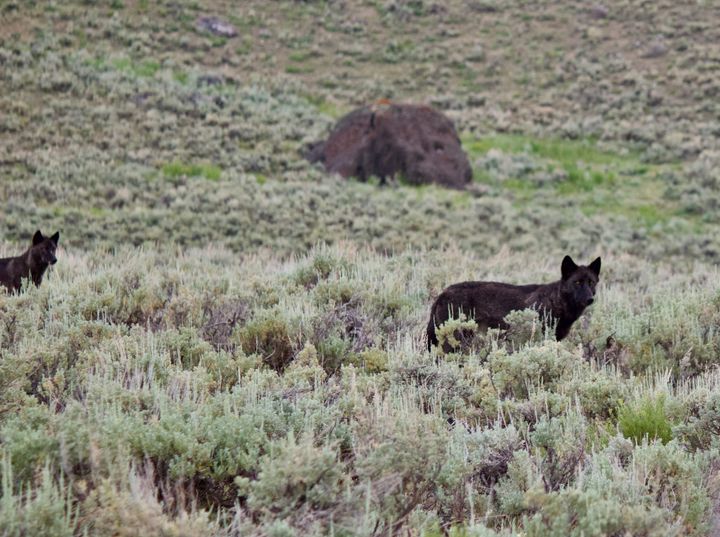
Other animals that may already be out and about from hibernation can be found in various habitats across Montana, including meadows, forests, gardens, alpine terrain and fields. If you’re planning a trip to Yellowstone National Park anytime soon, you may find bison calves with their orange-reddish colored fur alongside bear cubs and wolf pups. If you venture further up the mountains to higher terrain, you may see mountain goats foraging for grass at altitudes of up to 13,000 feet.
Habitation at such high heights makes mountain goats the largest mammal in North America capable of living in extremely high-altitude environments, according to the website animalia.bio. If you head deep into the forests, keep your eyes peeled for mooses who will drop their antlers in the winter and begin to regrow them in the spring, sometimes adding as much as one pound of mass to their antlers per day. However, regrowth is individualized, so don’t be surprised if you see a moose roaming without antlers.
Lastly, trek consciously across various habitats as bats, non-venomous garter snakes, ladybugs, snapping turtles, bumblebees, hedgehogs and ground squirrels may also appear as they leave hibernation in search of warmer weather, according to an article on thewhistlingoak.com. So, as you head outdoors in the next few weeks, greet our critter friends — from a safe distance — as they continue to file out of the darkness and into the light.

Comments ()