
Humanities Students Should Attend the Career Fair
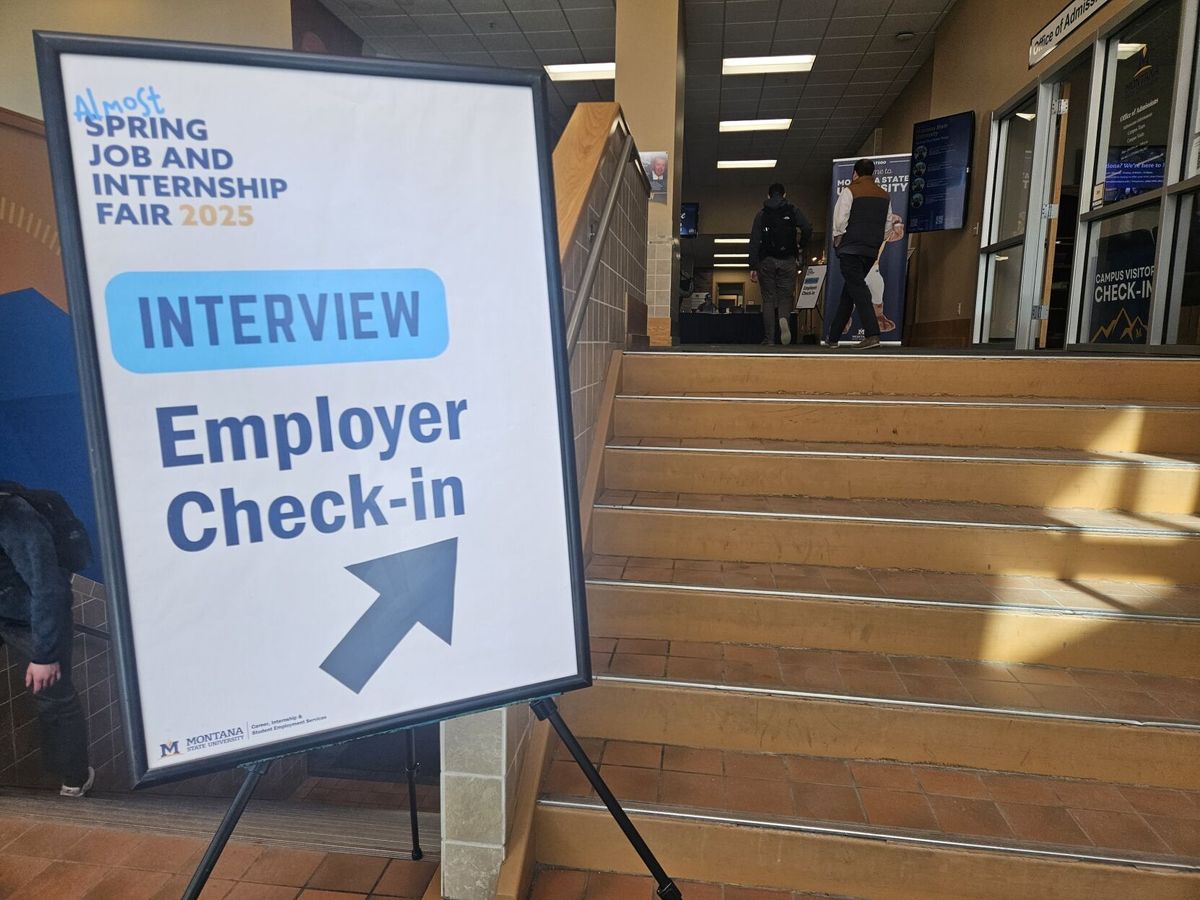
On Feb. 26, hundreds of students crowded the Strand Union Building in hopes of meeting a future employer at MSU’s annual Career Fair.
The event was packed with construction companies, defense contracting firms, industrial engineering firms and the like, which left students outside of the science, technology, engineering and mathematics (STEM) fields unsure of their place at the fair. “There were no jobs in my field,” said philosophy major Gage Miller. “I was looking for a law firm or something along those lines and there was nothing that really stood out to me in that field.”
I also attended the Career Fair and felt somewhat out of place as a writing major. I received confused looks when I entered the STEM room with my“English Major” badge at the Bobcat Networking Reception Roam on Feb. 25. However, despite the challenges students in the humanities face at the Career Fair, I believe that it is essential that they still attend.
Attending the fair as a Humanities student is mutually beneficial for students and the school. When few humanities students go, it is more difficult for the administration to convince employers in communications industries — like publishing companies and newspapers — to come. Halley Perry, assistant director of Industry & Employer Relations at the Allen Yarnell Center for Student Success (AYCSS), discussed the difficulty the AYCSS has in convincing some employers to come to the fair.
“ We do have to wait sometimes for the employer to reach out to us, and I try to also reach out to certain ones,” she said. “Especially convincing employers to come to the fair. In certain industries, it's not typical for them to go to fairs, right?”
Naturally, employers want to come to career fairs with a large pool of qualified potential employees. If humanities students avoid the career fair, it is likely to remain STEM-focused.
The Career Fair serves as an excellent opportunity to receive feedback on a resume or cover letter, learn more about industries and practice interacting with employers.
“I haven't actually gotten an internship or anything from [the Career Fair],” said Lukas Kosel, who double majors in history and writing. “I've gone to other sources to get internships, but it's still good practice for shaking hands, giving your elevator pitch — all that stuff — and just meeting professionals. Even if it's not in fields that I am in.”
Humanities students need to remember that as experts in communications, critical thinking, textual analysis and many other skills, they can fill vital roles in almost any organization.
“I think that for a long time it feels like it's just like a test,” paleontology major Ginger Heath said about the university system. “Like, how much do you know? And then, as soon as you become a professional, it's like, how well can you talk to other people? Because they're the ones who will fund your research. And they're the ones who are gonna visit your museums.”
Next time the Career Fair rolls around, humanities students should attend with confidence and seek to take anything they can from the experience. They should be willing to show employers how they can prove highly valuable because — not in spite of — their chosen degrees.
Comments ()