
Hunter Hess Showed Us What It Means to Represent the U.S.
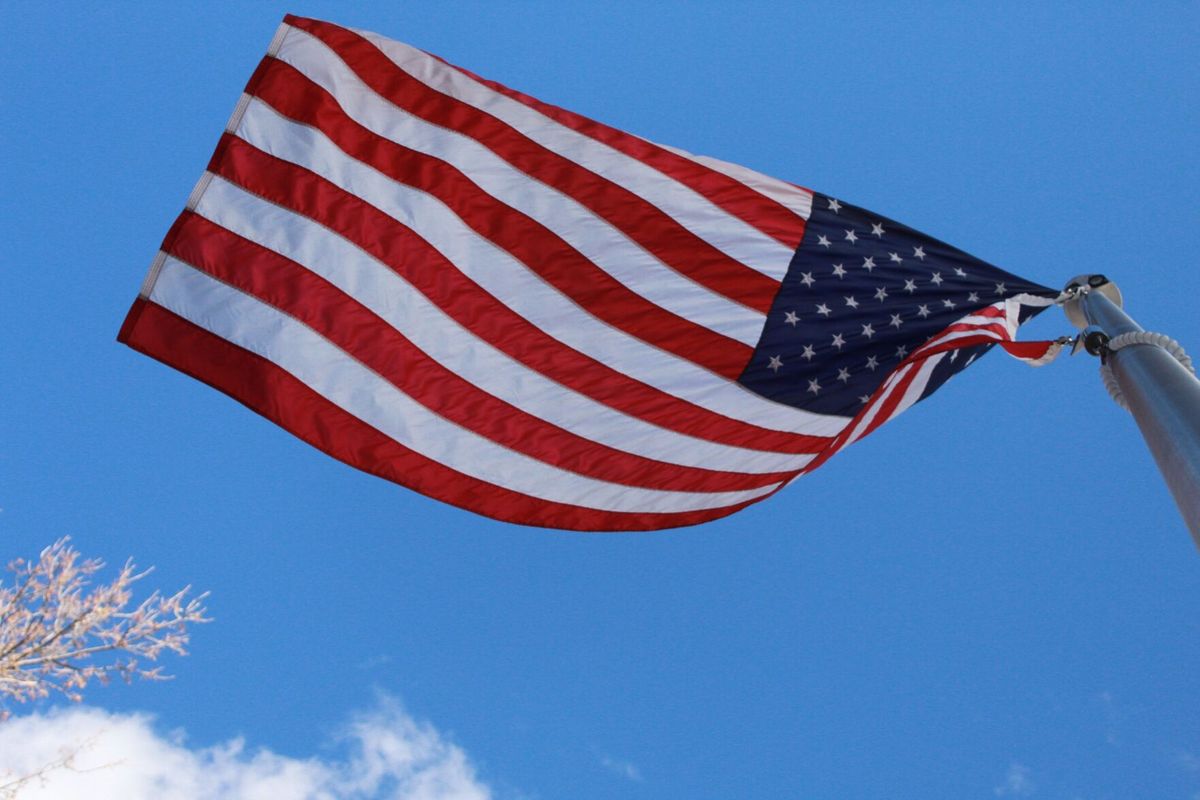
When U.S. freestyle skier Hunter Hess was asked at a press conference how it felt to represent his country at the Milan-Cortina Winter Olympics, he said: “It brings up mixed emotions to represent the U.S. right now, I think. It’s a little hard.”
The backlash was immediate.
His comment reignited a familiar debate: What does it mean to represent the U.S. on a global stage? For some critics, wearing the flag demands unqualified national pride, but for many athletes — and those watching them — representing the country does not require endorsing every action of its government. It can mean representing communities, values and personal integrity instead.
His remarks sparked heated arguments online, and even President Donald Trump weighed in.
“Hunter Hess, a real loser, says he doesn’t represent his country in the current Olympics,” he said on Truth Social in a Feb. 8 post. “If that’s the case, he shouldn't have tried out for the team, and it’s too bad he’s on it.”
Olympic athletes should be able to voice their opinions without being publicly ridiculed or degraded. Trump’s comment unnecessarily attacked Hess’s character and discouraged open dialogue. Hess voiced his opinion calmly and respectfully, using his platform to speak on an issue important to him.
Sophomore and elementary education major Sophia Bourriague said she believes it is essential for Olympians and public figures to express their political views. She argued that their words can influence issues back home and bring them to the world stage.
“The fact of the matter is, athletes have a lot of weight in the world,” she said.
Other Olympic athletes backed Hess, saying he has the right to speak freely about what representing the U.S. means to him. For example, when asked at a Feb. 9 press conference about President Trump's comments toward Hess, Olympic snowboarder Chloe Kim said: “We need to lead with love and compassion, and I would love to see some more of that.”
In that same press conference, Bea Kim, another Team USA snowboarder, emphasized the importance of culture and uniqueness within the U.S. “I think diversity is what makes us a very strong country and what makes us so special,” she said in the Feb. 9 conference.
The athletes who commented on the current administration’s policies are using their global platform to articulate what unity, peace and compassion mean to them. The right to do so, even while publicly representing the U.S., reflects the country’s foundational commitment to free expression.
“The U.S. is so much more than just the current leadership,” said Sage Nicholas, a sophomore studying secondary education. “For the president to tweet that is so disrespectful.”
The Olympics transcend our current political climate. They are a stage for elite competition, but also a reflection of the communities that athletes come from. “I love seeing their success stories, and I love seeing the journey that it took to get there,” Bourriague said.
Despite President Trump’s criticism, athletes who speak up for their personal convictions and broader social concerns are not rejecting their nation; they are redefining what it means to wear its colors during this deeply divided moment.
Hess’s comment did not reject the flag or country he represents. He acknowledged a sentiment that many Americans share, which is pride intermixed with concern. The ability to compete for the U.S. while acknowledging its imperfections is not disloyalty; it is democracy in action.
“[Hess] is so talented,” said Catalina Martinez, a sophomore studying political science. “He’s a dope guy, and he should be proud of what he is doing.”
Comments ()