
“It really can be anybody”: HEART Initiative hosts human trafficking panel
There can be a multitude of challenges associated with escaping human trafficking. However, one might not consider that the greatest barriers include the role of law enforcement and the criminalization of sex work.
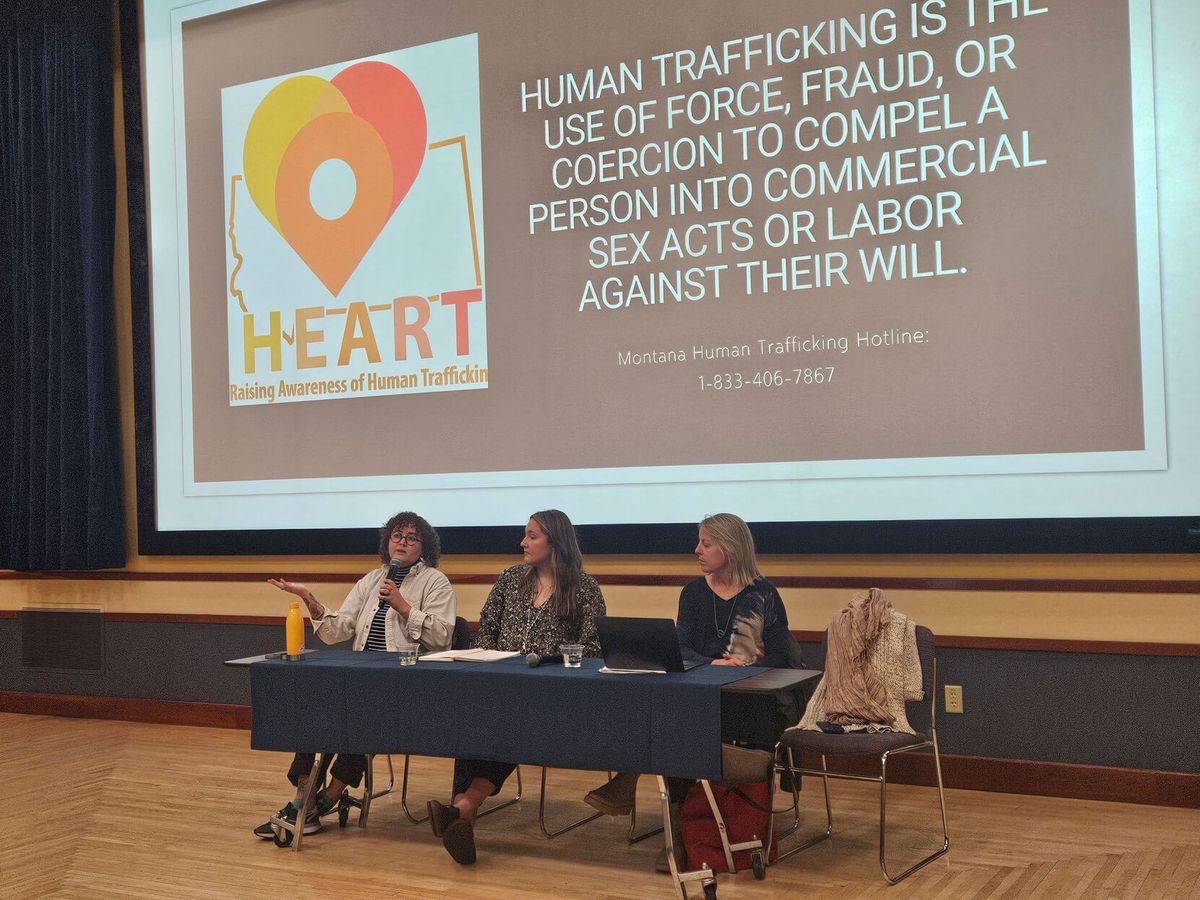
On Tuesday, Nov.12, the HEART Initiative hosted a panel event featuring three specialists to discuss the prevalence and misconceptions of human trafficking in our community. The panel consisted of Sociology Professor Veronica Shepp, Anti-Trafficking Legal Advocate Sha, who did not share her last name due to privacy concerns, from Haven — a Bozeman organization that offers shelter and resources to those impacted by domestic violence or sex trafficking — and Registered Nurse at Bozeman Health Shannon Brown.
The HEART Initiative is a student organization working to raise awareness about the realities of sex and labor trafficking in the community. Haven aims to provide survivors with safe intervention and offers resources to prevent future violence. Both maintain confidentiality through their processes, according to their respective websites.
As explained in the panel discussion, conversations surrounding victims' experiences with human trafficking are often overshadowed by the role law enforcement plays in the apprehension of traffickers and prevention of future crime. This time, rather than having a discussion led by law enforcement, the HEART Initiative elected to highlight the experience of those who have worked personally with survivors through informal avenues of support that bypass the threat of legal ramifications.
“A lot of law enforcement individuals are looking to save these people and go in guns blazing,” HEART Initiative Vice President and sociology student Isabel James said. “However, a lot of times, it takes a different approach to help people in these situations, because they don't have any money, their entire lives are linked to these people who are trafficking them.”
The panelists explained that the criminalization of sex work often negatively impact survivors. Many may choose not to come forward or report their assaults for fear of prosecution or maltreatment by law enforcement. This puts a barrier between survivors and their willingness to seek help.
Further, the panelists explained that victims of human trafficking are often close to their trafficker, which complicates their ability to remove themselves from their situation. Many are victimized by a romantic partner or family member rather than a stranger. To complicate it more, many are often financially dependent on their trafficker, relying on them for housing and other basic needs.
During the panel, Shepp expressed the negative consequences of the media’s sensationalized portrayal of human trafficking and how it often skews public perception.
“In the last few decades, the awareness campaigns have not really spoken to the actual facts of trafficking. We often see very racialized, stereotypical images of harm-doers,” Shepp said in an interview with the Exponent following the event. “Typically people are coerced or they're staying because they even care about the person who's trafficking them, which is a hard thing to get.”
Shepp noted that victims of human trafficking often report higher-than-average instances of adverse childhood experiences or have experienced unstable housing situations, food insecurity, substance abuse or mental illness. She said that transgender people, women of color — especially Indigenous women — and people that have been incarcerated or those who are undocumented are the most vulnerable. These demographics often have a poor perception or experience with law enforcement that further complicates their willingness to make a formal report.
The panelists underscored the importance of community organizations like Haven and the HEART Initiative, who do not report to law enforcement — unless required to by law under mandatory reporting stipulations — and offer survivors an informal route to seek help.
“Our students with HEART initiative and Students Against Sexual Assault are really educated on a lot of these issues. So, while they're not full, formal resources, we know that with so many survivors, seeking informal support is the gateway to seeking formal support,” Shepp said. “Knowing that you've got peers that are super supportive and also educated is really cool.”
High school sexual education peer educators working with BridgerCare also attended the panel event and re-emphasized the reality that many in the Bozeman community have experienced human trafficking or domestic violence.
“It really can be anybody,” said Em Williamson, a junior at Bozeman High School and a BridgerCare peer educator.
“I would say you probably know someone who has experienced an unhealthy relationship of some kind, who has struggled finding health care for [sexually transmitted infections] or maybe pregnancy or they want to have a child and can't. All of those things are so integrated into our community. And I think because we treat it as a taboo topic, we overlook it.”
According to the Montana Department of Justice, incidences of human trafficking increased 1,900 percent between 2015 and 2023 in Montana alone. In order to prevent human trafficking, it's important to recognize the incongruence between media portrayal of trafficking and the realities many face.
If you or someone you know is experiencing human trafficking, contact the Montana Human Trafficking Hotline, (833) 406-7867 or the Haven support line, (406) 586-4111. Both are operational 24/7.
To get involved with the HEART Initiative, contact the organization by email at theheartinitiative406@gmail or follow their Instagram @msuheartinitiative.
Comments ()