
It’s Difficult — But Worthwhile — to Navigate College Without a Phone
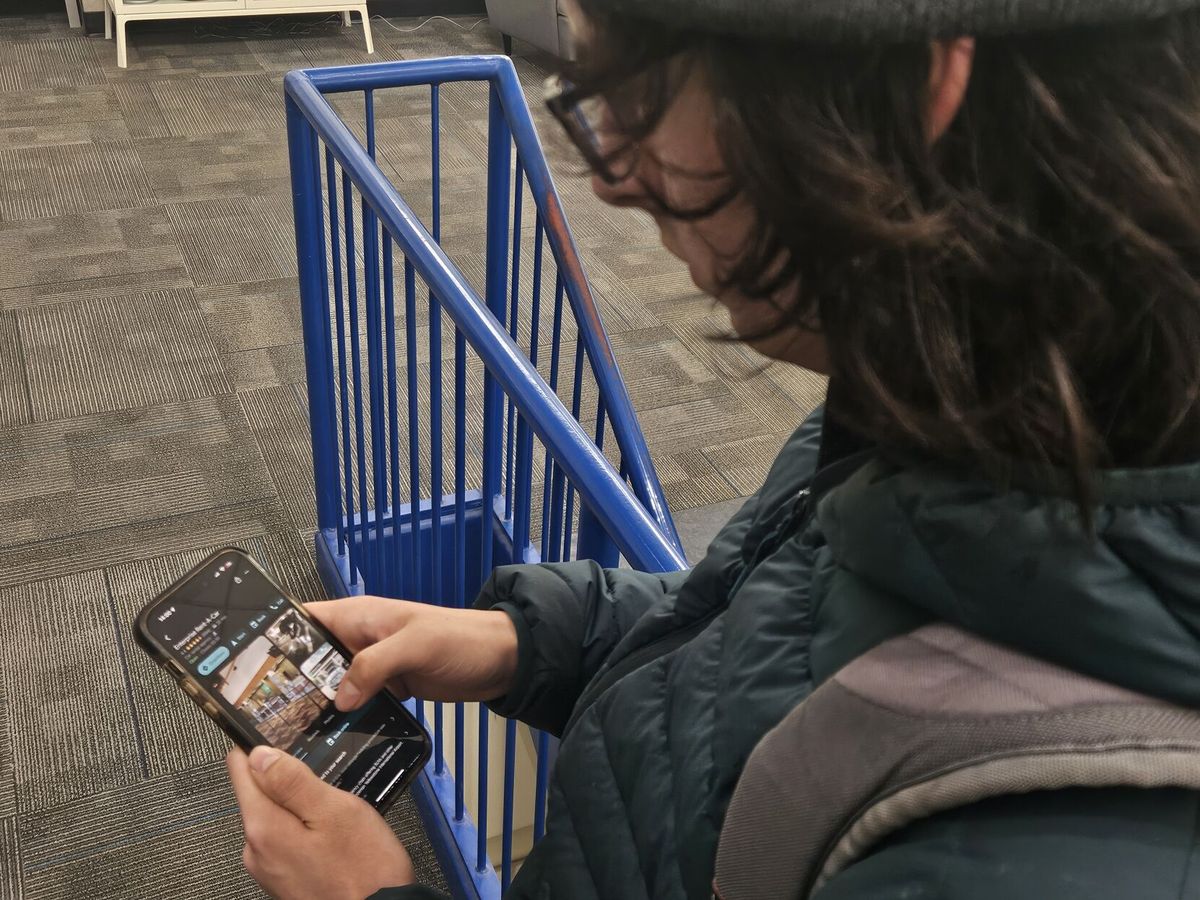
After spending last weekend scrolling through endless posts about friends losing their federal jobs, I was feeling pretty hopeless, a little nauseous and quite embarrassed about my screen time. It’s no secret that excessive phone use is associated with depression and anxiety.
A 2018 International Journal of Environmental Research and Public Health research review of 4,738 papers determined that mobile phone use can negatively impact mental health. So, after last weekend, I wanted to test the feasibility of ditching the phone. Can it be done as a college student? I spent the past week without my iPhone to see for myself.
On campus, I faced a myriad of issues. I couldn’t pay for parking using the Passport Pay app, which resulted in a hefty ticket. Without Gmail’s two-factor authentication on my phone, I couldn’t sign into my Google account to print a paper in the library. Not to mention that logging into Duo Mobile was impossible. At the Student Wellness Center (SWC), where I usually use my phone to enter, I had to plead with the staff to look up my student ID.
Off-campus, I awkwardly read a book in the driver’s seat of my car while I waited for the engine to warm up. At work, unable to clock in, I had to record my hours on a sticky note. While I waited for a friend at a restaurant, I felt oddly naked without something to scroll on. I couldn’t call or text my parents, listen to music or snap any pictures.
None of these situations, however, felt like legitimate justifications for needing a phone. There were ways around everything. I emailed my paper to the librarian to print. I learned that departments can purchase Duo tokens for students without smartphones. I dusted off my CatCard to get into the SWC. I successfully appealed my parking ticket. As for being uncomfortably unoccupied in public, I sucked it up.
And then there were the upsides — sans-phone, sans-music, the radio became a somewhat idyllic soundtrack to my morning commute. I ate breakfast over a book and opened my laptop only when I got to class. At work, unable to check my phone, I — well — worked. I exchanged whimsical emails with my iMessage-less friends and family and coordinated after school plans on the sidewalk between classes. I found myself going to bed earlier and waking up feeling shockingly well-rested.
I’ll admit that my week without a phone was not without frustration, and I did rely heavily on my laptop for emailing, D2L and even the occasional glance at Instagram. But without my phone, I felt absolved of some kind of responsibility I didn’t know I’d been burdened with. As uncomfortable as it sometimes was, my days had grown a bit longer. I had unlocked swaths of time, previously occupied by scrolling, now left enchantingly empty.
I would recommend a phone-less week to everyone, but that may not be realistic, or even necessary. After all, I did have to somewhat upend my routine to get through the week. Other forms of technology minimalism are more accessible to college students and may offer similar benefits. Deleting social media apps is probably a good place to start. There are also non-smartphone cell phone options, like the Light Phone, which offers a few essential apps — messaging, calling, music and maps — on an E-Ink touch screen.
If nothing else, simply try turning your phone off for an hour. Any time without a phone, I can confirm, will be time well spent.
Comments ()