
It's Time to Get Scared About Climate Change
Ever since I first learned about temperature-rise projection models in elementary school, I’ve seen our generation’s future as precarious. This election year, I’ve been dancing on the brink of full-fledged climate panic as I watch politicians of every party recite flimsy climate plans designed to appease the people who are as scared as me. There’s an emerging term for this chronic fear associated with climate change — eco-anxiety. While anxiety has a negative connotation, I fear that it may be a necessary ingredient to create essential systemic changes to curb the effects of climate change.
My own eco-anxiety inspired my ongoing photography thesis about the psychological impacts of climate change. I originally planned to speak with the masses of Americans laden with eco-anxiety. Still, as I set out photographing, I quickly realized those masses were much smaller than I’d expected.
“We’re definitely noticing changes with the climate,” said Amelia Lasky, a mother of two from Salt Lake City. “But God rules my life more than fear and anxiety. So whatever is coming, my kids will be prepared in some way.” While I was initially surprised by Lasky’s religious optimism, I have since learned that this indifference is not uncommon across the U.S.
Besides eco-anxiety, I’ve found that there are two other widely-held sentiments regarding climate change — apathy and denial.
Apathy is the most common sentiment among people I’ve spoken with. “There’s not really a whole lot us regular Joes can do,” Cory Jones from Williston, North Dakota told me and, in a way, he is correct. Radical environmental intervention and systemic, political change are required for ecological improvement. Eco-anxiety often stems from the seemingly unattainable nature of these necessary changes. But at least some political change is in the hands of regular Joes. Regular Joes still elect lawmakers. Apathy does not lend itself to supporting lawmakers who prioritize environmental legislation.
A 2023 study published in Emotion — an American Psychological Association journal — found that people who report apathy towards climate change tend to be conservative and formally religious. Conservative political campaigns are notorious for environmentally harmful legislation, while religious congregations rarely address climate change.
Religious apathy is its own subgenre of environmental complacency, and it is a sentiment shared by many I’ve spoken to, like Lasky. According to a 2022 Pew Research Study, 45% of Christians believe that the earth is getting warmer due to human activity. But belief does not imply concern. I spoke to David Collins — who identifies as Christian — in downtown Asheville two weeks after Hurricane Helene devastated the area. “This is it,” Collins said as we surveyed the damage alongside the French Broad River. “The surface waters of the Gulf are the warmest they’ve ever been. They’ve been warning us for 20 years that if you heat up the oceans, the storms will be more violent. But I have a very biblical worldview. I’m not anxious.”
Many Christians, like Lasky and Collins, view climate change as a part of God’s plan, which implies a lack of human accountability in environment-related issues.
Outright climate change denial, which I’m defining as the belief that the earth’s climate is unaffected by human activity, inherently lends itself to environmental inaction as well. While this is the least common sentiment that I’ve encountered, I’ve spoken with several families that do not believe in human-caused climate change. “We weren’t really raised to believe in it,” Memory Knoll and her sister — both from Port Angeles, Washington — said.
The irony of all these conflicting beliefs is that those who are not concerned with climate change and those with crippling eco-anxiety will eventually be impacted by the climate crisis in the same way. But by the time we all agree that climate change is a problem, it might be too late.
“I think we all kind of thought we had a little bit more time,” Izabella Bullard, an environmental activist from Raleigh, North Carolina, told me. “It feels like we’ve already pushed too far.”
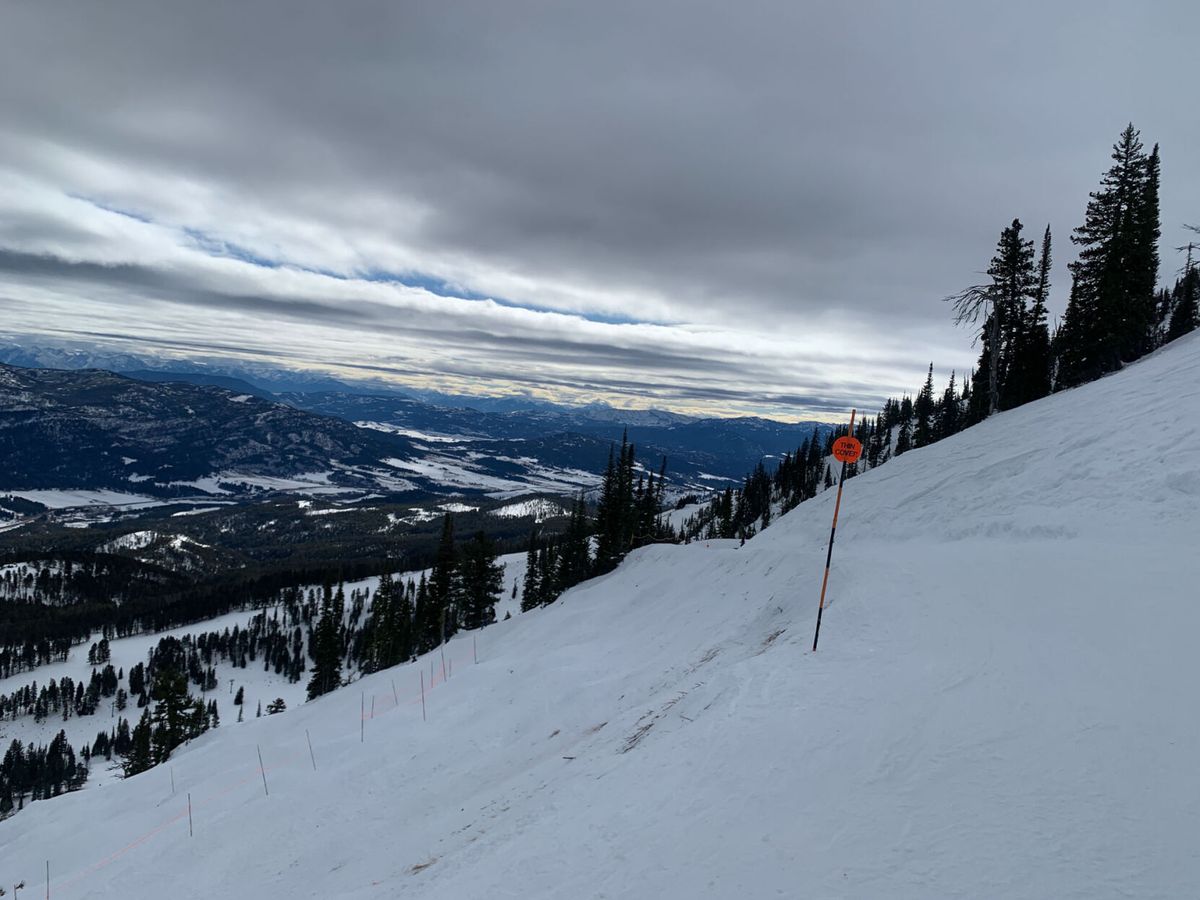
Here in Montana, while we complain about bad snow years at Bridger, it's easy to distance ourselves from the life-threatening heat waves and southern hurricanes. But remember that western North Carolina was previously considered a climate haven. “I’ve heard a whole lot about climate change but I don’t know a lot about it,” said Joe Bryant from Swannanoa, North Carolina. He showed me around the muddy foundation where his house had stood before it was swept away by flood water. “I’m ready to learn about anything right now. I’m tired of damn sleeping on the ground.”
Does the prospect of losing your home, like Bryant, give you anxiety? Good. Get scared. Climate change is no longer a matter of good and bad skiing. It is a matter of human survival. For Americans to make the necessary systemic changes to curb climate change, we need bipartisan political consensus that climate change is the biggest threat to our nation and our world. As Bullard said: “There are more catastrophes in our future.”
Comments ()