
La Niña signals snowy days ahead for Montana skiers
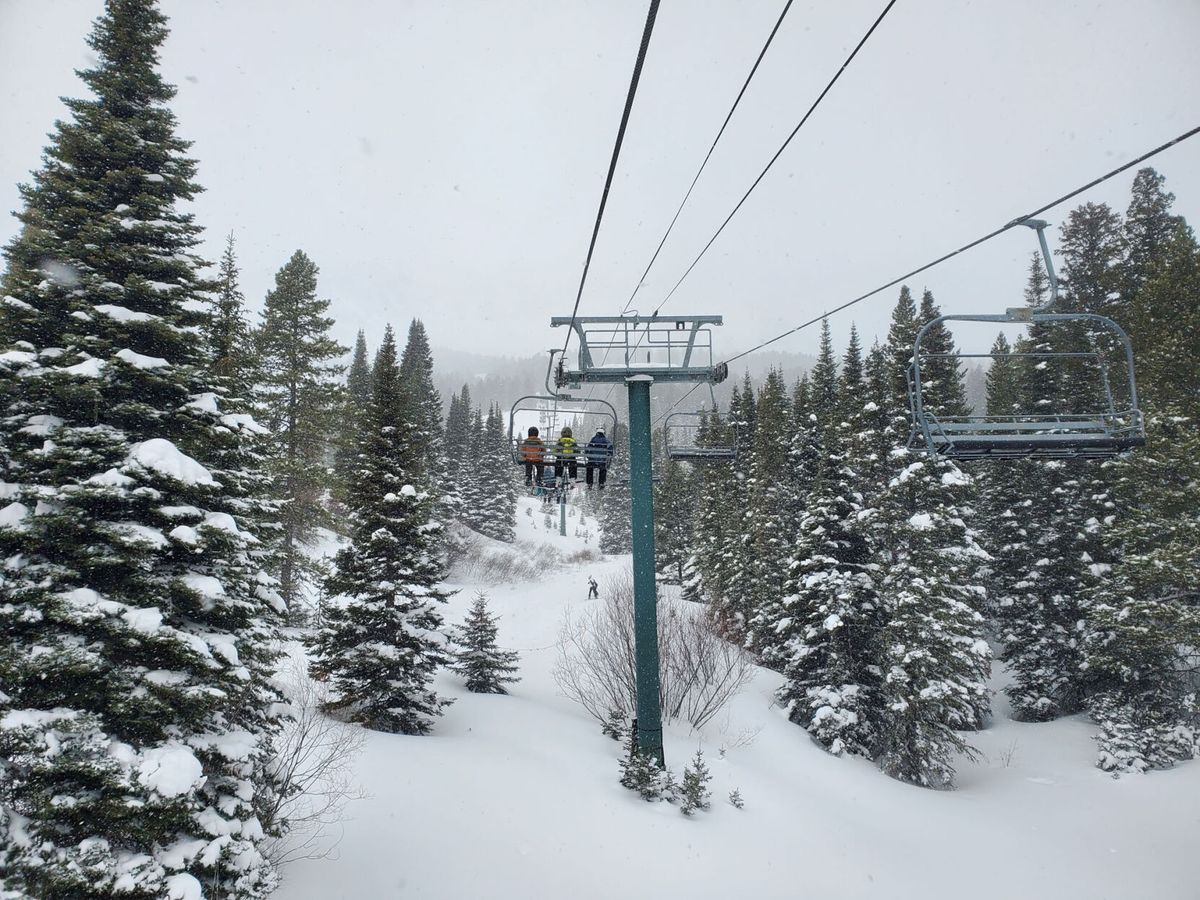
With snow already coating the Bridgers, the excitement for ski season is building on campus. For skiers and snowboarders alike, the potential for a shift to a La Niña winter gives a promising outlook for heavier snowfall and a longer season. While the long-term snow forecast is largely unpredictable, 30-year statistics at Bridger Bowl and Big Sky continue to fuel excitement leading up to opening day.
As explained by the National Ocean Service, a La Niña cycle — part of the El Niño-Southern Oscillation (ENSO) — arises when ocean surface temperatures in the Central Pacific cool to below average. This is due to stronger trade winds near the equator, which draw cooler water from below the ocean’s surface and bring it to the top.
According to the World Meteorological Organization (WMO), the effect of this cooling on weather patterns varies depending on location. For the northwest region of the U.S., it often means cooler, wetter winters. The WMO predicts a 60 percent chance that the currently neutral system will transition to a La Niña cycle through the 2024-25 winter.
Data collected by OpenSnow — a weather forecasting service that focuses on snow reports and ski conditions — over the past 30 years shows that, on average, the snow water equivalent — measured as the depth of the water if the snow was melted down — for a La Niña cycle is five percent higher than that of the 30-year normal at Bridger.
The WMO predicts a weak La Niña cycle, making its impact on weather patterns potentially less extreme. Because of this, many forecasters are hesitant to predict a good or bad season. However, after the well-below-average snowfall documented by OpenSnow during last season's El Niño, returning to La Niña could provide a hopeful start for winter activities.
Outside of promising weather patterns, in-progress expansion projects at Big Sky aim to enhance the mountain experience and bring as many people as possible to the resort.
According to the Big Sky website, amenities coming for the 2024-25 season include the Madison 8 Chairlift — allowing double the uphill capacity and reducing ride times — and the Lone Peak Tram Lower Terminal Enclosure to keep tram cabins in pristine condition when not in use.
While no new projects have been announced at Bridger, many students still prefer a season pass at the local resort to one from Big Sky. “It’s just convenient,” commented MSU student Martina Lobo when asked why she chose to get her pass at Bridger. Only 30 minutes from campus, the accessibility and affordability of Bridger over Big Sky are decisive factors for students looking to buy season passes. Projected opening days are Dec. 13 for Bridger and Nov. 27 for Big Sky.
For skiers, snowboarders or just winter-weather enthusiasts, the return to a La Niña winter for the fourth time in five years opens the possibility for longer ENSO cycles in the future and higher-than-average snowfall throughout the season. Students and community members looking for a return to the Montana ski scene should hold out hope for a quality winter season.
For more information on the changing weather cycles, visit the WMO website or the OpenSnow forecast page at https://opensnow.com/news/post/2024-2025-montana-winter-forecast-preview.

Comments ()