
Landscaping and Grounds Crew sprout a fresh variety of produce around campus
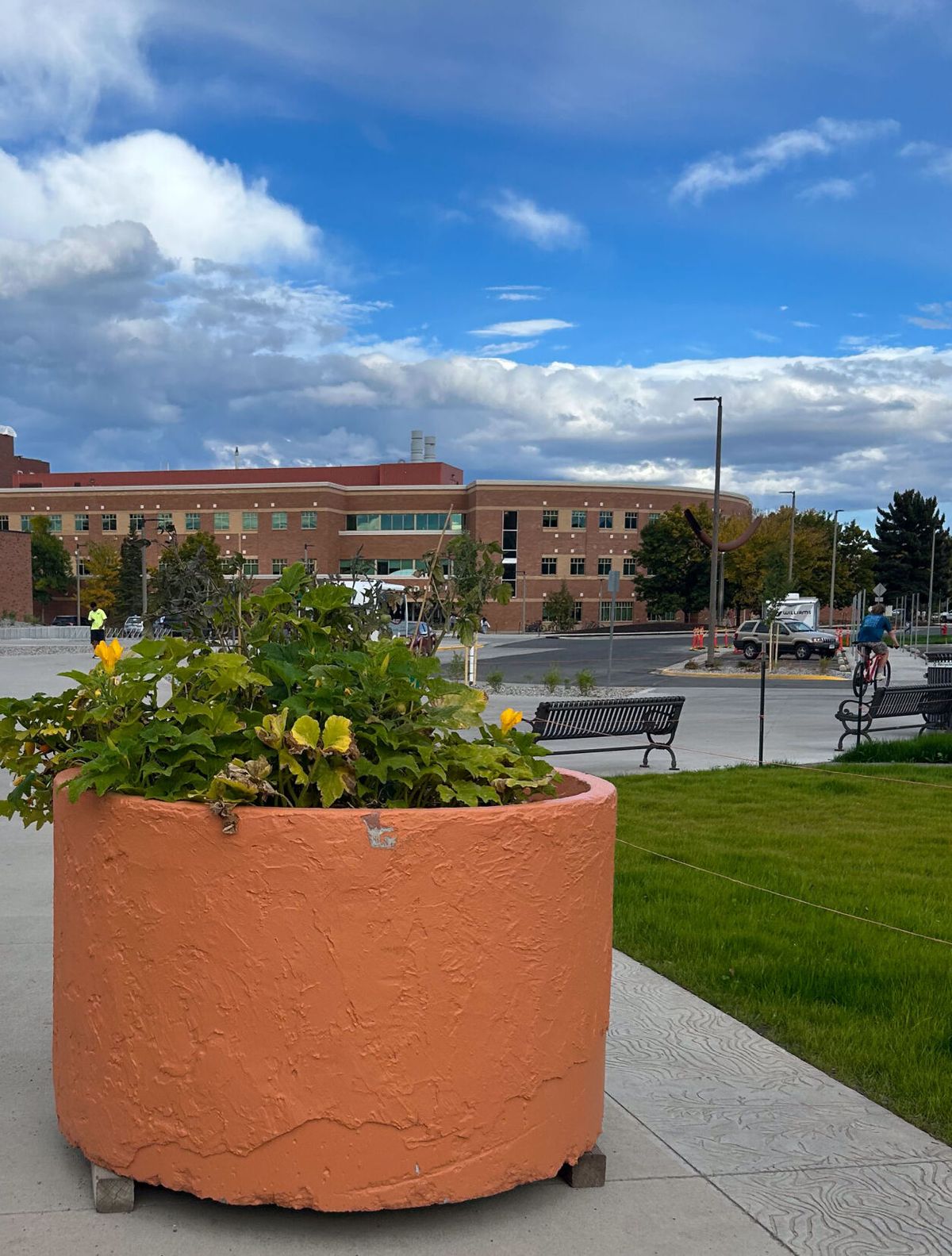
Amid the grassy lawns and patches of delicate cosmos blossoms, organic vegetables, fruits and herbs are growing all over campus. This produce is part of the edible garden program and is available for anyone to harvest.
“People can find them and utilize them, and it's like a neat treat,” said Gavin Ball, an area tech and operator for MSU’s landscaping and grounds crew who has been working to expand the program in the last few years.
The edible garden program, designed to integrate biodiversity, has been going on for the last 10 years. During his time at MSU, Ball has worked with the rest of the landscaping and grounds crew to integrate more types of edible plants into the flower beds, boxes and pots throughout campus.
The goal is to foster biodiversity and offer students a way to connect directly with their surroundings. “It's not one or two people, it's a whole village that makes the community garden part come together,” he said.
Landscaping and Grounds Manager Jim Waterman said the landscaping team aims to create opportunities for the campus community to interact with the landscape and not just look at it.
“This gives [students] the opportunity to be a part of it and mix up the aesthetic value of campus and make it useful,” he said.
“There's a lot of different varieties of squash out there, cucumbers, tomatoes, lettuce, beans, some peas in the fruit section, apples, plums, raspberries, pears — I'm sure I'm forgetting a bunch of them — but there's ultimately quite a variety out there,” Waterman said.
Ball said seeing students interact with the garden has been really cool.
“Knowing where your food comes from is important,” Ball said. “This is something that you can do in your apartment, you could grow some vegetables in a pot and it's not super difficult. You just gotta get your hands dirty and get out there and do it.”
According to Waterman, the landscaping team has been working with culinary services to provide the dining halls with fresh produce, which is grown, in this case, right outside of their doors. For example, he said the garden beds outside of Rendezvous Dining Pavilion were transformed this past year to grow radishes and potatoes, which found their way onto students’ plates.
An integral part of the project is creating accessibility to fresh produce and encouraging students to take it when they see it, according to Ball.
“If you can find it and it's ready for harvest, have at it,” he said. “The only thing I would ask is just don't abuse it. Take what you need, don't go through and take every single thing. Leave a little bit for somebody else.”
Aesthetics and student interaction are not the only goals of the project. According to Waterman, the cost of planting vegetables is one-third of floral costs, allowing them to provide students an opportunity to engage directly with where their food comes from at a lower cost than it would have been otherwise.
In a move to diversify the gardens further, Ball has been working with a research center in the Bitterroot Valley that designs hybrid plants. Specifically, Ball planted a unique strain of honeyberries near Rendezvous.He said he hopes to purchase more to plant around campus in the coming years.
“I ordered some from them last year and they're doing really well,” Ball said. “They're the first berry to go in the spring, first one to ripen and they're pretty tasty. They have, like, 10 times the antioxidants that a blueberry has.”
Senior Area Manager Craig Bennick said the project also helps address the growing issue of student-made walking paths that tear up the grass.
“It's no secret around here, but we have a lot of cut-throughs — cattle paths — that create problems,” he said. “I can't plant stuff necessarily in the turf. I'm living with the fact that we get worn-out areas where I can't keep the students on the sidewalk.”
Bennick said these paths were especially a problem near the Strand Union Building, where students kept walking through the mulch. He said that since Ball planted raspberry bushes there, students no longer walk through it.
“[In landscaping] you're trying to find things that work and a lot of this stuff that works comes about because something else did,” he said. “I take pride in the fields — I'm a turf guy — but it's really good when we can diversify and have different things throughout campus.”
Waterman said he hopes to expand the project in the coming years and increase the number of available produce opportunities for the campus community.
“The plan is to continue to grow this program,” he said. “We are hoping to get some more planters on campus — and not just the planters, beds too. We're growing the program. We love it. We think it's beneficial to us and the campus.”

Comments ()