
Let it fly this fall
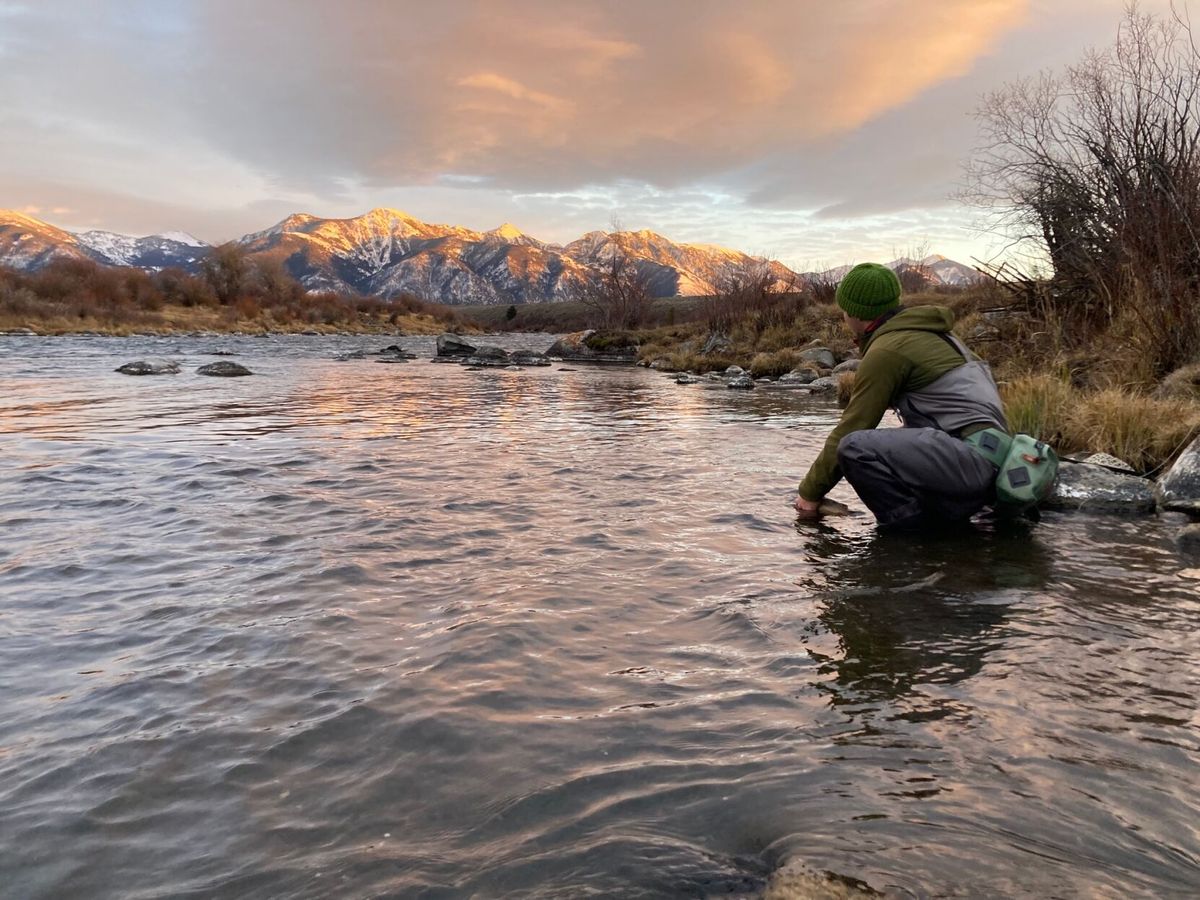
Late fall in Montana may be the greatest time of year for local anglers. Warm enough weather and sparse attendance at even the most popular fishing access sites make November and early December a perfect time to experience wild trout fishing at its pinnacle. You’ll get rained on, sure. Probably snowed on, too, and the wind will blow hard enough to make the river flow uphill. But the fish are still hungry, and the water temperatures are warm enough to provide nymph, dry and streamer eats on any given day, so patch up those waders and get out there.
This fall, in particular, anglers in the Bozeman area have been blessed with daytime highs in the 40s and 50s. What does that mean for fishing, you ask? It means that water temperatures on local rivers are holding steady in that magical window between 35 and 45 degrees Fahrenheit. Trout are cold-blooded creatures, and since they live in the water (duh) the water temperature matters much more to them than the air temperature. Stream temperatures around 40 degrees are warm enough for trout to chase down streamers and move further for nymphs and dries, whereas colder temperatures make fish sluggish and less willing to move to a fly.
Trout increasingly feed subsurface in late fall, gorging on midge, mayfly, stonefly and caddisfly larvae along with fish eggs from spawning brown trout and mountain whitefish. Eggs hold tons of calories in a dense, free-floating package and are a favorite for trout when available. Additionally, baitfish such as sculpins and small trout are in the river year-round and are an important food source for large, predatory trout. A go-to set up this time of year is an indicator-nymphing rig suspending an egg imitation along with a small mayfly or midge pattern. Make sure to add and subtract weight on your rig in the form of split shot depending on the speed and depth of the water you are fishing. Trout tend to move into slower, deeper water as stream temperatures drop, but as long as temps stay in the 40s, faster runs and riffles are still worth fishing.
If you decide to head out to a local stream this fall, keep in mind wild brown trout are currently spawning in our local waters. Brown trout use their tails to clean a patch of gravel in the streambed and dig a depression where they lay their eggs. This fish-nest is called a “redd” and it houses the future of our fisheries. Spawning trout and their redds are incredibly vulnerable and should be avoided by anglers at all costs. If you see large trout in shallow water and patches of light-colored gravel, keep your distance. Disturbing a redd could compromise tens of thousands of eggs.
Late fall is a magical time to be on the water, but don’t take my word for it. Get out there and experience it for yourself on the multitude of world-class rivers we’re so lucky to have in our backyard.


Comments ()