
Limited Opportunities For Humanities Majors
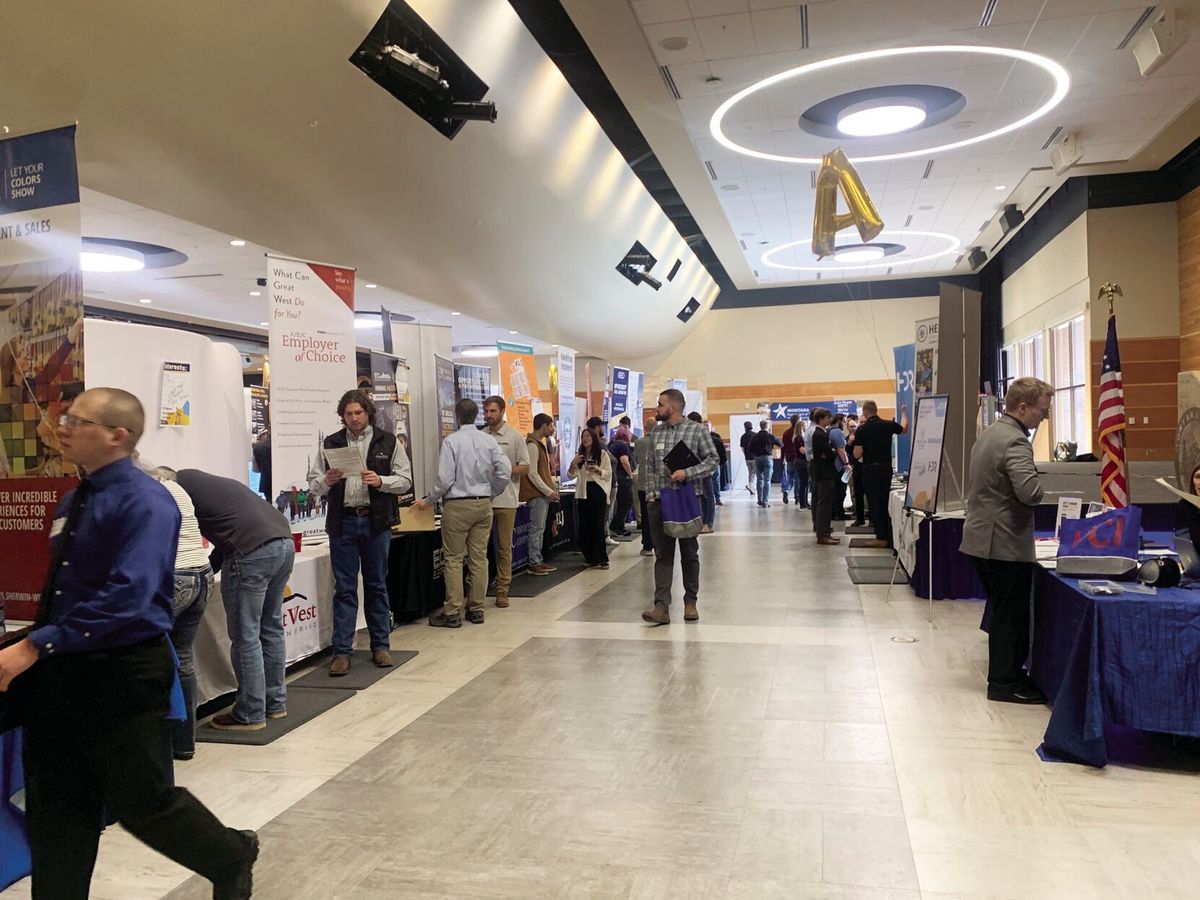
MSU’s Career and Internship Fair is advertised as the time to build your network and future corporate ties, to prepare for the future. Because it’s about time we all start thinking about our futures — at least if you’re in the engineering and business schools.
If, like me, you are in a humanities degree — English, psychology, art, history, etcetera — the best thing the fair could’ve given you is a sticker that says “F*ck Yourself” in happy yellow bubble letters. I immediately stuck it on my water bottle.
I walked into the Career Fair on Thursday with high hopes. I left barely fifteen minutes later, disappointed. The humanities were sectioned into Leigh Lounge, a decorous room with an ashless fireplace and chairs better looked at than sat in.
I was told to write my name, major and year on a nametag, seemingly so that employers would have an easier time turning me away. Of the six tables I saw on Thursday, two were engrossed in conversations, one was on their phone, two weren’t even worth remembering and the last was for Oh Hi Collective, where I got the sticker.
The representatives at Oh Hi Collective seemed, for the most part, like they wanted to talk to people, although the two women who were working there — they didn’t even introduce themselves to me — had their spiel rehearsed and I apparently wasn’t the type of candidate they were interested in.
I wasn’t the only one who felt this way. Sophomore Sydney Aslin, a psychology major with a minor in writing, also entered the Career Fair with high hopes. “We walked in. It was super busy, a lot of stuff. I saw nothing for psych majors. There was only one [internship] in Helena that was available, everything else was mainly engineering and military-based. And there was absolutely nothing for writing,” she said.
She told me she went on Thursday as well and left Leigh Lounge to find better prospects in the sections designated for other majors. The Union Market looked like a zoo, with people propped up everywhere. Inside the Alumni Lounge were employers looking for engineering and business majors. Though it was smaller than Leigh, there were also six tables. The only free table was for a materials firm and the woman was very sweet — if not direct — about turning me away. All the other tables were busy in conversations or spiels that still felt rehearsed, but more welcoming.
While Aslin and I experienced difficulties at the Career Fair, senior Joe Mattson had an entirely different experience. Mattson is a political science major with a minor in sustainability. Even though he said he was “a little bit concerned,” he came in with a game plan. He downloaded the Career Fair Plus app, which helped him decide which tables to visit. While he was only there for an hour, he was able to hand out his resume to a couple of businesses, even though he said there wasn’t anything “too political science-ish.”
Mattson seemed to stick mostly to the Union Market, not visiting the Leigh Lounge. While I avoided the mess of people, Mattson jumped right in and was able to find connections. “There are people who are open to talk; definitely opportunities, you just had to talk to people,” he said. It seems the key to the career fair is to look for positions outside your degree and understand how to market yourself.
Part of this year’s issue with the Career Fair was its cost of entry for employers. This year, MSU charged businesses $500 to get a table for one day, as well as $65 for every additional representative at each table. This cost created a barrier for many businesses looking to join the fair.
Carl Anderson, the campus organizer for MontPIRG’s Bozeman location, discussed the impact that the pricing had on his organization, a usual attendee of the fair. Now coupled with the pricing, the fair is “not a convenient time and not a convenient price, it doesn’t end up being worth it for us in the end.”
While many bigger, more established businesses could afford the pricing, many smaller and newer businesses found themselves out of luck, which in turn meant many students pursuing less popular degrees missed valuable opportunities.
The MSU Career Fair ended up being much less than it promised for many students. It seems to me that the humanities degrees are offered for good looks, but are rarely given the appropriate care and use needed to validate them. Between an already low outreach for degrees outside of business and engineering and the new cost of entry, it was no wonder the humanities didn’t find more willing employers to participate.
So until MSU makes good on taking care of all its students, be like Mattson and plot the best ways to make yourself appealing to jobs you might not have otherwise considered.
Comments ()