
Lorca Smetana’s path to resilience
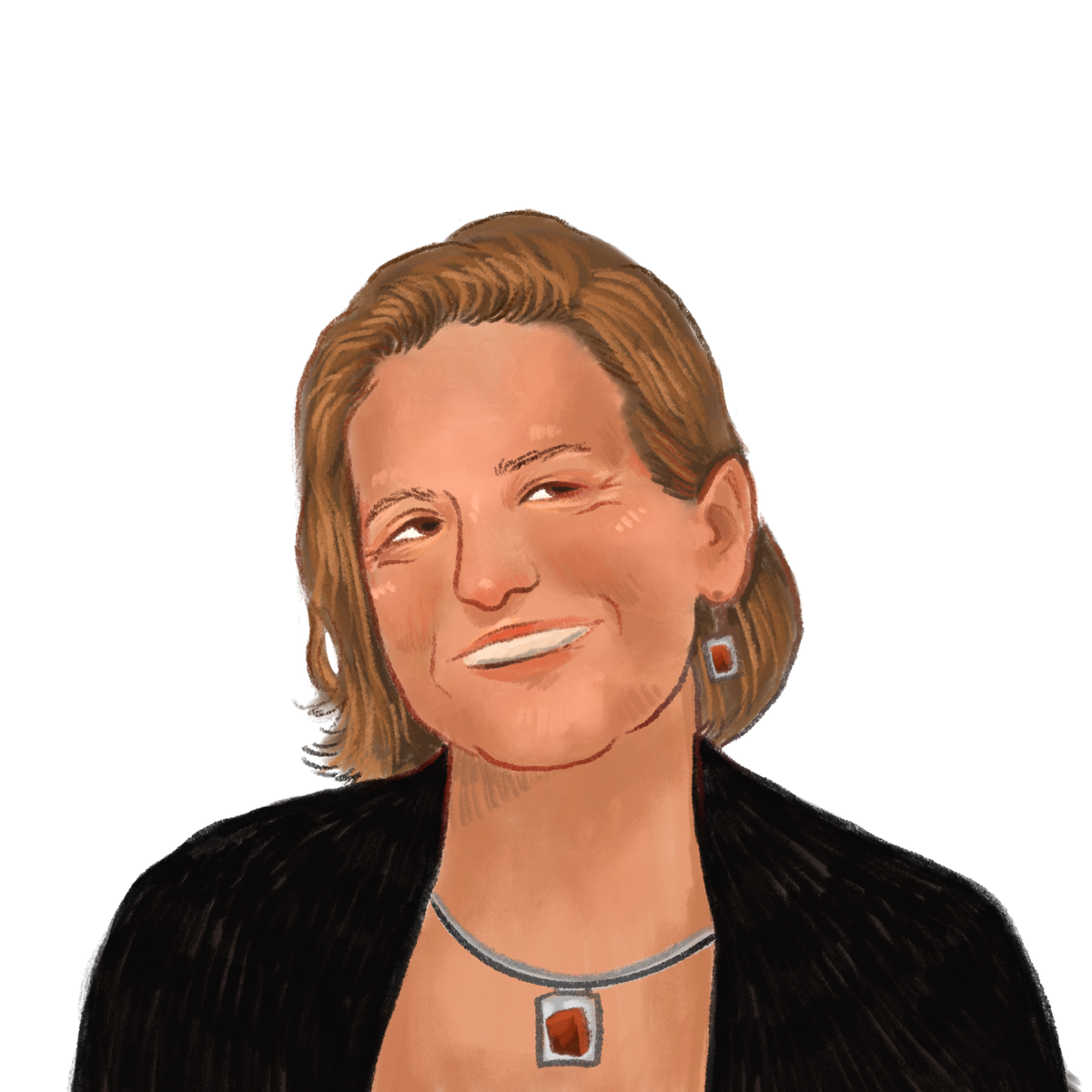
On an early autumn afternoon, Lorca Smetana gazed across the aspen grove bordering her Bozeman farm. With her dog in her lap, she explained the importance of that very thicket.
“Being with — in any different context — people who were either burning out, or who were overwhelmed or who were grieving, my first response at that point was, ‘This person needs a day out here. They just need a day on the river. They need a day in the aspen grove,’” she said.
Smetana is originally from Oregon and grew up in a family of mountaineers. She has made her career building resilient people. Aside from a tenure teaching at MSU, Smetana speaks at events and provides individual and group workshops, which include mapping the body and mind as an ecosystem.
Her work in resilience training stems from her lived experiences. Smetana was involved in the 1986 Mount Hood mountaineering disaster, the second-largest mountaineering accident in North American history, according to a 2018 article from Outside Magazine.
Due to an incoming storm, the group of 20 climbers split up, with some heading back before the weather hit and others continuing toward the summit. Smetana was a part of the group that turned back.
The remaining climbers were thrown off course, and some attempted to shelter in place while others sought help. There were nine fatalities, seven students and two administrators, according to the Outside Magazine article.
Smetana identified this event as the beginning of her resilience journey. “I started collecting a toolbox for myself after the climbing accident,” she said. “And that toolbox was used and iterated and added to ever since then.”
Smetana uses the outdoors as a key aspect of healing from trauma. “Nature has found an infinite variety of solutions to things that show up, and the result is when nature is given its ways, there is often a great deal of efficiency, beauty, elegance and effectiveness,” Smetana said.
She noted that numerous studies confirm her methods — humans maintain better health and healing when the outdoors are involved. “The metaphorical elements of nature provide a learning mechanism for human brains that is easy to take in and that is universal. This is a language that everybody speaks,” she said.
“The best way to teach [natural resilience] is to frame any existing system as an ecosystem,” Smetana said. “How healthy is this ecosystem overall? How likely is it to have well-being through time?”
One of her main maps of the human ecosystem is her lake method, through which she frames mental well-being as a lake. Some things fill and others drain the lake’s water levels. She explains that one cannot make commitments when the lake is running dry; there must be equal or more replenishing aspects than draining ones.
Smetana defined resilience as the presence of joy regardless of life’s obstacles. “It is important to understand that endurance is not resilience. Joy cannot persist in endurance; it's an indicator species of resilience,” she said.
The first step to building a resilient person is to look at one’s own life and explore the mind, according to Smetana. “There is an enormous amount of suffering out in the world right now that exists because of an incapacity somewhere to be with what is,” she said. “And so expanding our capacity [starts with] getting curious. Actually, first, curious about ‘how good am I at being with what is?’”
Smetana explained how her trauma from the climbing accident called her to reckon with her new reality. “[My trauma] tended more toward the direction of having a pretty strong narrative for a number of years, internally, of having something to prove. That I somehow had to prove that it was okay, that I survived when my friends didn't. That I was living a worthy life,” she said.
According to Smetana, understanding that the accident was a tragedy rather than a predestined event helped her begin the healing process. “[My father] wrote me a letter that basically said, just know that this was an accident in the most tragic and chaotic sense. That you were not meant to live, your friends were not meant to die. And that was so beautiful and important for me right away,” she said.
The growth and healing process is easier said than done, and people often struggle to heal on their own, Smetana said. Providing people with tools allows them to find joy and growth, which encourages healing and builds resilience.
“I think one of the most courageous things you can do is ask for help,” she said. “Fundamentally, any ask for help is a tacit admission that you are not alone and not perfect.”

Comments ()