
Montana FWP encourages hunters to test for CWD
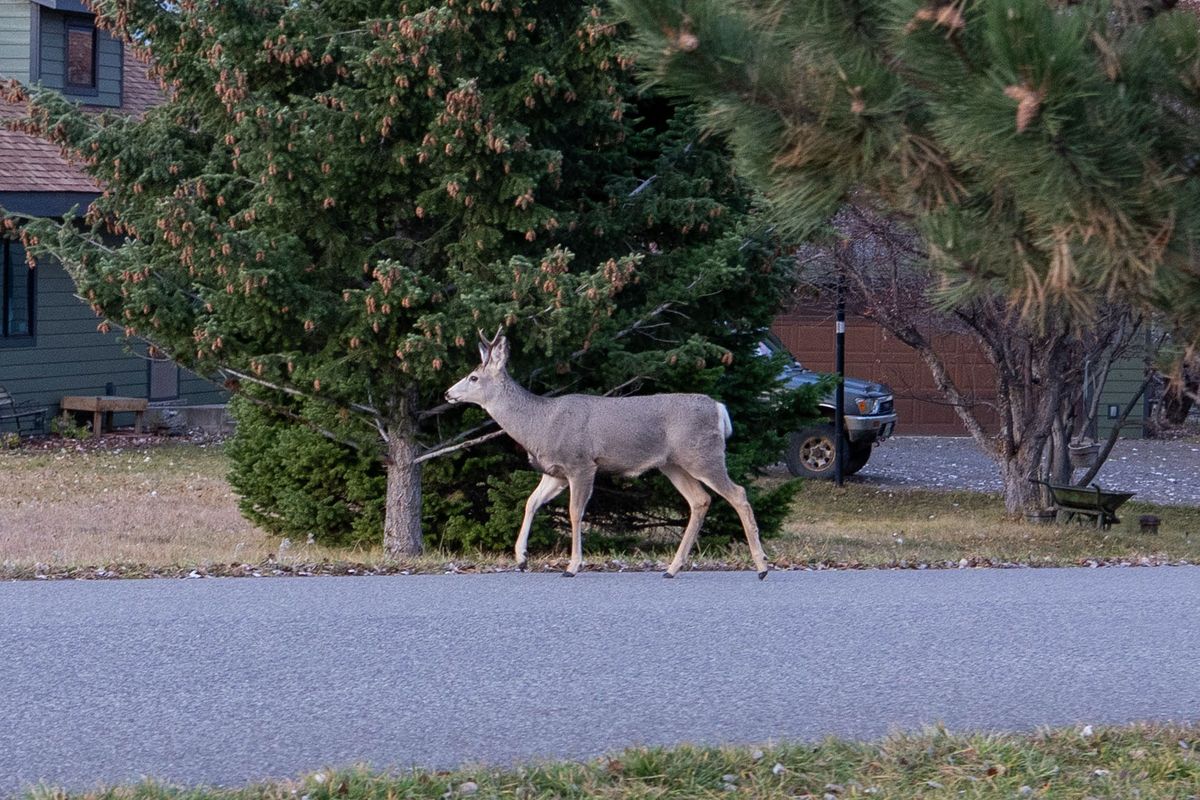
Chronic wasting disease (CWD), sometimes called ‘zombie deer disease,’ was first identified in Colorado in 1967. Since its discovery, CWD has been found in 36 U.S. states, including Montana in 2017.
CWD is a fatal neurological disease that belongs to a group called transmissible spongiform encephalopathies, which are responsible for mad cow disease in cattle, scrapie in sheep and Creutzfeldt-Jakob disease in humans. CWD affects members of the deer family, including elk, moose and caribou, according to the Montana Fish, Wildlife and Parks (FWP) website.
The Bozeman office of Montana FWP held its first CWD sampling workshop on Wednesday, Nov. 12. Its purpose was to encourage hunters to test for the disease by educating attendees on CWD and demonstrating proper sampling methods. The workshop featured two live sampling demonstrations and allowed hunters to practice on their own.
Montana FWP Region Three Coordinator Jasmine Russell helped lead the event alongside other regional coordinators. According to Russell, hunters were encouraged to bring their own harvests, but supplies were provided for those who needed them.
The goal of the workshop was to give hunters the practice needed to feel more comfortable collecting their own samples, according to her. “This workshop was great for individuals that maybe didn't want to pack out the whole head or wanted another option outside of having us do it,” Russell said.
“Hunters are really, really essential in our management of [CWD],” said Montana FWP wildlife biologist Bevin McCormick. “Getting their animals tested allows us to have the information we need to make management decisions.”
In late stages of the disease, signs include skinniness, disorientation and drooling. However, due to its slow-acting nature, sick animals often do not show signs of CWD. This increases the risk of exposure to healthy animals, according to McCormick.
“Generally speaking, we do not see outward signs,” she said. “Oftentimes, these deer can be sick for years without looking sick at all.”
Accurate testing for CWD can only take place after an animal has died, making hunters essential for tracking its spread, according to McCormick. “If we didn't have hunters, it would be really difficult to manage,” she said.
In addition to monitoring CWD, McCormick said prevention methods are equally as important. This includes proper disposal of animal carcasses in a class II landfill if they are removed from the kill site.
Those who want to collect their own samples can use any knife and a ziplock baggie, according to Russell. Hunters should use knives that they are willing to potentially bleach afterward, as that is the only known way to denature the prions that cause CWD.
The animal head can also be brought to a collection site where FWP can assist with sampling.
During sample collection, the retropharyngeal lymph nodes — small glands located in the head and neck area of the animal — are removed. The glands are then mailed to the Montana Veterinary Diagnostic Lab in Bozeman, according to Russell.
Because CWD is linked to age, sex and species, this information is also recorded during sampling, according to her. Hunters are required to provide the location to the square mile of where the animal was harvested.
“We have to have a location in order to test because that's the most important part — to know where CWD is,” Russell said.
All test results are made available to the hunter, according to her.
Though there is no known transmission of CWD to humans, the Centers for Disease Control and Prevention (CDC) recommends hunters not consume the meat of animals that test positive. Montana FWP authorizes the disposal of meat in these cases and allows for replacement license requests.
Last year, around 10,000 samples were collected across the state and tested for CWD.
“Because it's a slow-acting disease and it's really delayed, we need many, many years of data to even begin to inform management,” McCormick said.
According to her, in states like Wyoming — where CWD has been tracked longer — there are more data available to indicate which management techniques are most effective and which need further exploration. “In Montana, we're just kind of getting to a place where we're able to have enough data to start looking at those trends,” she said.
McCormick and Russell said continued hunter participation is essential for managing CWD.
“We need samples every single year [and] we need many years of data to really understand how our management is effective,” McCormick said. “We definitely couldn't do it without our hunters, so it's really awesome that people are coming in, bringing those samples and participating in our program.”
To learn more about how to test for CWD, visit https://fwp.mt.gov/conservation/chronic-wasting-disease/get-your-animal-sampled.
To locate a class II landfill site in Montana, visit https://experience.arcgis.com/experience/6de1ebaa25c64c048ae162306940a5af/page/Map.
To learn more about CDC recommendations, visit https://www.cdc.gov/chronic-wasting/about/index.html.


Comments ()