
MSU professor teaches students to explore death without fear
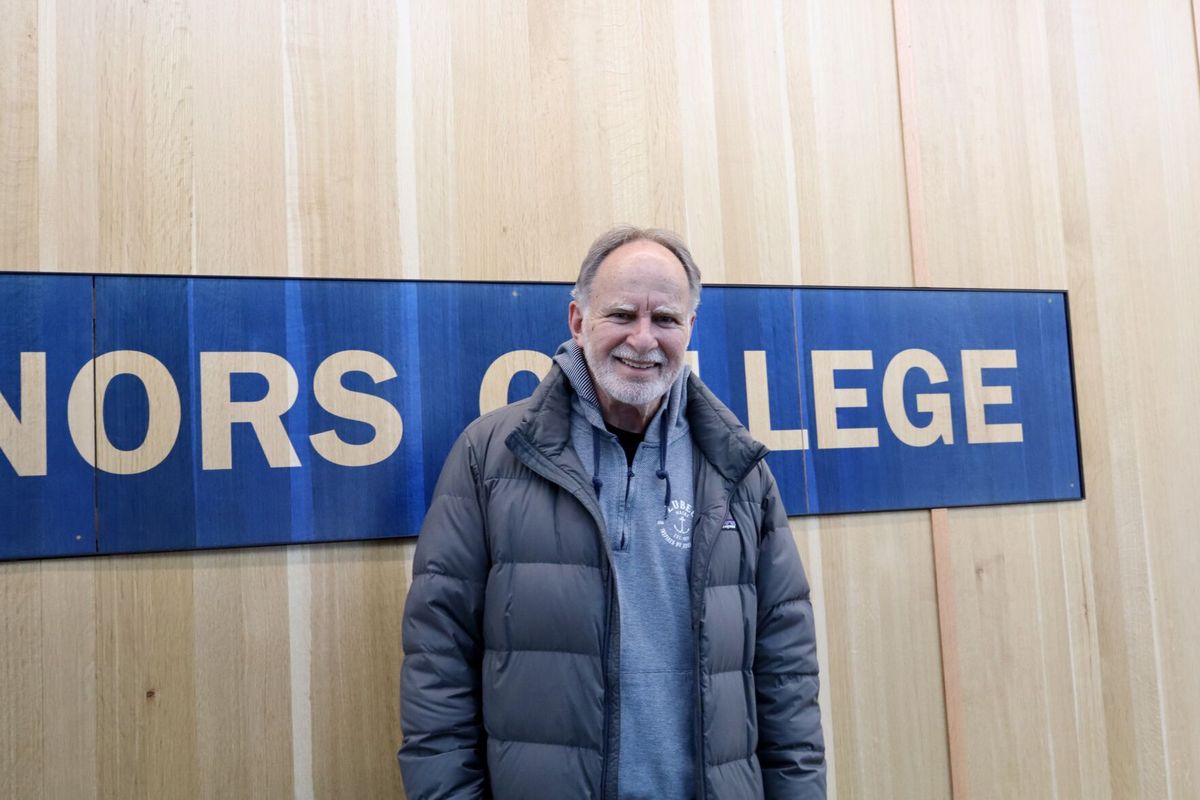
While many avoid conversations about death, Thomas Donovan — an Honors College faculty member at MSU — encourages people to face it with curiosity instead of fear.
Donovan began his career as a physiotherapist and later earned a Ph.D in psychology at the age of 60. He has spent the past 15 years in the Honors College, where he instructs Texts & Critics seminars and a course he personally designed called Death Becomes Us.
“[Death Becomes Us] involves philosophy; it involves science; it involves medicine. The premise of the class is, ‘We are the only critters that know we die in advance of dying,’” he said.
Donovan said thinking about death and its impact can cause humans to change their everyday behavior, influencing how they live their lives.
“We can wake up five minutes from now and think about our death. It's available to us 24/7, the fact that we're going to die,” he said. “That puts a lot of stress on humans, and it affects our behavior. So, the class sort of plays around with, ‘How does [awareness of death] affect our behavior? Or does it really at all?’”
While Donovan is highly regarded by his students, he said teaching was not always his career plan. Before coming to MSU, he spent almost 20 years working as a physiotherapist for athletes in California. Over time, the physical demands of the role caught up with him, prompting a career shift.
“I was looking for a position that had more brain stuff going on as opposed to physical stuff,” he said.
Donovan said Death Becomes Us normally has a waiting list of 80 to 100 students, but he only accepts around 20 students each semester to maintain an intimate, discussion-based setting.
“It's a very popular course, which surprised me. I wasn't sure that anybody would be interested in death and dying, but I've been proven wrong over and over again," he said.
Donovan was first exposed to death at eight years old when his father passed away. He said what frustrated him most was knowing that his father had died, but seeing the adults around him avoid talking about it. It wasn't until graduate school when he read “The Denial of Death” by Ernest Becker that those early experiences began to make sense.
“If I said something, they just shut it down, or mostly they just ignored it. And that sort of planted some seeds somewhere,” he said. “Once I read that book, all the pieces fell together.”
“The Denial of Death” is an award-winning book that examines how the fear of death significantly affects human behavior and, by extension, civilization as a whole.
“It was like one of those scenes in a movie where the person throws a book or something across the room, and all the lights go on, and it's sparkly and it's an a-ha moment. And that was when I just immersed myself in mortality,” Donovan said.
He also became a certified death doula in 2025 through the University of Vermont. Death doulas are hired by individuals or their families to help with the difficult parts of grief throughout the dying process.
"It's rather amazing, I think. I've been called to a couple of people's homes and [the responsibilities] could range from anything like reading poetry or holding someone's hand,” he said. “It's like an end-of-life helper.”
“My death doula certificate — it's a gift from me to my community. I'm not hiring myself out; I'm volunteering myself out,” he said.
Donovan said he is drawn to what death can teach you.
“One thing I’ve learned by studying the impact of death: It's sometimes [the] most amazing, beautiful process. If we can not be afraid or scared, there's a richness in conversation, there's a richness in memories,” he said.
For people who are afraid of death, Donovan offers his consolation. He said grief can be an intense and isolating experience for families and it is important to meet that pain with empathy and compassion.
“I might say, ‘Can I hold your hand?’ I might say, ‘What's going on? How are you feeling right now?’ I want to draw them out of a fearful position,” he said.
On his office window ledge, there sits a wooden carving of Buddha crying into his hands, a gift he received from a friend in France during a difficult time in his life. He said it reminds him that grief is universal and no one goes through it alone.
“He gave me that little statue and said, ‘Look here, even Buddha suffers, even Buddha cries, so pay attention to that,’” he said.
Comments ()