
New York Times Games Are the Best Time-Wasters
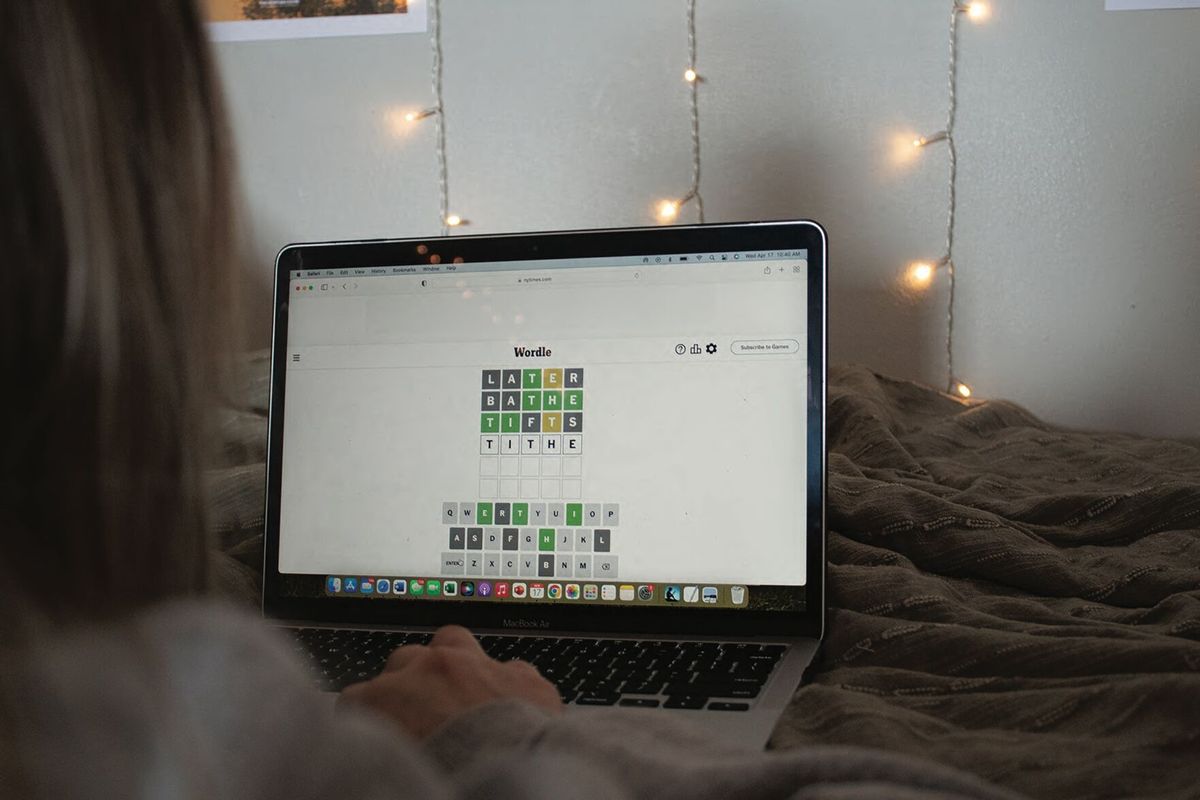
For nearly a 100 years, the New York Times (NYT) has challenged readers with crossword puzzles in their daily papers. In recent years, they’ve created many online puzzles which have exploded in popularity. Games like “Wordle,” “Connections,” Spelling Bee, “Mini Crossword” and more have become a part of people's daily routines. Lately, it’s become especially popular among college students.
For my friends and I, these games are a daily ritual in which we try to best one another and flex our puzzle-solving abilities. Now, rather than scrolling on my phone as a distraction, I attempt to complete the gauntlet of daily puzzles. I find these games to be far superior to any other form of time-wasting. I finish actually feeling good about myself. I believe there’s no better way to procrastinate schoolwork than playing the daily NYT puzzles — and I’ll tell you why.
I think we all have to accept that we’re typically not as focused and productive while doing school work as we intend, and inevitably we’re going to waste some time. So, if time-wasting is inevitable, why not use that time to engage your brain in a way that actually provides something back to you?
Most people spend their procrastination time mindlessly scrolling through an infinite feed of entertainment that provides no real value. NYT games, on the other hand, are engaging and fun. They’re also finite in the time you can spend on them — unlike doomscrolling, which can go on forever.
NYT puzzles also allow us to interact with others and share our experiences even when we’re not close. My mom and I send each other our “Mini Crossword” every day to see who can complete it faster. Even though I whoop her almost every day, my mom loves the games.
“I like that they spark my curiosity. I learn something, and they allow for some small interaction every day even though we’re doing it totally separately,” she said.
Being able to share those little things with my mom and friends is one of my favorite things because it keeps us connected.
She also made sure to say, “I feel very clever when I beat my son in the “Mini Crossword,” but I really gotta get better at it.”
Ha, yeah, good luck with that, Mom.
I also feel like the NYT puzzles can really help warm your brain up for the day. My usual routine starts with “Wordle,” as I can methodically take my time attempting to guess a five-letter word in six chances. Then I move on to “Connections,” which entails sorting 16 seemingly random words into four categories that you have to figure out based on that day’s words. Once properly warmed up, I move on to the timed “Mini Crossword,” which I try to complete as quickly as possible to see if I’ve got my mom beat that day.
After I’ve completed the games, I feel like I’m more prepared for whatever real work I've got — and I’m not the only student who feels that way.
Senior psychology major Isabella Patterson, said, “I would definitely say they’re the best way to waste time ‘cause they’re not mind-numbing, and it actually feels like you’re being productive even if maybe you’re not.”
Patterson, like me, enjoys the challenge and feels like it gets her warmed up for the day. “They bring out my competitive spirit, especially when I’m playing with friends, and it helps get my mind going,” she said.
NYT puzzles connect me with others, prepare me for the day and make my small, feeble mind feel sharp for a while. The next time you pull out your phone during class or a study session, I challenge you to open up a puzzle rather than TikTok or Instagram. NYT puzzles are an addiction — a healthy one — and once you start, you won’t be able to stop.
Comments ()