
Powwow brings Bozeman together to celebrate Native American culture
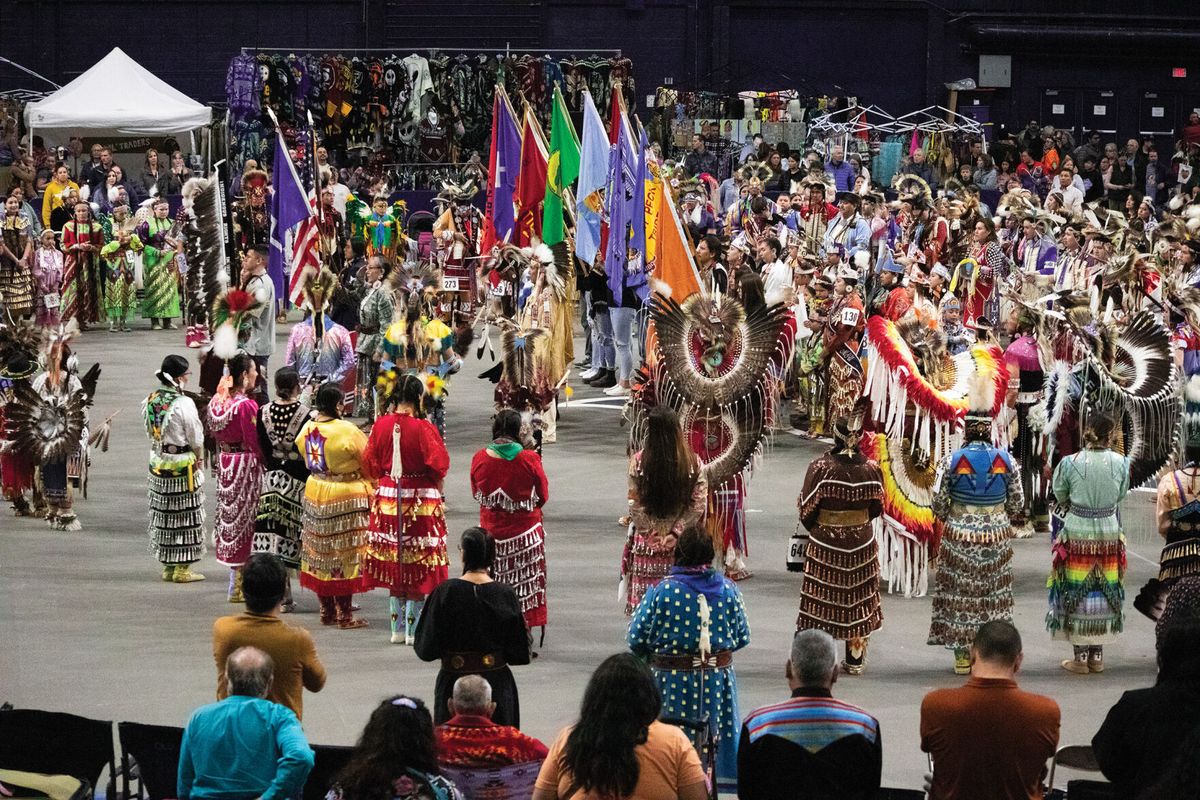
The rhythmic beat of the drums echoed through Brick Breeden Fieldhouse, mingling with dancers' vibrant colors and intricate movements as they gathered for the annual American Indian Council (AIC) powwow.
"In the past, we had all those enemies. We made powwows to find common ground with each other, to make friends and good neighbors out of each other,” said Head Man and student Tennison Big Day.
At the Brick Breeden Fieldhouse last weekend, the 47th annual American Indian Council powwow was hosted before an audience of hundreds of people.
The entire event was a flourish of sound, smells and colors. In the beginning, the bleachers were filled with a mix of performers and audience members observing traditional regalia adorned with bells which brought the fieldhouse to life.
The powwow was organized by the AIC at MSU to get people on campus involved with the Native American community, said AIC Secretary Paige Robertson.
"AIC recognizes that our Native American population has a lot of non-traditional students," said Robertson. “One of the AIC's roles is to accommodate those students through events inclusive of their children and families."
According to Ryan Old Crow, treasurer of the AIC, the council has worked diligently since the previous powwow to prepare for this year's festivities and a lot of outreach was necessary to find companies willing to contribute and hotels to accommodate visitors.
"All eight Montana tribes are represented," Robertson said. "People are also coming from Idaho, Wyoming, Canada, probably even Washington."
"[Powwows] celebrate that we still have our culture," said Old Crow. "I go to powwows, and I see dancers from different tribes, and I like to watch them dance. Because everyone dances in their way — people might group us — but we are all different," Old Crow said.
Everyone who attended the event was welcomed last weekend, and because of this, the environment was electric.
"We are one of the biggest collision powwows in the Midwest," Old Crow said. "And one of the only collision powwows that doesn't charge for admissions."
It was around 6:30 p.m. that Grand Entry started. The color guards entered the center of the arena on the sound of the drums, singing and the jingles of the bells. Groups of dancers followed, introduced by the Masters of Ceremonies.
After the opening prayer by Cheyenne-Arapaho Henrietta Mann, the Endowed Chair in Native American Studies at MSU, and the honors ceremony, it was time for singing and dancing contests to start.
Even when the drums stopped for a minute, the dance music filled the room. Dancing sunwise in circles, every performer, dressed in their traditional regalia, twirled and stepped in an orderly fashion.
According to the AIC Powwow program these powwows are of great cultural importance as they are a place for gathering. "I personally love dancing here." Old Crow said. "To show off our culture, to see others' cultures. It is a lifestyle for us."
"There are a lot of little universes at powwows," Old Crow said. "That's the fun part about it." Whether the audience wanted to stay in the bleachers, watch dancers, drummers and singers perform or travel and browse the vendors’ stands, the event seemed to be designed for attendees to experience it at their own pace.
Visitors were welcome to attend the basketball tournament at the Shroyer Gym and cheer for their favorite teams, visit the drumming groups, and listen closely to their songs. They even had the opportunity to dance with the performers and contestants in the circle at the center of the arena.
According to the Montana constitutional mandate, Indian Education for All, which was included in the program put together by the AIC and sold at the event, "the circle is an important symbol to Native Americans.”
“You will see that at many powwows, the dancers are in the center of a circle, the drums and the audience form a circle around them and the concessions and encampment form another circle around the gathering. This is symbolic of the life circle,” according to the program. “The powwow brings the circle of people closer to their family, friends and Native American culture.”
The love for each community member was evident and expressed clearly through the words of participants and attendants. "The common denominator is family. Family is really important, we all support each other. Powwows are a way to be together," Robertson said.
Big Day elaborated, "It means a lot to me because we have to make good neighbors and relationships. Many of us have the heart to give people another chance at life."
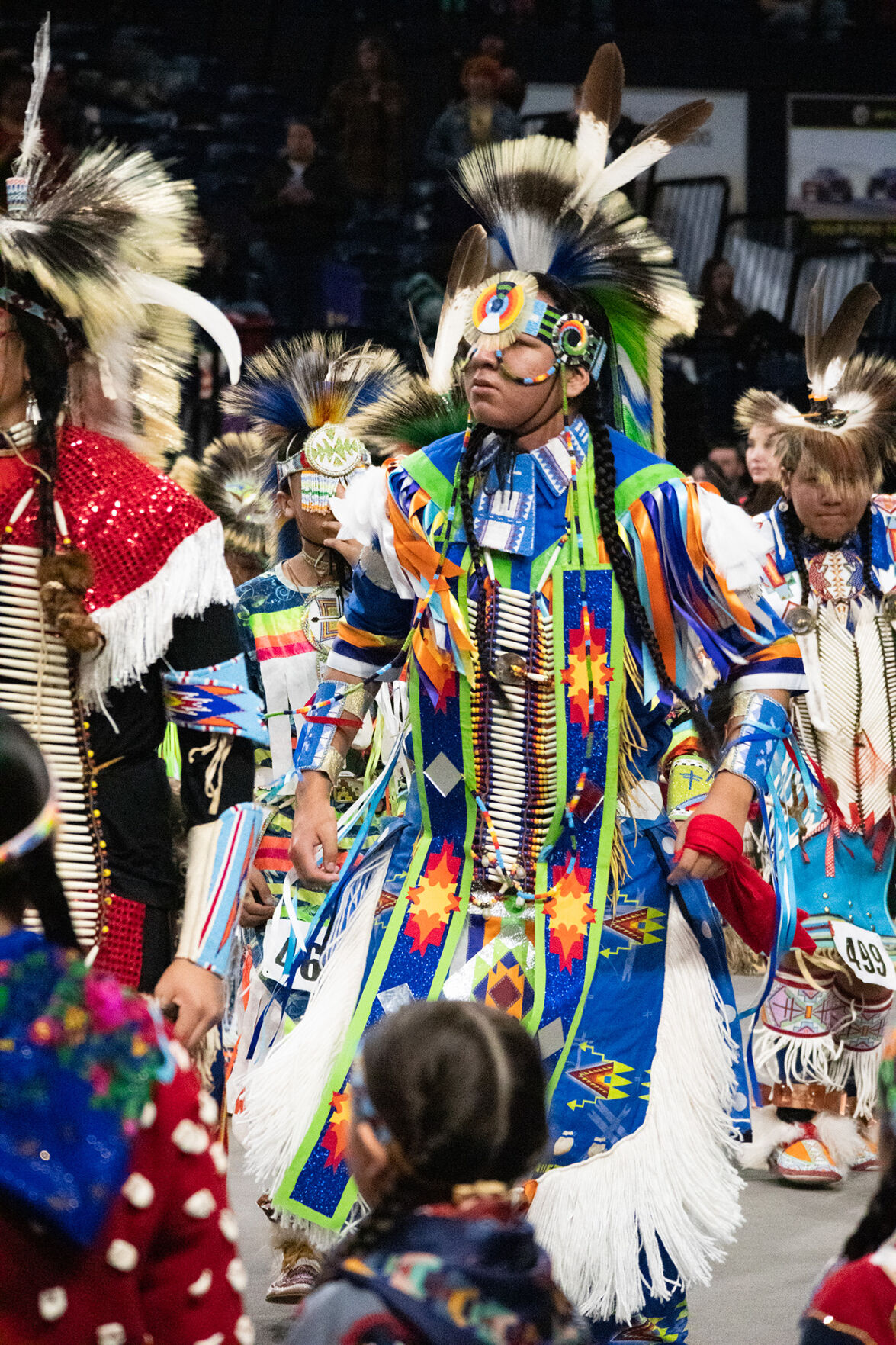
Head Dancers start the dancing. The dance Big Day performed, called the Men's Crow Style Special, is traditionally called Hot Dancing. This dance "goes way back in history," Big Day said. "My grandpa said the definition of what is now called Crow Style comes from what it is called Hot Dancing."
"We dance because we celebrate victories: going to college, finishing high school, going to war, achieving something. My grandparents raised me, and I was never raised to compete, but to Hot Dance and to celebrate all life on Earth," Big Day said.
Big Day said making the dance contest available for all ages was essential. "You always need to guide young people so they can succeed later," Big Day said.
This year the contest sponsored by Miss Indian MSU, Maleeya Knows His Gun, was the Men's and Women's Missing and Murdered Indigenous People (MMIP) special — a contest of great significance. As of the date of publication, the National Missing and Unidentified Persons System Department of Justice database, reports an estimate of 880 unsolved cases of missing indigenous people in the United States. Big Day said he liked the dance competition because of his mother’s role regarding the MMIP movement.
"I really like the MMIP dance competition. My adoptive mother was involved in the MMIP movement, and she devoted her life to it after my daughter was murdered by her mother," Big Day said.
Old Crow said he hoped the event provided a lens into Native American culture.
"I think I would like people to get out of their boxes,'" Old Crow said. "Peak into a little bit of our life before judging."
According to AIC, the 48th annual powwow is already in preparation and will occur on March 29-30, 2024. Save the date so you don't miss next year's festivities. You can contact the AIC at aicofmsu@gmail.com or on Instagram at @msu_aic.
In upcoming news, May 5 is Missing and Murdered Indigenous Women’s Day. The MSU Missing and Murdered Indigenous Peoples Student Association (MMIPSA) group promotes this day and you can find more information on Instagram @msu_mmipsa.
Comments ()