
Religion Has a Place on Campus
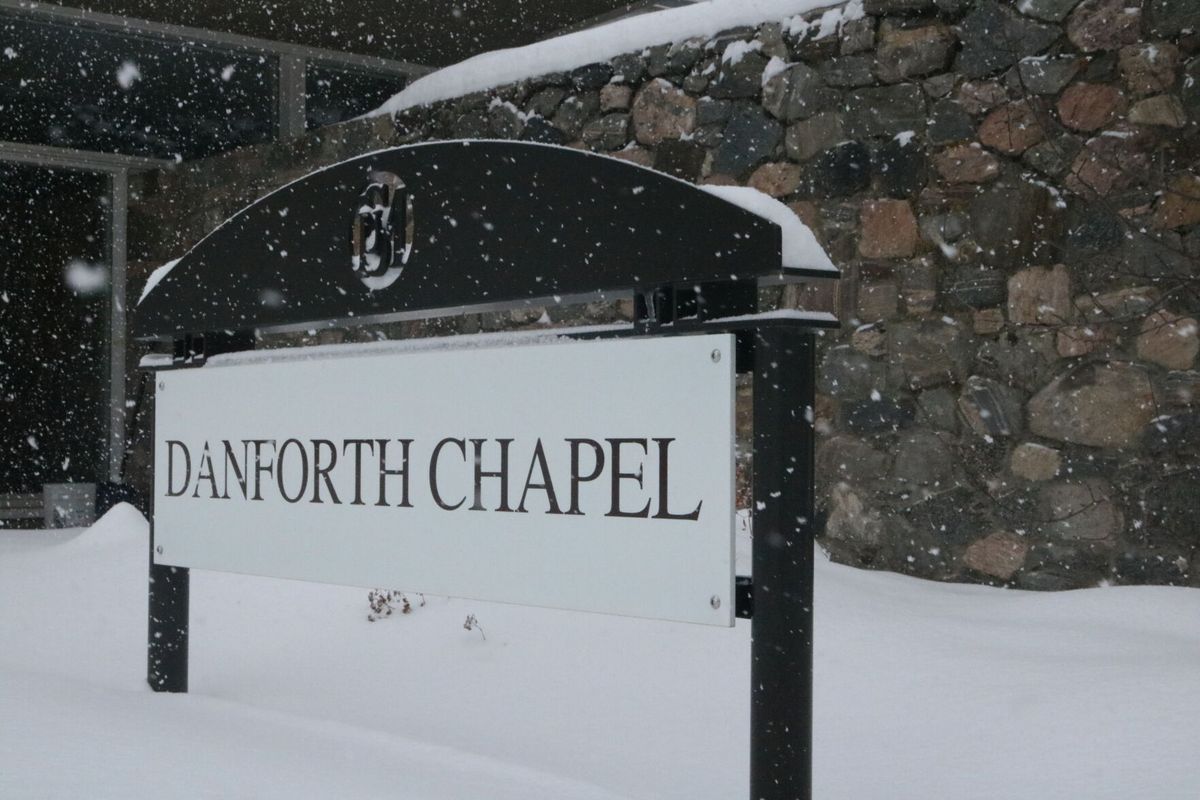
It’s easy to critique the religion of the masses, but infinitely harder to have a respectful conversation with someone you disagree with. And yet, our university classrooms have become a limiting sphere. The very place that should encourage all perspectives to be brought together to innovate now confines the limits of knowledge to a secular worldview. Despite Christianity’s prevalence on campus, I believe it has been removed from academic discussions all too frequently. This is not to say it should be a mandatory presence, but it certainly shouldn’t be a taboo one.
Many — regardless of belief — confuse truth and faith. Through this, we have forgotten the necessity of both. Facts have their place in innovation and argumentation. Faith — no matter the type — gives meaning to life, forges bonds and establishes a place for community to grow. Faith is not just about belief in God — it is all of the things we go beyond fact to place trust in and use to collectively build a shared reality.
Faith encapsulates how we define the reality that all successful members of society must abide by, while facts are what society agrees exists within that reality.
While we collectively build a shared reality, how we perceive it is entirely subjective. Confirmation bias inclines each of us to prioritize the information that confirms our own beliefs. This is especially true in the classroom.
In the contemporary era, the search for absolute truth dictates much of what is considered intelligent conversation. However, the concept of absolute truth is a fallacy since everything we know is based on some degree of faith. Anyone who claims a truth is asserting a faith, whether that be in science or God. However, within the setting of a public university, the value of having and discussing faith is frequently ignored. The contradiction of an endless pursuit of absolute truth and the rejection of faith only fuels the constant ideological conflicts found about campus.
Tensions rarely appear until one group asserts their conviction as absolute truth. In classrooms, the quiet disapproval and removal of religious beliefs is frequently how faith in a godless world is asserted.
I took a history of the Bible class where the professor expressed that we would only examine the book from a secular point of view because this was a public university, as though MSU’s association with the state prevented any mention of a faith in God.
On the other side of the coin, some Christians on campus assert their faith by attempting to convert their fellow students. For example, a student approaching a stranger sitting alone or a table with a simple sign open for questions about Christianity.
“I find that a lot of times, evangelical Christianity — which is the main form that we find in these on-campus ministries — tend to be blind to the disrespect that they often dish out to people of not only different ethnicities but cultures,” freshman biochemistry major Sasha Liubich said. “I find the language they use to be incredibly demeaning and disgusting, frankly. And oftentimes you feel belittled when you talk to these people.”
“So, as much as I do think that on-campus ministry is good for these people to have, I don’t trust them,” Liubich added.
While this is certainly an understandable perspective, many people find meaning and community amongst the on-campus ministries. There is also the irony that while faith grounds all of us in reality only some versions are considered respectable.
For Spanish and English writing major Isaac McNally, Christianity is heavily integrated into his life, so much so that he helped found a campus ministry called Kingdom Cats three years ago. “I've been involved in all sorts of different aspects of evangelism, but I tend to find the most productive conversations come just as dialogue,” McNally said. “Try to hear other people's perspectives and what they believe and then just have a healthy discussion.”
Sophomore mechanical engineering major Westley Roberts described his experience with Cru, an on-campus ministry. “I love being a part of a campus ministry. I have found some of my closest friends in Cru and made some of my best college memories with them,” he said. “It’s also great to be a part of something outside of academics.”
Roberts said he understands how people might feel that evangelizing can overstep.
“We have something that we believe in, and we care about it so much we have to share it,” he said.
“I don’t feel like this is a problem. If people from other organizations or faiths try to get me to join them, I will be respectful because they are passionate about what they believe in. I would much rather someone really care about what they are a part of than be totally indifferent.”
Throughout my lifetime I have experienced all sides of this problem and witnessed a good helping of poor Christian evangelism. Now, at the ripe old age of 19, I find it difficult to declare anything as objectively true. Perhaps as a society we should endeavor less to assert an absolute truth, and a great deal more to strive for: common decency, empathy, thoughtful conversation and genuine connections. On a campus that often feels like we know everyone and yet somehow no one, the least we can do for one another is to speak with kindness, respect and a good helping of curiosity about how they navigate this uncertain world.
Comments ()