
“Sex Ed 2.0” breaks the taboo around discussions of sexual health
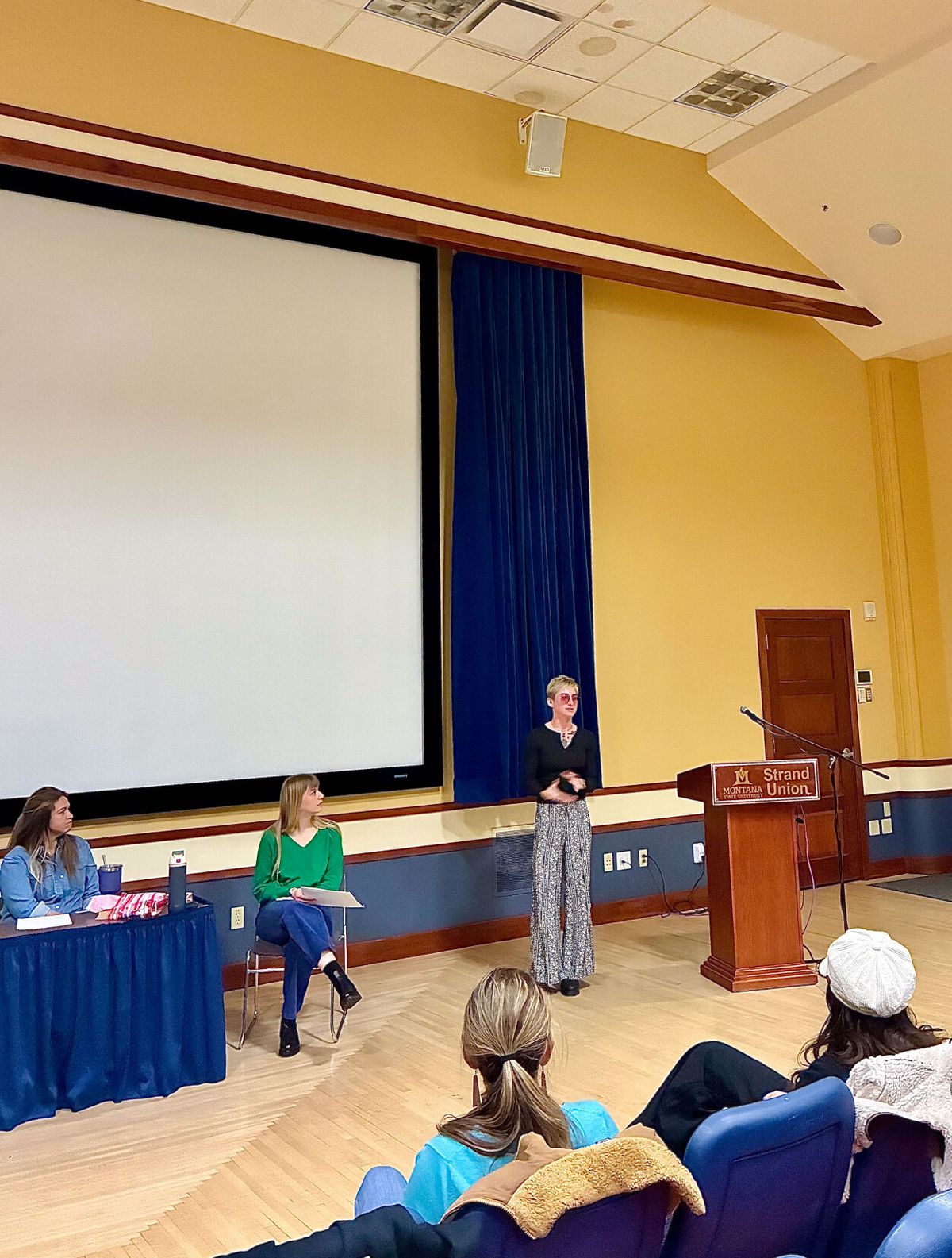
Just inside the double doors of the Procrastinator Theater, condoms, Plan B and educational pamphlets covered a table, welcoming guests to a panel discussion on sexual health.
Last Thursday, students, faculty and community members were invited to attend “Sex Ed 2.0: What We Didn’t Learn in High School.” The educational panel discussion — put on by Student Advocates for Reproductive Rights (SARR) and the Women's Center — was designed to provide a judgment-free space for people to ask questions that may seem taboo, according to Siena Quesada, president of SARR.
“Something [the Women’s Center and SARR] have both been recognizing over the past few years, is that we’ve been getting more questions about sexual health, sexual advocacy and places for people to access resources — either on campus or in the community,” said Betsy Danforth, the director of the Women’s Center and faculty advisor for SARR.
The event included a guest panel composed of staff and community members, each with a specific background relating to sexual health. Discussion topics ranged from the side effects of birth control to locations that offer affordable STI screenings.
“We wanted to make it a panel that anyone felt like they could come to and ask questions about, just their reproductive health in general,” Quesada said. “So we focused on what we felt the major issues were that affect college students, or that college students have questions with.”
One of the panelists was Hannah Wilson, the foundress of the Oh Hi Collective. Her talk focused on what she calls the more playful side of sex.
“We not only offer continuing [education] for other providers, but we do more playful education,” Wilson said. “One upcoming event we have is ‘Whord’oeuvres,’ which is a whole menu of aphrodisiacs [that] you get to learn about.”
Wilson said that the Oh Hi Collective promotes peer engagement in sex education.
“The importance of sex educators I cannot scream from the rooftops enough, and peers teaching peers is even more important,” Wilson said. “We’d like to help educate and give greater education that isn’t such a bummer.”
After the panelists finished presenting, they held a Q&A. Attendees could ask one-on-one questions or write anonymous questions on index cards.
“We had four people ask questions,” Quesada said. “Which is four more audience questions than I thought we were going to get when we first started out.”
She has high hopes that the program will be recurring. “There was a really good amount [of people],” Quesada said. “But I’d love to double it next year.”
She said that as a young adult, she had questions about sexual health, but felt awkward going to her parents.
“It was great just to find doctors and healthcare providers that cared about me,” Quesada said. “That’s what [SARR] wants to do. We want to make sure students have all the resources they can to be successful and just feel safe on campus.”
To learn more about the Women’s Center, visit its website https://www.montana.edu/women/.
To learn more about SARR, visit its Instagram @reproductiverights.msu.
Comments ()