
Students come together to honor the life and legacy of Charlie Kirk
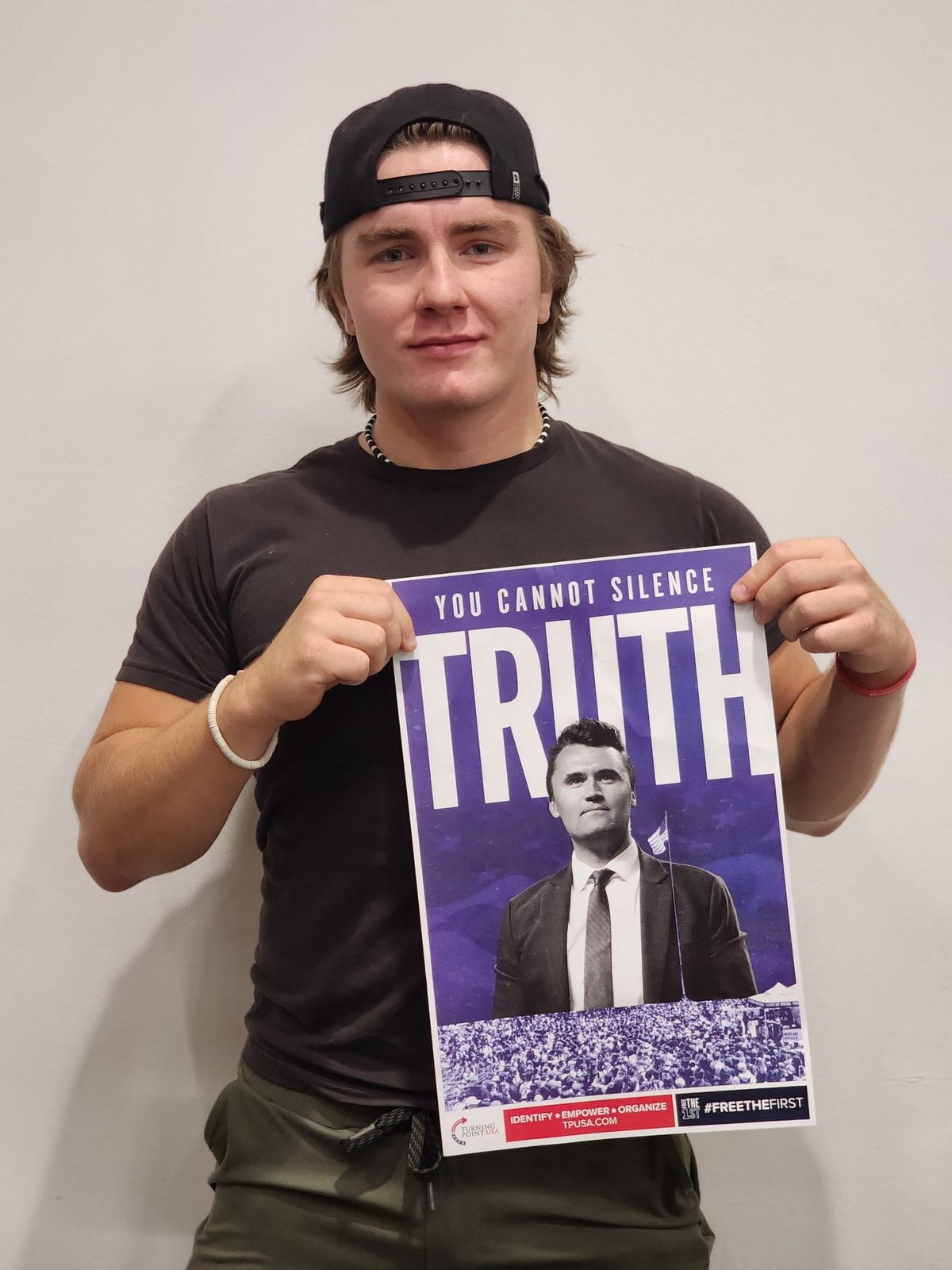
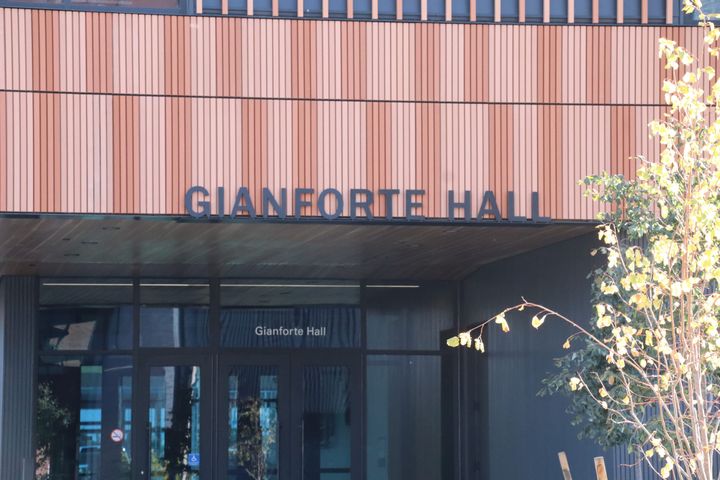
MSU students filled a classroom in Linfield Hall on Sept. 10 to watch a livestream of "Freedom Built to Last" Turning Point USA's (TPUSA) memorial livestream honoring Charlie Kirk on the first anniversary of his assassination at Utah Valley University (UVU) — the same campus where he was killed while hosting a campus debate.
The memorial out of Utah was watched by thousands, both in person at UVU’s event center and livestreamed by TPUSA chapters like MSU's all around the country. According to Vice President of MSU TPUSA Cale Thatcher, the memorial event set aside political rhetoric in favor of a message centered on faith, with the broadcast leaning more toward a memorial service than a political rally.
The event featured a lineup of orators who either knew Kirk personally or worked alongside him at TPUSA, including political commentator Glenn Beck, author and podcast host Michael Knowles, Christian author Frank Turek, TPUSA’s Chief Field Officer Andrew Sypher, TPUSA Beehive Field Representative Caleb Chilcutt and UVU Chapter President Sage Lloyd.
MSU TPUSA decorated the classroom with American flags and projected the live stream. They also handed out pins, posters and stickers commemorating the life of Kirk.
The two-and-a-half-hour UVU memorial event featured video clips of Kirk's life and his dedication to his Christian faith.
“One of the best ways to know and understand Charlie is to know and understand Jesus, because that's who Charlie tried to imitate. That's who Charlie always pointed to,” said Konrad Joy, president of MSU’s TPUSA chapter.
For Joy, Kirk's advocacy for free speech was inseparable from his call for kindness — it was to listen to people even when you disagreed with them, Joy said.
"It means reaching out to people with compassion, but not compromising on truth," Joy said. "By seeking out people who are lost, people who are hateful, people who are scared and giving them a hand in a world that just seems so crazy right now."
Students at the event said they admired Kirk's legacy and it inspired them to carry his advocacy forward on their own campus.
“So just refusing to be silenced, even if you end up being wrong. That's part of the learning curve,” Thatcher said. “That's why we're all here. We’re here to learn and grow our perspectives on the world.”
According to Joy, Kirk's legacy came down to a handful of ideas he tried to model himself, especially in conversation.
"It's free speech. It's dialogue. It's looking at each other as humans instead of enemies," Joy said. “Let's go have a discussion. Let's go hash this out. I want to see where you're coming from, and maybe we get somewhere with that. Maybe we don't, but it's peaceful.”
Thatcher remarked that Kirk's legacy was a reminder that too many students arrive on campus with their minds already made up, unwilling to engage with views that challenge their own.
“A lot of kids come here with their ideology already set, and most of them aren't willing to listen to new ideas,” Thatcher said. “I think that's a great fault. And you should always know the other side of an argument, even if you disagree. There's multiple ways of looking at the world, and you have to decide which ones fit your perspective the best.”
“I encourage anyone that hates Charlie Kirk, [who] thinks he was a hateful person, to actually watch him. I feel like so much of our perspective about people comes from social media,” Thatcher said. “There's hundreds of hours of Charlie Kirk debating on Instagram. I encourage people to take even 10 minutes — five minutes — and watch those.
“And I think you'll see how quickly you're misunderstanding Charlie Kirk, about who he is, what he wanted and how much he genuinely cared for all the students he talked to.”
Comments ()