
Students Should Wear Headphones Less On Campus
I listened to 65,873 minutes of music in 2024, according to my Spotify Wrapped. That is equivalent to 1,097 hours or 45 days. Not only is that an insane amount of listening time, it is similar to — or even less than — that of my peers.
The consumption of music rules our generation. It seems that we can’t breathe without simultaneously listening to music. Wake up? Music. Brushing teeth? Music. Walking to and between classes? Music.
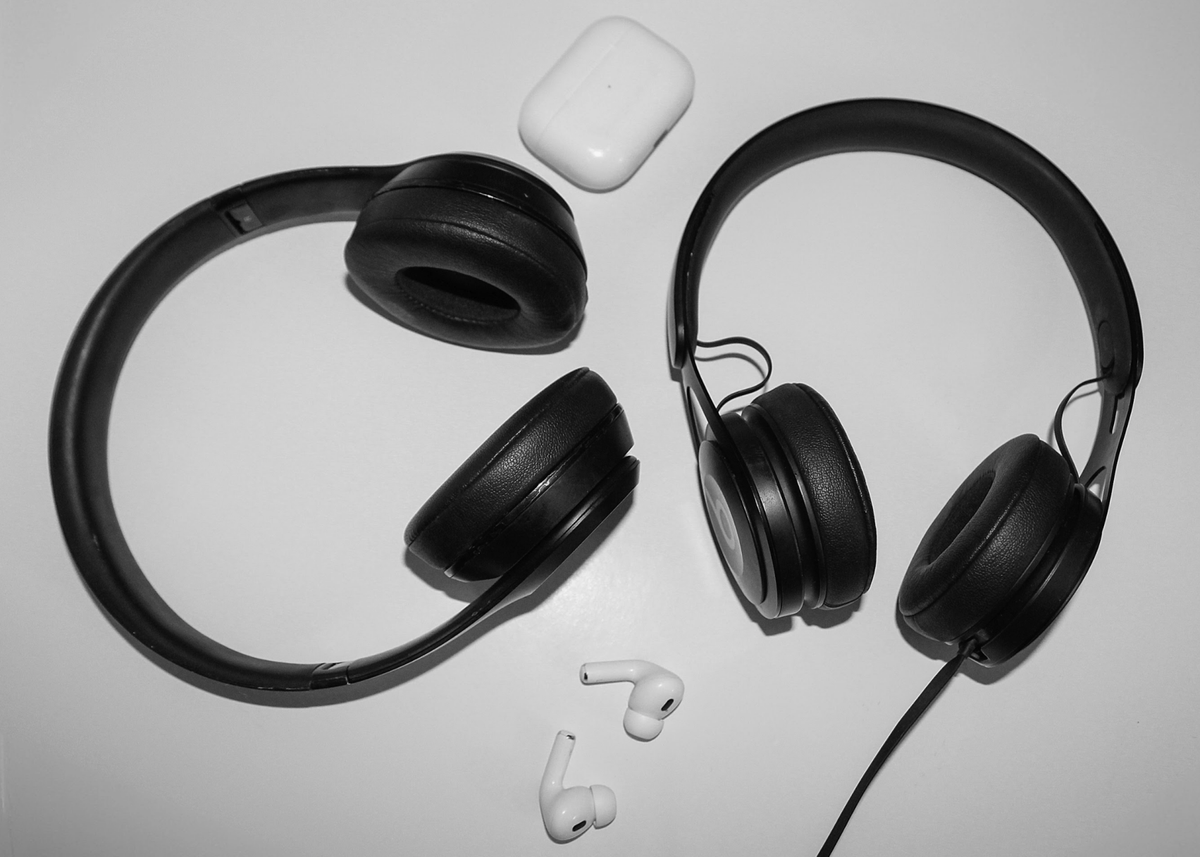
Noise-canceling headphones in particular have become the ultimate tool for locking in. When you’re wearing a pair, it feels like the entire world disappears. All you can notice is your ears being blasted by those sweet, uninterrupted, high-quality tunes. It doesn’t matter if it’s a podcast, rap or classical music. Noise-canceling headphones are perfect at their job— canceling everything out.
After realizing how many students wear noise-canceling headphones I changed my own habit. I wanted to see how different I would feel without them. Would I feel exposed? Would I feel antsy? Would I talk to others? All of these questions were answered after a few days, and I realized I would not go back.
Nothing compares to the liveliness that campus brings. Fully embracing all it has to offer – including quick chats with others – reminded me of how grateful I feel to be exactly where I am. It felt like everyone near me was wearing headphones, which at first made me feel different. When I realized that it brought me less anxiety and instead more connection to the people and places on campus, I knew that it was what I preferred.
So, while noise-canceling headphones are great for students to use while studying, sleeping and listening to media, I’ve found they can also isolate people — and other students agree.
“When my AirPods are in, people often leave me alone,” said junior music education major Jack Staton. “I’d say it dramatically decreases compared to when I don’t have them in.”
Many prefer the privacy of headphones, and you don’t want to bother someone with headphones just as much as they don’t want to bother you. As a result, the opportunity for social interaction is gone before it starts.
If students took breaks from wearing noise-canceling headphones on campus – especially between classes – they would have more interactions beyond a simple nod or wave. They could compliment someone or ask someone out. They could actually hear the hustle and bustle of campus.
These little noises may be annoying or not as enjoyable as the voice of your favorite artist, but they are part of our reality. Being completely present as I walk through campus is incredibly grounding. I have to actually listen to my thoughts. With music, though, I feel disassociated and separate from the environment and the people within it.
Some students, however, feel differently and believe that headphones create a positive separation from those around them.
“I think it’s sometimes nice for people to just get into their zone or have time to avoid socializing for a little bit, and I think the noise-canceling helps us with that,” Staton said.
Student Olivia Belcher concurred. “I like having the distraction during my daily commutes,” she said.
I am not advocating for no music — I can appreciate improving the vibe of a rainy day by listening to Hozier. However, I started limiting my use of noise-canceling headphones to studying, working on assignments or relaxing.
I love hearing the wind rustle the leaves, hearing bits of people’s conversations, complimenting a stranger and hearing a stranger compliment me. I even like to hear, “On your left!” as bikers pass by. I love having all of my senses working in unison. For this reason, the time spent walking between classes or to and from campus should be a time of genuine presence.
Comments ()