
“This is a heavy topic to digest”: HEART Initiative holds human trafficking awareness event
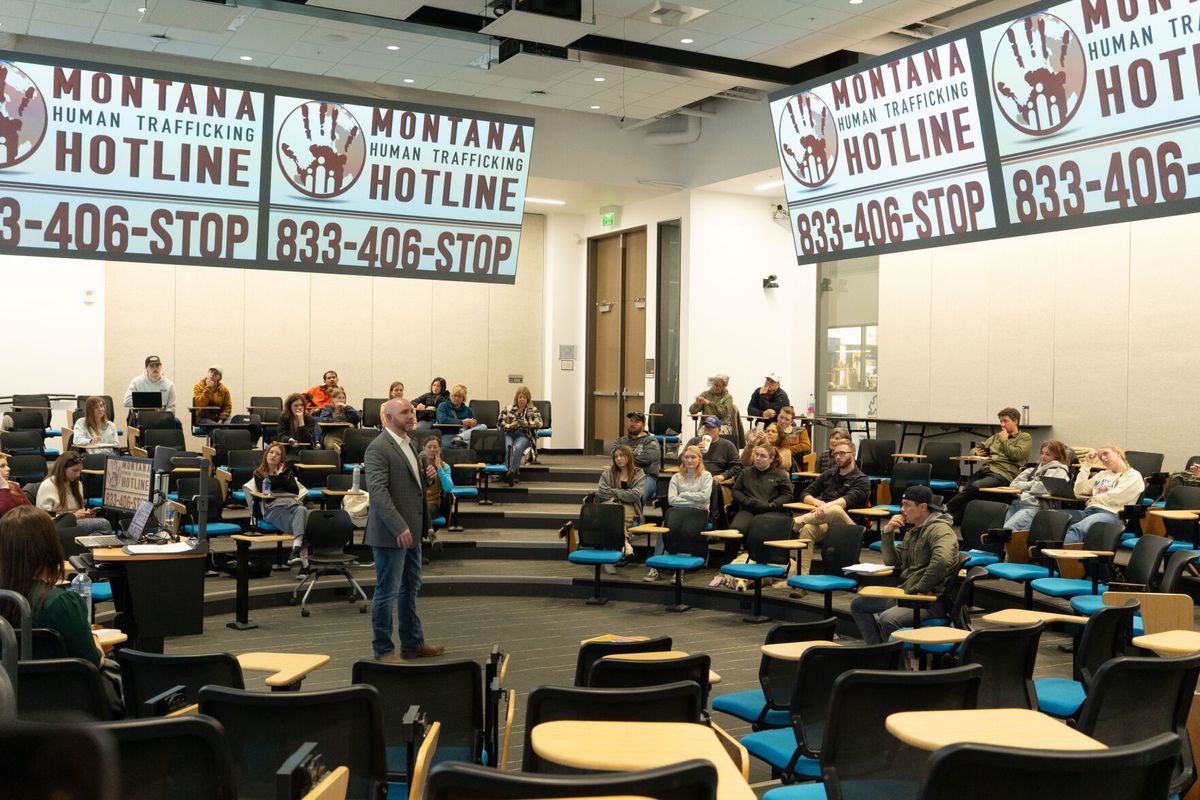
“[Human trafficking is] compelling or coercing another person’s labor or services, including commercial sex acts,” said Andrew Yedinak, the supervisory agent with the Montana Department of Justice (DOJ)’s Human Trafficking Unit. “People still don’t want to admit that it exists here in Montana. Even in the smallest parts of Montana, human trafficking exists — often in the form of debt bondage.”
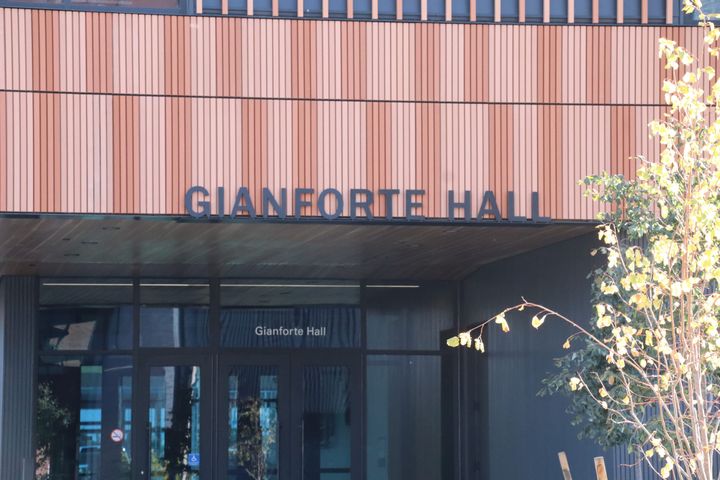
On Tuesday, April 1, a mix of students and community members gathered in Gianforte Auditorium in Norm Asbjornson Hall to listen to Yedinak describe human trafficking red flags and dispel myths about the crime.
“This is a heavy topic to digest,” Yedinak said.
This presentation was put on by the HEART Initiative, a student organization that was founded in 2016. Its members work to increase awareness about trafficking in Gallatin County and beyond, according to the organization’s CatsConnect profile.
Every semester, the organization holds training workshops with advocacy groups, law enforcement or those working directly with human trafficking survivors, according to the academic advisor for the HEART Initiative and Director of the Women’s Center Betsy Danforth.
Yedinak has been working in human trafficking investigations since 2019. During the presentation, he explained that working in this field is the most impactful thing one can do. Before taking on his current role, he worked a variety of government jobs, including major case investigations and undercover narcotics operations.
He explained that the majority of people trafficked are aged 14 to 24. According to him, there are over 50 million people experiencing human trafficking globally, with 81 percent trapped in forced labor. It is estimated that 5.5 million are children.
Yedinak explained that oftentimes, that when one thinks of human trafficking, they only think of sex trafficking. However, the Polaris Project — a nonprofit that works to combat and prevent sex and labor trafficking — analyzed more than 32,000 cases in the U.S. between December 2007 and December 2016 and recognized 25 different forms of human trafficking. This list included forms of labor trafficking that encompass various fields, such as agriculture, domestic work, cleaning services and carnivals.
According to Yedinak, Internet or media-based trafficking is extremely common. Students should be aware that trafficking happens on OnlyFans, Snapchat and other online sites. He explained that it is very easy for predators to create a profile that appears to be legitimate but is actually completely fake and made to lure people in.
“A lot of times when we hear trafficking, we think of the movies and extreme situations,” said audience member Kylie Erp, a victim service specialist for the Montana Division of Criminal Investigations. “And while those do happen, a lot of times, victims and survivors can be people in our classrooms. Just because they are showing up and they’re involved in daily things, it doesn’t mean that they are safe.”
Erp explained that because trafficking can be broad, those being victimized could have no idea. “So, sometimes just breaking down those questions and being a little more direct [is helpful],” she said.
At the end of the presentation, Yedinak urged community members to educate themselves on human trafficking red flags. He said a good way for students to get involved is to join the HEART Initiative.
“That’s step one,” he said. “There are civilian task forces that you can become a part of. The biggest thing is, be a friend. Be a friend to someone who maybe doesn’t have that friend.”
If you are interested in joining the HEART Initiative, email theheartinitiative406@gmail.com.
For more information about recognizing human trafficking, visit https://polarisproject.org/human-trafficking/.
If you or anyone you know is experiencing human trafficking or feel they may be in a dangerous situation, call the Montana Human Trafficking line at (833) 406-7867.
Comments ()