
Walter Fleming honored at 49th American Indian Council Powwow
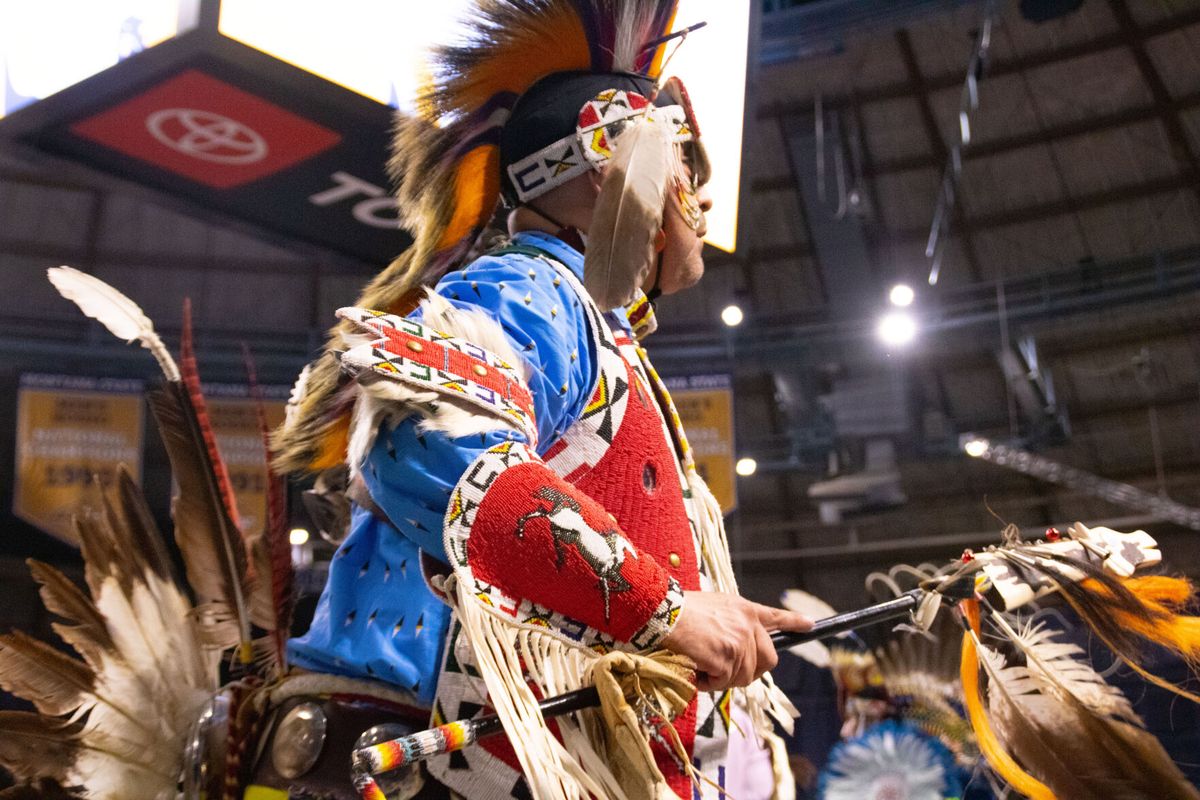
Beneath the lights of the Brick Breeden Fieldhouse last Friday and Saturday, drums pounded like a heartbeat as the sound of jingle dresses and shifting feathers filled the room. This was MSU’s 49th annual Powwow, put on by the American Indian Counsel (AIC).
Powwows are Native American cultural celebrations that feature singing, dancing and storytelling — often including some form of dance competition. According to Walter Fleming, an enrolled member of the Kickapoo tribe and the head of the Department of Native American Studies, after reservations were established, powwows emerged as a way for tribes to continue the legacy of their traditions.
MSU has held a powwow on campus every year since the 1950s as a result of the growing Native student population during that time, according to Fleming.
“When you have a growing student presence on campus, they want to gather and share,” he said. “The first powwows here were sort of extended family gatherings.”
These early powwows were held in the “Save Our Barn” (SOB) Barn — the blue and white barn located on Garfield near Julia Martin Apartments. The barn’s name is partially rooted in Native students' efforts to protest to preserve it. In the 1960s, the barn was set to be torn down. After hundreds of students protested the closure, MSU decided to keep it, according to Outside Bozeman.
Since then, the Powwow usually sees hundreds of dancers from various Indigenous nations each year. This was especially true for the 49th iteration, where dancers took to the arena for Grand Entry in accordance with their respective dance category.
On the arena floor, the host drum group for this year — the Southern Cree of Rocky Boy — pounded their rawhide drum, while the voices of the Masters of Ceremonies, Don Racine and Chico Her Many Horses, boomed overhead announcing the dancers and their categories.
The men’s categories featured various traditional dances such as grass, prairie chicken, traditional and fancy. Women competed in jingle, fancy and traditional. Younger dancers, — including teens, juniors and tiny tots — competed in their own dance divisions.
Fleming emphasized the significance of powwows in celebrating Indigenous culture. “Powwows emerged after the reservations had become established as a way for tribes to maintain the legacy of their traditions through dance,” he said.
Along with traditional powwow events on Friday, the AIC dedicated a speech to Fleming, who is retiring this year. Fleming has been with the University since 1979 and has been part of the Department of Native American Studies for 47 out of the 51 years it's been around.
The AIC gifted Fleming a blanket and then opened the floor for people to shake his hand and join in an honor dance. “A blanket is a pretty typical gift because — in the way we were taught, the blanket symbolizes warmth — comfort and caring,” he said.
Fleming said he was both surprised and moved by the number of attendees who chose to come down and engage with him. “It was a really touching mix of current and retired faculty members. People who I have known throughout the years who made an effort to be there,” Fleming said. “It’s always going to be a memory. You hope that your career has some meaning to other people, and then to see folks acknowledge that by their presence is really special.”
Fleming reflected on how much MSU has changed over the years. He specifically recalled a conversation he had with former MSU President Geoffery Gamble, who told Fleming that one of his goals in his presidency was to make MSU the university of choice for Native students.
“When I started in 1979, there were 52 Native students on campus, but now there’s 856. I remember when we exceeded 200 and that was something to be celebrated,” Fleming said. “The increase in Native student enrollment has been a reflection of how much MSU has been open to helping Native students.”
In retirement, Fleming said he plans to research and write about the history of the Department of Native American Studies — including the building of the American Indian Hall — and identify the earliest Native students to attend MSU. “I’ll probably spend a lot of my retirement in [the MSU Library’s] Special Collections,” Fleming said.
Fleming said that retiring is a bittersweet moment for him. “One thing that has made the experience so positive is the relationship that one can have with students — they keep you engaged,” he said. “These are now people who are the chairmen of their tribe or pilots or doctors.”
“They achieved these goals independent of anything that I’ve done, but I can share in their success and that’s a reward in and of itself,” he said.

Comments ()