
Why Visibility Matters for Contraceptive Healthcare
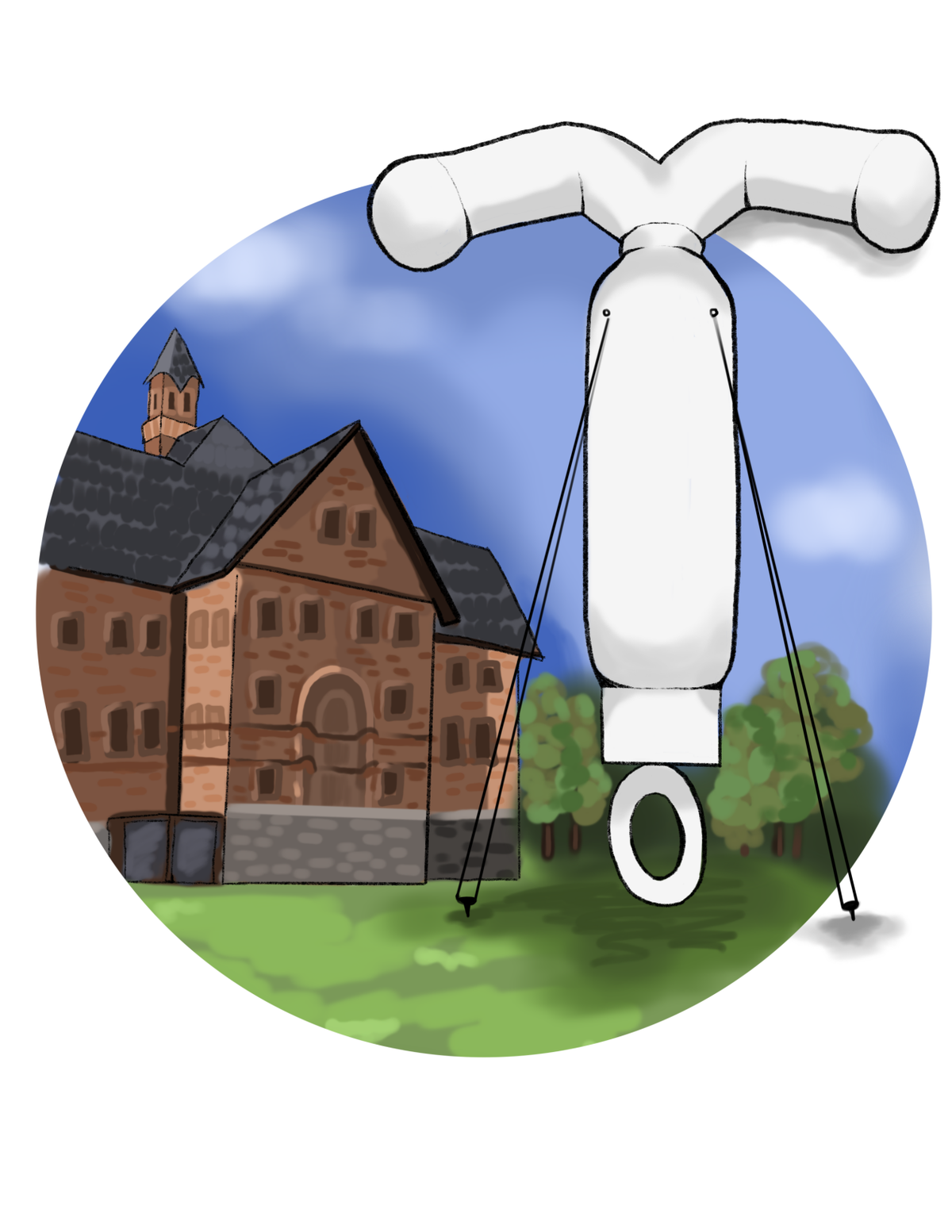
Education about contraceptives and reproductive rights should be accessible to all without shame or stigma attached. This education is vital on a college campus, where students are often navigating newfound independence and responsibility. Access to reliable, non-judgmental reproductive healthcare empowers students to make informed choices about their bodies and their futures.
On Sept. 24, a 20-foot-tall inflatable IUD (intrauterine device), nicknamed Freeda, was set up on the grass outside of Montana Hall. Freeda is taking a stand for reproductive rights as part of the Americans for Contraception’s IUD Tour, hoping to spark a healthy dialogue surrounding this critical topic.
The Americans for Contraception IUD Tour started on June 5 in D.C. as a way to raise awareness about the Senate vote on the Right to Contraception Act. Freeda is currently traveling through the country, and the tour will end on Oct. 25 in Huntsville, Alabama.
The giant IUD embodies this idea because it's impossible to miss — and that’s precisely the point. As a society, we often shun or hide these conversations, pushing them out of sight. But in reality, reproductive healthcare is essential for everyone — regardless of gender identity or background.
On that sunny Tuesday morning, I was greeted not only by Freeda but also by educational stalls — including a local nonprofit reproductive healthcare facility called Bridgercare — complete with brochures and a congregation of people passionate about reproductive rights. Students posed with the inflatable and took pictures to share with their peers; pictures that I’m sure sparked important conversations.
The IUD offers protection from pregnancy for three to 10 years, according to Yale Medicine. Many people choose this contraceptive option for its convenience factor.
Of course, everyone’s story is different. Many women — and trans or nonbinary people with the ability to get pregnant — seek out contraceptive care for many reasons. Different hormonal imbalances are common and can alter a person’s quality of life. Painful periods, or PMDD — premenstrual dysphoria disorder — can do a number on someone's physical and mental health, according to the National Library of Medicine. Access to hormonal birth control like IUDs can help ease these symptoms.
Individual-based healthcare is ideal because doctors can best help their patients when they are well-informed and the patient feels safe enough to speak about their reproductive health. I hope that campus-based educational events like Freeda’s visit help remove stigma from this type of healthcare and the conversations we need to have.
As someone who was assigned female at birth, I’m no stranger to the struggles of finding adequate reproductive healthcare, of not being listened to or taken seriously at the doctor’s office. It wasn’t until after my gender transition that I was finally able to schedule permanent contraceptive surgery, a tubal ligation. This highlights the fact that women are often ignored in the doctor’s office when seeking this type of healthcare at a younger age than is deemed socially acceptable.
The fact that I, as a trans man, was able to secure permanent contraceptive surgery without resistance while women are often dismissed is telling. It shows that our healthcare system still harbors biases around gender and bodily autonomy — and that’s precisely why we need more education, visibility and access to reproductive care as a whole.
Freeda stands as a bold, in-your-face reminder that contraceptive healthcare is not just a personal issue but a societal one. Allowing these conversations to be out in the open and making them more inclusive gives people more bodily autonomy.
Comments ()