
2026 Montana wildfire season outlook: Mild winter leaves questions, some above-normal potential
Despite a mild winter, only a few parts of Montana are forecast to have above-normal significant wildfire potential, but the effect of the near-record-low snowpack on this year’s wildfire season is still a bit of a mystery.
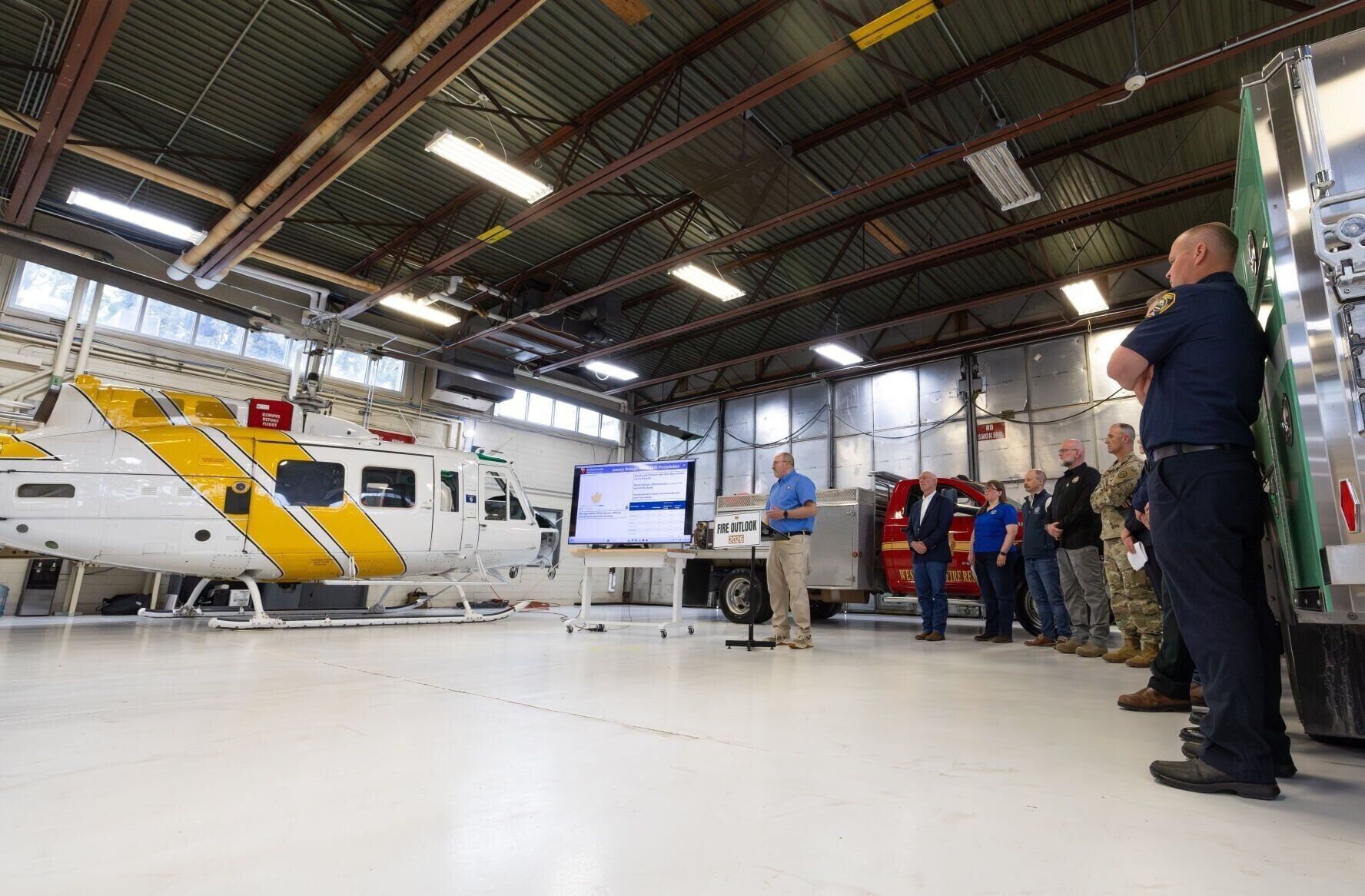
This insight and many others were shared Tuesday during a briefing on the 2026 wildfire season hosted by Gov. Greg Gianforte’s office in the Montana Department of Natural Resources and Conservation aviation hangar in Helena. Officials from local, state and federal agencies briefed the public on what to expect this fire season and how they plan to manage the fires when they happen.
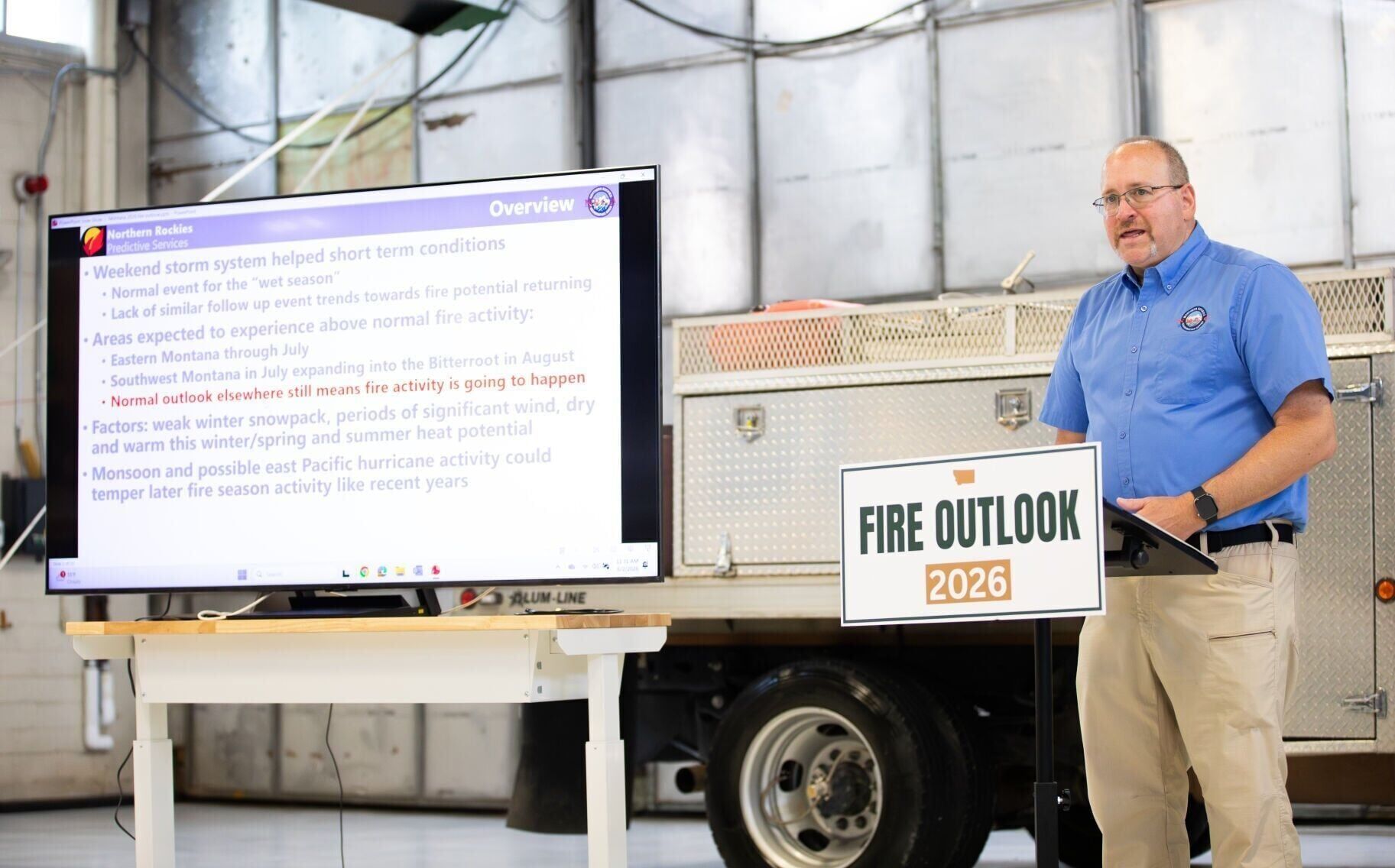
“Obviously we've had a very complex winter, and it's created a lot of different puzzle pieces to put together for an estimate of what's going to happen this year,” said Dan Borsum, predictive services meteorologist for the U.S. Wildland Fire Service.
In general, Borsum said, the weak winter snowpack, warm winter temperatures and periods of significant wind have led to moisture deficits that could propel fire intensity and growth.
“The wind was a bugger this year. It was our second-windiest year of the last 10 years,” Borsum said. “… That is an accelerant. It does cause or promote drying across the landscape, and that means we ended up losing even more moisture beyond the temperature alone.”
Questions remain on how the snowpack could influence fire potential.
“We just are missing one of our resources that we normally have in the state, which is a snowpack, certainly at least down to 5,000-foot elevation. We lost a lot of our snowpack below 8,000 feet inappropriately early this year, and it's a little bit of an unknown how that's going to impact our fire season,” Borsum said. “‘Does that mean we're accelerating growing cycles? Does that mean that certain fuels are going to be more available in July in the first half as opposed to waiting until the second half? So it's one of the gray areas of the outlook.”
However, there are bright spots in Montana’s moisture situation, including the most-recent rain event that dropped multiple inches in some parts of the state.
“This recent rain event was great,” Borsum said. “It was badly, badly needed, but it didn't wipe out every moisture deficit that we've got out there.”
Relief may come in the form of August monsoon activity and moisture from East Pacific hurricane activity, but it’s still to early to tell, Borgum said.
“Coming to the beginning of August, what the monsoon does is the No. 1 thing that I really cannot predict right now, but I'll just continue to hope for the best,” Borgum said.
Overall, Borgum said, through June there will be above-normal potential for fire in eastern Montana, and then in July, concerns develop in southwest Montana after the curing of fuels. The threat then is expected to spread into the Bitterroot in August.
During the briefing, state agency representatives took turns outlining how their agencies are preparing for the upcoming fire season.
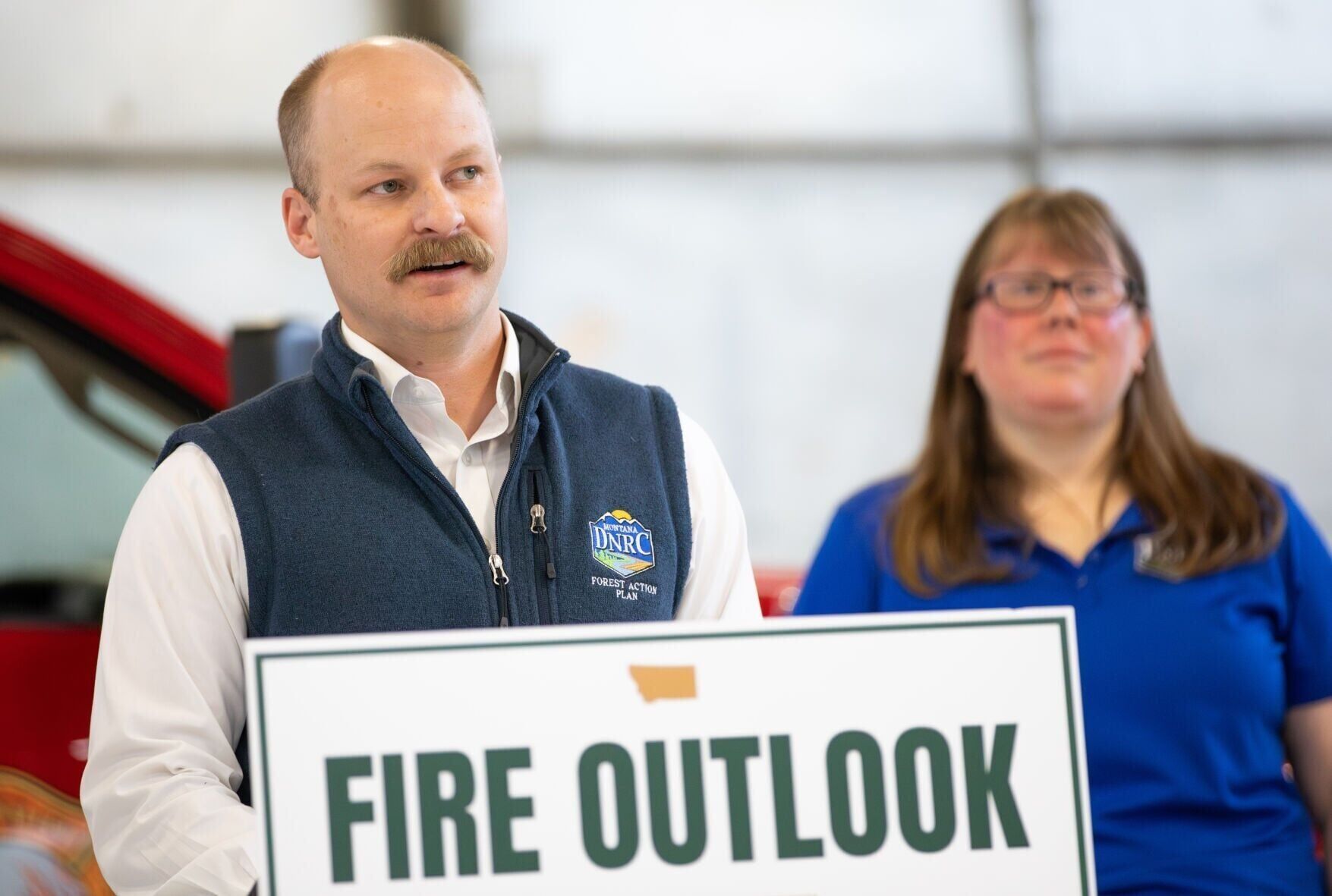
This year, the DNRC plans to deploy a more-advanced fleet of three fixed-wing aircraft specially fitted with infrared technology to better detect fire invisible to the naked eye, said Wyatt Frampton, acting state forester for the department.
“These assets improve early detection, enhance coordination between air and ground resources, and support real-time decision making as conditions change,” Frampton said.
The aircraft will be stationed in Kalispell, Missoula and Helena.
In addition, DNRC will have 50 staffed engines, five MT-205 helicopters, more than 150 seasonal firefighters and Helitack crew members across the state available to deploy on fires. The department will also deploy contracted resources, including “two type one tank helicopters, two initial attack hand crews, a nighttime detection and mapping platform, and a large air tanker shared with the state of Alaska.”
Brig. Gen. Trenton Gibson of the Montana National Guard said they have certified nearly 500 soldiers and airman to fight fires. They have also trained an additional 18 squad bosses who can deploy with fire line crews.
As for aircraft, the Guard has six UH-60 Blackhawks, four CH-47 Chinooks and one LUH-72 helicopter ready to deploy should they be activated to fight fires this year.
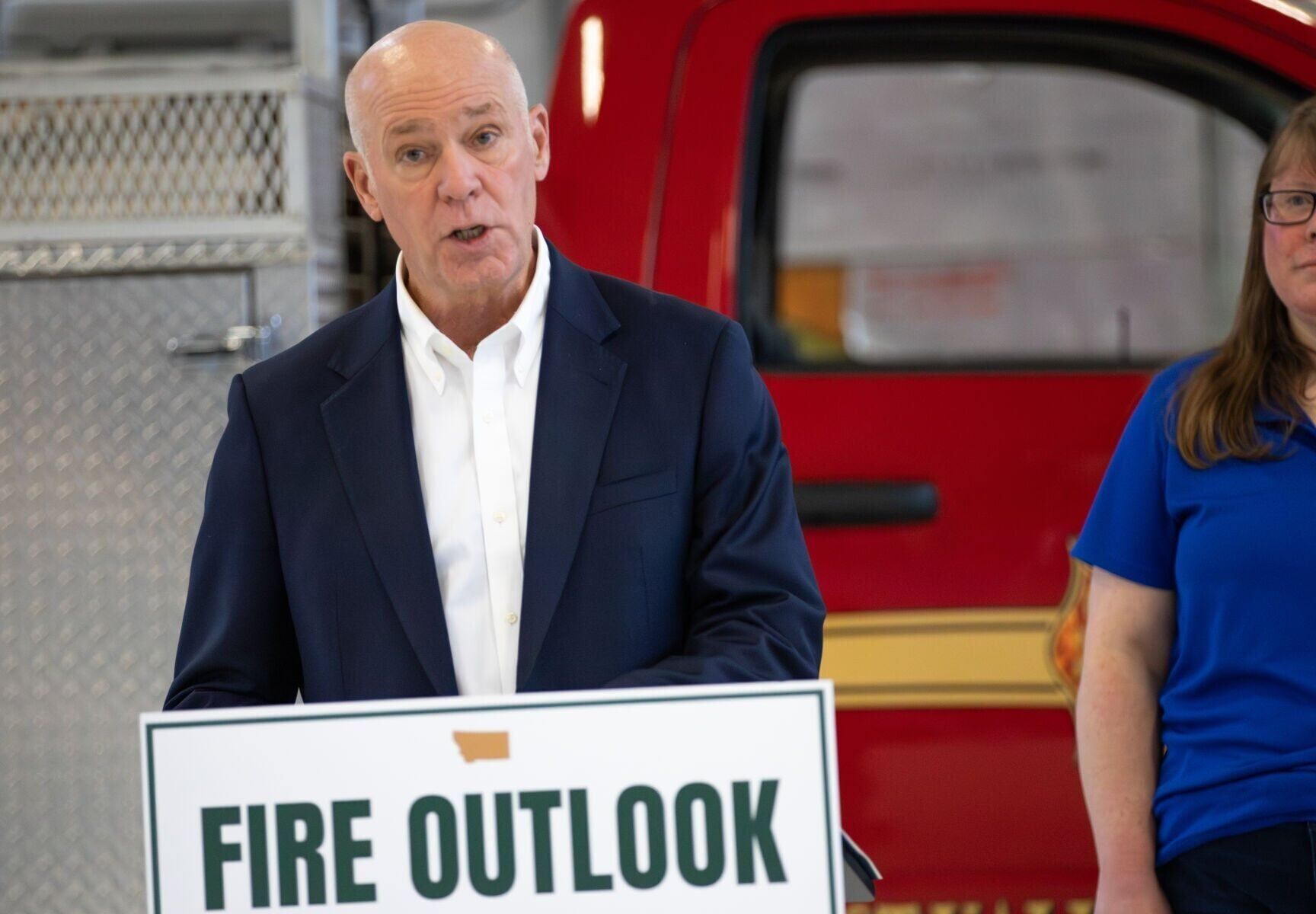
Gianforte closed the briefing by reminding the public that 3-in-4 fires from the 2025 season were human-caused and the state will continue a full suppression strategy on any fire that pops up.
“As we look ahead to the season, our goal is straightforward: be prepared, work together and protect Montana families, homes, communities, natural resources, and our way of life,” Gianforte said. “It takes all hands on deck, from county officials and volunteer fire departments, to state and federal agencies and private landowners to prepare our forests and communities and initiate an aggressive initial attack on all wildfire starts.”
For current fire information and tips on preventing human-caused wildfire, visit www.mtfireinfo.org.


Comments ()