
AG Knudsen ultimatum: County Attorney Cromwell has until Monday for ICE reversal — or else
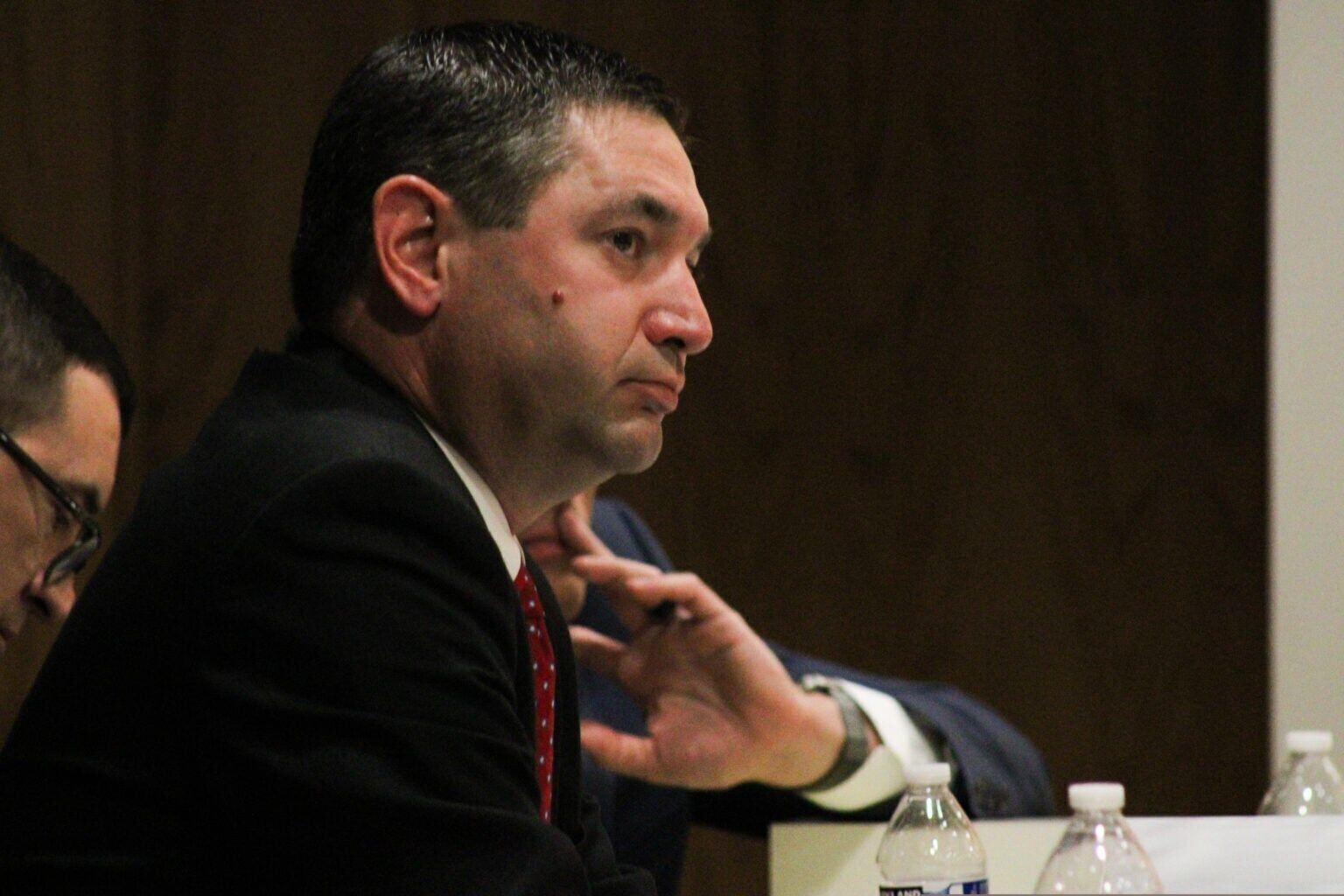
Montana Attorney General Austin Knudsen is giving Gallatin County Attorney Audrey Cromwell until Monday to rescind what Knudsen’s office views as her office declining to recognize U.S. Immigration and Customs Enforcement (ICE) as a criminal justice agency.
Knudsen’s office warned in the letter Thursday morning that he will take “control” if Cromwell’s “policy”, which they say includes withholding records, is not reversed.
“Please issue a memorandum to all relevant personnel stating that Gallatin County may share Confidential Criminal Justice Information with ICE for civil immigration enforcement functions,” Knudsen says in the letter. “If you refuse to follow the statute, I will have no choice but to invoke supervisory control. Please provide proof of compliance by 5 p.m. on Monday, April 27.”
The Attorney General’s Office supervises county prosecutors and can assist with cases, ensuring uniform application of state law, according to the Montana Department of Justice.
“Our office intends to follow the law and I look forward to responding to Attorney General Knudsen,” Cromwell told the Chronicle on Thursday, declining to comment further.
Knudsen’s response follows Cromwell’s April 6 rebuttal, in which she disagrees with the attorney general over whether Montana counties need to provide sensitive personally identifiable information for administrative or civil enforcement cases outside county jurisdiction. It is the third combative letter between the offices.
In her prior response, Cromwell requested Knudsen issue a binding legal opinion on an interagency information-sharing dispute between the county and the Montana Department of Justice. Knudsen denied Cromwell’s request in an April 23 reply.
“The time to request a legal opinion was before issuing a communicae that ICE is not always criminal justice agency,” Knudsen said. “The request is denied.”
Knudsen addressed the six-month delay from his office in responding to an October 2025 email from Cromwell’s assistant Jack Veil, which partially started the interagency rift.
“I am writing to inform you that the Gallatin County Attorney’s Office does not legally recognize Immigration and Customs Enforcement as a law enforcement agency entitled to receive CCJI,” Veil said in the email.
The correspondence was attached to Knudsen’s initial May order six months later.
Veil’s communication is not and does not establish policy, which is set by the county commission, per Cromwell.
“The Response laments that my office did not contact you prior to issuing the letter,” Knudsen said. “This isn’t the first instance, however, where your office has demonstrated poor judgment on this issue.”
While the Gallatin County Attorney’s Office legally advises county departments, all policy is set solely by the Gallatin County Commission, Cromwell said.
“The response suggests that my office obtain records about your Office’s policies and practices from the Gallatin County Commission or the Records Department,” Knudsen said. “I respectfully decline.”
The Chronicle reached out to the Gallatin County Commission. None of the commissioners had responded as of mid-day Thursday.
In the same Thursday letter to Cromwell, Knudsen references her recent trip with Bozeman Sen. Cora Neumann and Belgrade Sen. Pat Flowers to the Twin Cities in Minnesota in February in response to two ICE killings.
“Then, in February 2026, you traveled with other Montana Democrats to Minnesota to discuss immigration,” Knudsen said. “Your delegation also referred to ICE as ‘the Gestapo.’”
Knudsen mentions a Feb. 2 article in the Chronicle interviewing Neumann, who gathered 120 officials from 27 states to attend an in-person and online lawmaker coalition in Minneapolis demanding ICE accountability.
Tensions were at a boiling point in the Twin Cities after an ICE agent fatally shot Renee Good, a 37-year-old U.S. citizen, on Jan. 7. Good’s death touched off widespread protests while ICE continued arrests.
Less than two miles from where Good was killed, the fatal shooting of Alex Pretti, another U.S. citizen, on Jan. 24 intensified national public outrage over ICE tactics.
Neumann, who is Jewish and whose grandparents were Holocaust refugees, told the Chronicle that when left unchecked, violence without government accountability can quickly spiral out of control.
“My grandfather would talk to me about how over and over again they said to each other ‘this can’t happen in Austria, this can’t happen in Germany’,” she said. “I was raised with stories about how ‘you’ can’t expect other people to stop the deterioration of ‘your’ rights. To have masked unidentified federal agents disregarding local law enforcement, arresting and detaining, kidnapping people, that does remind me of the Gestapo.”
Cromwell said she had a conversation with Minnesota Attorney General Keith Ellison, who also is named in Knudsen’s letter. Cromwell told the Chronicle then she learned local prosecution is paramount to ensuring federal agents remain accountable to state and local laws during the meeting.
“This cross-training and information exchange are invaluable as my office prepares our own protocols here in Gallatin County,” Cromwell told the Chronicle then. “My office and I are prepared. I have a clear plan and framework for how we will respond if incidents, especially serious ones involving federal officers, occur here.
ICE plainly meets the definition of a criminal justice agency, Knudsen says in the letter to Cromwell, citing Montana Code Annotated codifying core ICE activities as the “administration of criminal justice”.
“In other words, it doesn’t matter if ICE is ‘seeking confidential criminal justice information for a civil administrative immigration purpose’ and ‘not for a criminal investigation or prosecution’,” Knudsen wrote. “Montana law simply says ‘dissemination of confidential criminal justice information is restricted to criminal justice agencies.’ ICE is a criminal justice agency — Full stop.”






Comments ()