
ASMSU calls on administration to address communication issues in graduate student housing
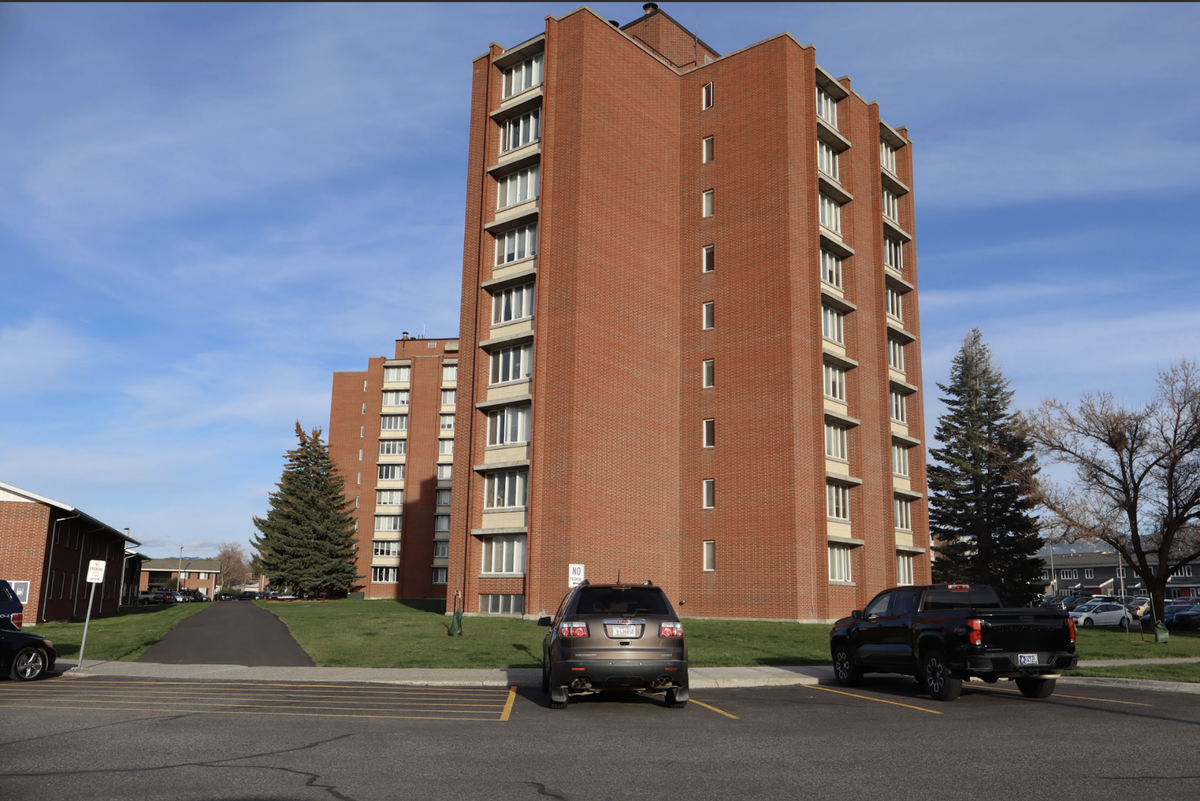
Graduate student Mary Farina learned that her university apartment building, Nelson Story Tower, had asbestos-containing materials (ACM) when a neighbor was asked to vacate her unit for potential disturbance to asbestos during repairs.
Farina was worried by MSU’s lack of communication with residents regarding ACM, citing factors such as a long wait for environmental reports in her complaints.
Concerns like Farina’s prompted Associated Students of MSU (ASMSU) at-large Senator Gavin Thorson to sponsor a resolution addressing graduate student housing conditions.
On April 22, ASMSU passed Resolution-08 (R-08) calling on MSU to improve communication with residents and conduct air quality tests to detect asbestos levels in residential structures.
Graduate student Bear Wood said that among the many communication issues she has experienced with University Student Apartments, asbestos-related issues are the most consequential.
“There are lots of everyday living conditions that have this miscommunication,” Wood said. “But this asbestos has amplified this poor communication between [the] housing office and tenants.”
Thorson said that more communication regarding asbestos would help residents take proper precautions.
“If they’re redoing the ceiling of one of the units, that’s creating particulate matter that’s floating through the building. What we have right now is a situation where that takes tenants by surprise and they have to hope that what they’re breathing in isn’t [ACM],” he said. “That is not an acceptable situation.”
The reports Farina was given, conducted by Tetra Tech, showed that Nelson Story Tower and seven other campus buildings contained materials with asbestos concentrations exceeding one percent — the threshold for classification as ACM under Montana Administrative Rules.
The Tetra Tech reports stated that ACM must be abated in the Peter Koch Tower, Nelson Story Tower, Julia Martin East and Julia Martin West apartments before any disturbance. The ACM in North and South Hedges and Roskie must be removed.
Interim Vice President of University Communications Michael Becker said such materials are safe when properly managed. “In some campus buildings — including South Hedges — areas above the ceiling may contain building materials that should not be disturbed, such as insulation or, in certain locations, [ACM]] that are safely managed when left undisturbed,” he said.
He said that MSU follows EPA recommendations for mitigation techniques.
“Left undisturbed, asbestos does not pose a health risk,” he said. “Based on industry best practices, removal is not always the best method for reducing asbestos exposure.”
However, when a building is renovated and ACM must be disturbed, the University follows specific protocols.
“MSU conducts asbestos surveys prior to any renovation of a building, no matter when it was built, with samples analyzed by an independent laboratory,” he said, adding that if ACM are detected, MSU develops an abatement plan to safely remediate the asbestos.
Farina said that the lack of communication about ACM is her main issue. During public comment at the April 22 ASMSU Senate meeting, she asked the University to alert students if asbestos is detected.
“If tenants are aware of which materials contain asbestos, they can take simple precautions to minimize exposure, and they can alert the housing office as soon as they notice any damage to [ACM],” Farina said.
Becker said that there are currently no known exposures but in the case of such an event, the University has response plans in place.
According to Farina, MSU should take steps to improve its handling of the potential presence of ACM.
“I'm asking University Student Housing for routine air quality testing so that we have quantitative evidence to support the statement that risks are low, and so that we can keep everyone in the MSU community safe,” Farina said.
According to her, MSU’s housing handbook previously stated that routine air quality testing was conducted to ensure safety, but that language has since been removed.
Becker said the statement was removed because it was inaccurate. “There was no risk determined to exist,” he said. “If a risk is identified, we would then conduct air quality tests.”
R-08 proposes the creation of an advisory housing council to help address these concerns. Wood and Farina both stated that they would be interested in serving on such a council.
“We would like to have a representative group of student tenants that can communicate issues and use that in dialogue with the leadership,” Farina said.
She said that, with the formation of an advisory housing council, she hopes transparency and communication between residents and the University can be improved.
“We want safe, livable and affordable conditions, and each one of those are compromised right now,” Wood said.

Comments ()