
ASMSU Senate passes revised leadership resolution
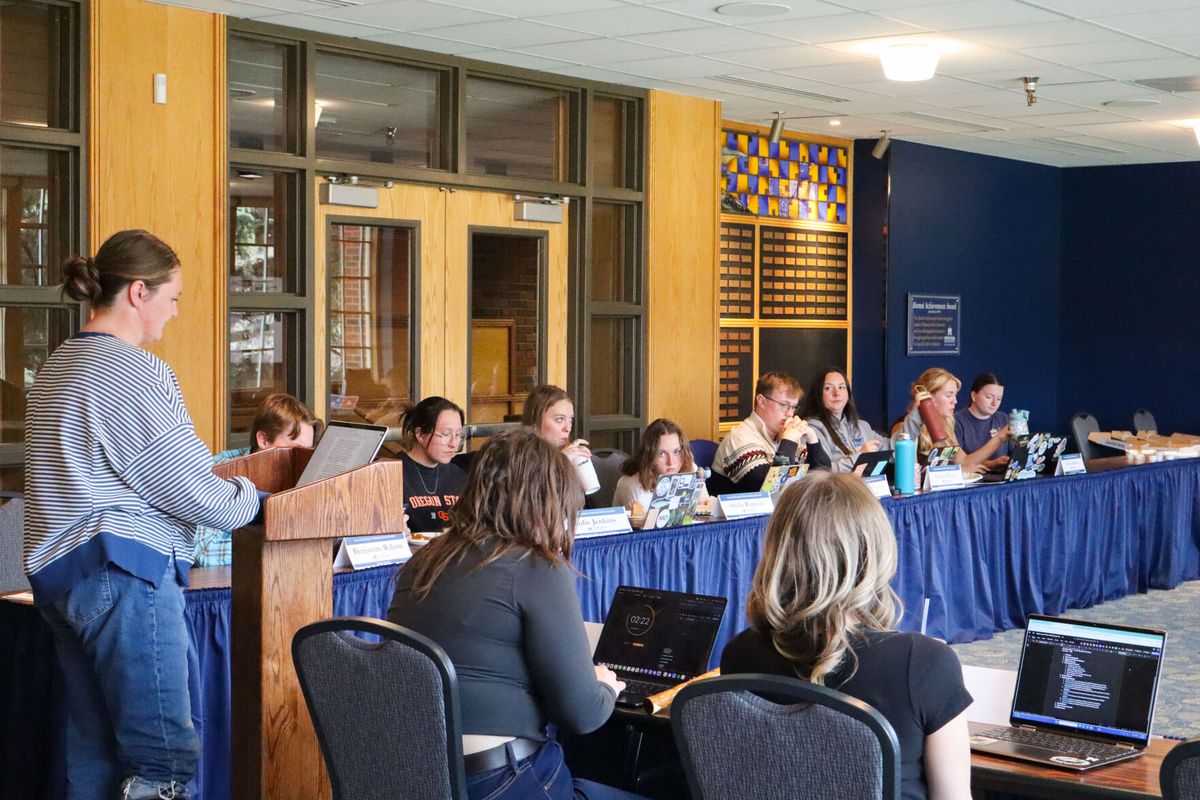
The Associated Students of MSU (ASMSU) recently passed a revised version of Resolution 11 (R-11) during an April 22 Senate meeting.
The first draft of the resolution, titled “On a Loss of Confidence in ASMSU President Leonard Triem,” directly criticized Triem’s leadership and called for a formal loss of confidence. The final version, now titled “On Good Governance,” removes that language and instead emphasizes transparency, communication and accountability among student leaders.
According to at-large Senator Gavin Thorson, the primary sponsor of R-11, the new version maintains the same concerns but changes how they are expressed.
“The version of R-11 we ultimately passed states what we would like to see from student leaders rather than what we disapprove of,” he said in an interview with the Exponent on April 25.
During his April 22 address to the Senate where he explained the changes made to R-11, Thorson said the conversations that gave rise to the no-confidence resolution happened very late in the academic year. “My knee-jerk reaction was to declare a loss of confidence,” he said.
In the Senate meeting, Thorson detailed specific concerns about Triem’s leadership, including claims that he bypassed senators in meetings with administrators and disrupted internal processes.
During his address, Thorson referenced a concern related to the funding that the American Indian Council (AIC) receives from ASMSU. He described a situation that he characterized as a breakdown in communication and trust.
“Without the knowledge of the leaders of AIC, Triem met with members of MSU administration to discuss cutting ASMSU’s funding of AIC events,” Thorson said during the April 22 Senate meeting.
He said he became aware of the situation through a conversation with a council leader.
“When Triem was caught later and confronted on his lack of due diligence, he asked to meet with [the] leaders of AIC. They declined to meet with him, though, because, in their words, the damage had been done,” Thorson said during the meeting.
In an interview with the Exponent on April 28, Triem disputed this characterization and said discussions about funding did not take place behind closed doors or without transparency.
“I wouldn't say [cutting funding] is an accurate characterization either. All these discussions happened in open meetings,” Triem said.
He said his goal was not to eliminate the funding, but that he had recommended shifting that support from the executive budget into the registered student organization funding pool next year.
“I sent them all their money for this year. I recommended a different funding model for next year,” Triem said.
He also said he did not meet privately with administrators to reduce funding and pushed back on claims that he acted without due diligence.
“To my knowledge, I don't think I met with any members of administration to discuss cutting our funding of those events,” Triem said.
Regarding concerns about a potential strained relationship with AIC, Triem said he has not been directly contacted by student leaders expressing concerns.
“I haven't heard directly from any student member of the AIC that our relationship has deteriorated, but that might be the case, and if it is, I would appreciate the chance to talk with one of those student members,” Triem said.
ASMSU Vice President Finn Growney defended Triem’s leadership and approach to governance. “It has been one of the greatest honors of my life to serve alongside ASMSU President Lenny Triem,” Growney said in a written statement to the Exponent on April 24.
Growney said Triem consistently prioritizes students in his decision-making. “I’ve watched him approach every decision with a single guiding question: ‘Will this benefit students?’” he said.
He pointed to several initiatives and cost-saving measures implemented by Triem. “Whether it was saving $3,400 by moving the ASMSU banquet on campus or proposing changes to printer services and wages, he has never shied away from asking hard questions to ensure we are responsible stewards of student fees,” Growney said.
According to him, disagreements within ASMSU should remain focused on ideas rather than individuals. “We must remember to challenge ideas, not people, because that’s where real progress begins,” Growney said.
During his interview, Thorson said he and his co-sponsors stand by the concerns outlined in the original draft of the resolution. “My co-sponsors and I maintain that there was a troubling pattern of antidemocratic behavior on Triem’s part, but that is our personal opinion,” he said.
The updated resolution is about setting expectations moving forward, according to Thorson.
“If you’re in the position to make positive change, it’s incumbent on you to push for that change,” he said. “R-11 will hopefully serve as a clarion call for positive leadership habits for future generations of MSU student leaders.”

Comments ()