
‘Authentic community’: Churches seek local resonance, but the path isn’t always easy
Kristen Spiker and David Joyner both know how important outreach is for churches to energize congregations and engage with their local communities.
“For us, outreach is a big deal,” said Spiker, who is executive pastor of ministry for Element Church in Cheyenne, Wyoming. “Our goal is to make notable impacts within our community.”
The Evangelical church has monthly charitable efforts, and is looking to increase its outreach to nearby F.E. Warren Air Force Base, including an on-base picnic on May 16 that will include 100 volunteers.
“It’s hard for them to get off base,” Spiker said, noting concerns about isolation and mental health challenges for some airmen and other military personnel.
“Our goal is to really impact our Air Force base, to really love on them and spoil them,” she said.
Spiker said the key is for churches to look beyond their four walls and to their neighbors' needs.
‘PEOPLE ARE LOOKING FOR THE SAME THING’
Across the country, Joyner is senior pastor at First United Methodist Church in Rocky Mount, North Carolina. He is also a district superintendent in the North Carolina Conference of the United Methodist Church.
He said genuine engagement with local communities is essential for churches to stay viable and grow their denominations in a contemporary landscape that has seen dips in church attendance and religious affiliations.
“People are looking for an authentic community. It doesn't matter whether it's a small or large membership church; I believe people are looking for the same thing. People are looking for a community where they can be themselves, and the community is honest and open about daily life happenings,” Joyner said.
He said young people, in particular, see through “smoke and mirrors” of some church events and programming.
In Wyoming, Spiker said her church aims to have events that engage young families, including kids and teens. She agrees that churchgoers want to see real impacts, with families wanting to volunteer together.
“You want your church to be an asset to your community,” Spiker said.
‘TOUGH GO’
But like other churches across the U.S., large and small, Spiker said finding volunteers to engage in church events and community outreach and the money to pay for such programming can be consistent challenges.
Element Church is one of the larger in Wyoming with 1,100 members and 14 staff members.
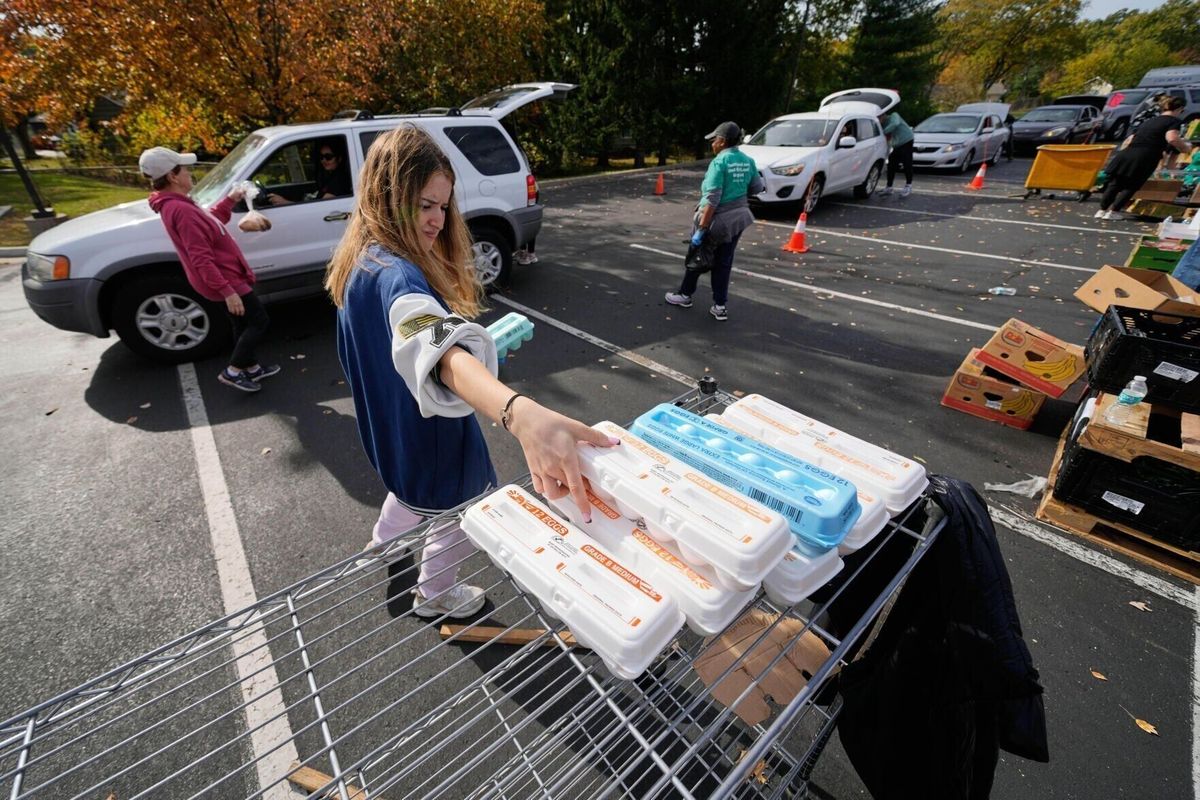
The Cheyenne church also operates a food pantry with a focus on helping families going through long-term hospitalizations of loved ones and does quarterly donations drives, such as winter hats for homeless persons and diapers for foster families.
Other smaller churches across the country have limited staffing and limited budgets to do all the outreach they would like to do.
A new report by the Hartford Institute for Religion Research shows 70% of the churches in the U.S. have 100 members or less, with median in-person attendance of 70 parishioners.
That latter figure is down from 137 congregants in 2000.
The Hartford group shows median weekly attendance at Roman Catholic and Orthodox services is 200 persons, compared to 75 attendees at evangelical services and 50 at mainline Protestant churches. Catholic and Orthodox churches have fewer parishes than their Protestant counterparts and have more masses and other services.
The Connecticut-based group said the median annual income for U.S. churches in its latest survey is $205,000.
“They struggle to have a full-time pastor. They struggle to keep the doors open. They struggle to pay the pastor a living wage,” said Ron Sellers, president of Arizona-based Grey Matter Research and Consulting, which helps churches and religious organizations.
Sellers notes that many mainline Protestant churches have older and sometimes declining denominations.
That makes it difficult for smaller churches to do outreach or step up their social media efforts. Many smaller churches will have a paid pastor and perhaps a part-time administrative assistant.
“For a small church, that's a tough, tough go,” Spiker said.
‘REAL MINISTRY’
Spiker said her evangelical church has reached out to other local denominations in hopes of partnering on community events.
“We try very hard to partner and collaborate with other churches,” she said.
But she notes limited success so far with those efforts.
“They’re doing their own thing, in their own lane,” Spiker said.
A number of churches contacted for this story did not respond to requests to talk about their community outreach efforts or share their best practices.
Joyner said size and resources should not keep churches from engaging with their local communities.
“I have seen churches with as few as 10 people engaged in real discipleship and ministry in their community without spending large amounts of money. It doesn't cost any money to be nice and to love one another,” Joyner said.
He said sometimes “churches are busy trying to program themselves out of decline” instead of finding real opportunities for local connections and resonance.
“The church has to stop doing ministry for and start doing ministry with,” Joyner said.



Comments ()