
Behind the windows: What a library closure reveals about the building made for every student
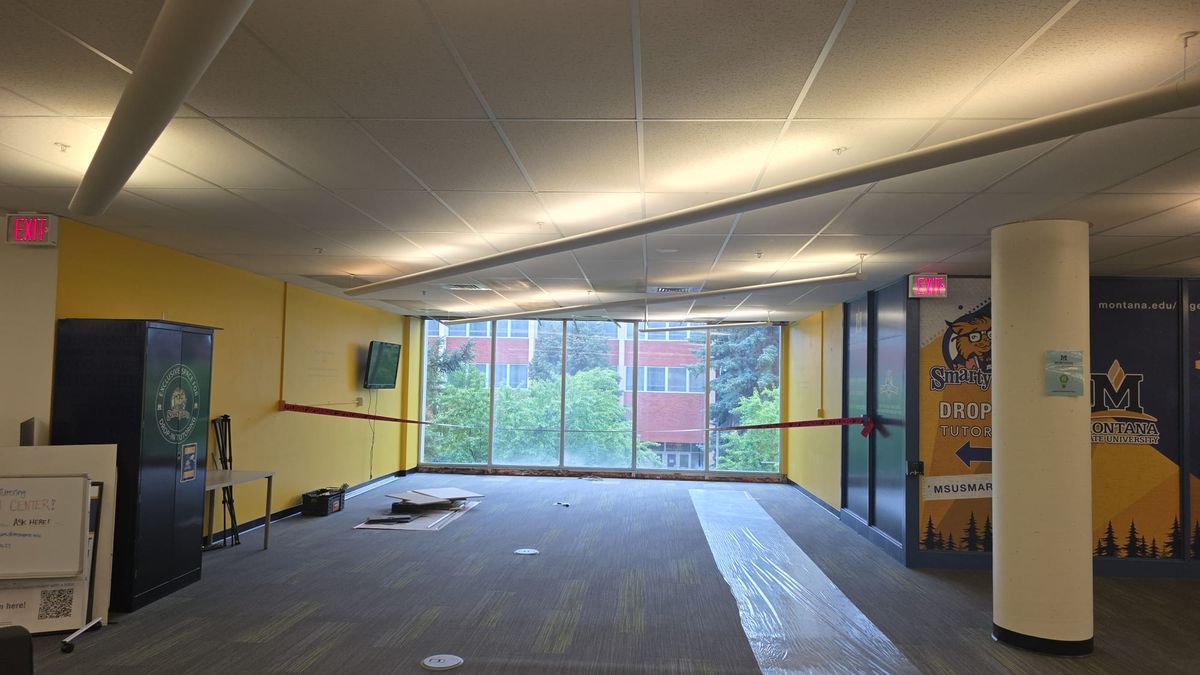
A story about the Roland R. Renne Library was far from my first choice for this week's edition of The Exponent, but after our original story fell through, someone mentioned that the library's second and third floors had been closed. Who was affected, and what were the details?
Internally, I groaned. A newspaper article about construction — always riveting — at the library, which is notoriously popular with the youth. I scheduled an interview with Doralyn Rossmann, dean of the library, closed my laptop and went back to my homework.
The interview started straightforwardly enough — Rossmann said the window project had been planned for years, funded by leftover money from an earlier renovation and the one-day closure was an unplanned side effect of a steel fastener stuck in the supply chain. What surprised me was how deliberately the library manages any disruption to students.
"We always try to plan anything that's going to be disruptive to students to be when they're not here, or in intercession," she said. According to Rossmann, this standard applies to everything from changing lightbulbs to swapping furniture.
From there, Rossmann discussed just how data-driven and dedicated the library is in service to all students. “We actually have counters at the front of the building that are heat sensor counters, so we can see the heat of someone walking in the building. At any given time we can tell approximately how many people are in the building and at what hours of the day,” she said.
Every project is the result of careful planning and years of behind-the-scenes work. The money behind the window renovation traces back to a 2022 project that relocated shelved books on the second and third floor to make room for more seated study areas. According to Rossmann, this was a direct response to staff noticing more students studying with friends than browsing bookshelves, so the library changed to accommodate the demand.
The librarians even log weekly counts of how students use each space, how many students are studying alone, how many occupy each table, utilize quiet zones, study with friends or use library-provided technology versus their own. All this informs how the library is organized, furnished, lit and operated.
Feedback collected through the whiteboards downstairs recently led to expanding the natural light within the library and more outlets being installed throughout the building.
According to Rossmann, the window project only scratches the surface of what she'd like to do with the building. The library, as we know it, was constructed in two phases. Back-to-back constructions in 1950 and 1960 make up the entirety of the library that students utilize today. However, the demand for library services has increased along with the student population. A book epublished on the MSU website, “History of the Statistics Program at Montana State University, ” by Martin Hamilton and Richard Lund, stated that enrollment was 4,438 in 1960, back when the university was called Montana State College. In the fall semester of 2025, the number had nearly quadrupled to 17,165, according to University Data and Analytics.
Rossmann described a renovation of the south-facing side, which is currently a wall of brick with two fenced-off generators. The long-range building plans that she hopes for entail a new entrance on the south side of the library, complete with added study spaces, more glass to allow for natural light and even a patio.
Building renovations at MSU aren't unprecedented. The University has seen impressive capital investment in its infrastructure over the past 15 years. According to a May 29, 2025 Mountains and Minds article, 25 percent of MSU’s total building square footage has been built, renovated or has been planned for construction or renovation under the former President Waded Cruzado.
Despite my initial doubts about the library’s popularity, Rossmann told me that 4,000 students use the library every week — 5,000 during finals — and I interviewed two students to survey their usage as well.
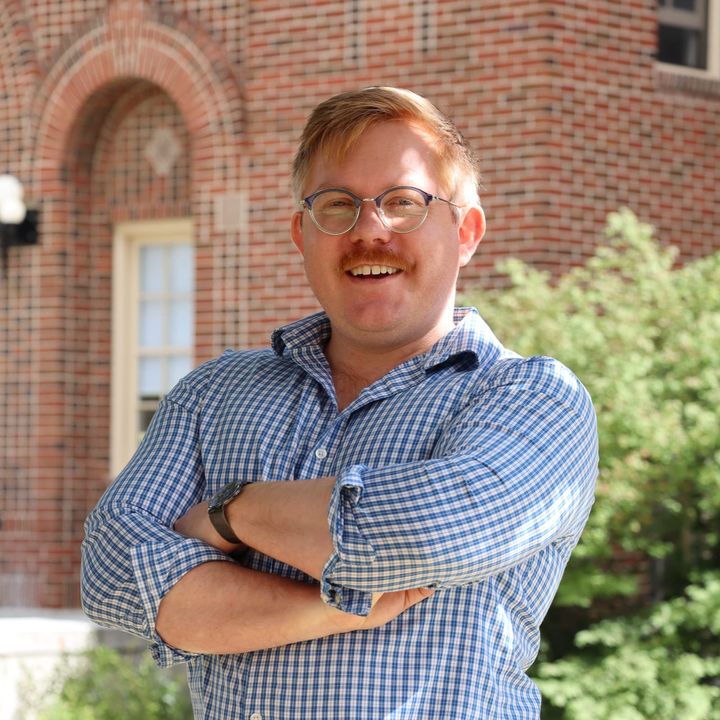
Dilyn Huffine, a junior studying business management, said she uses the library three to four times a week and considers it one of her most-used University resources.
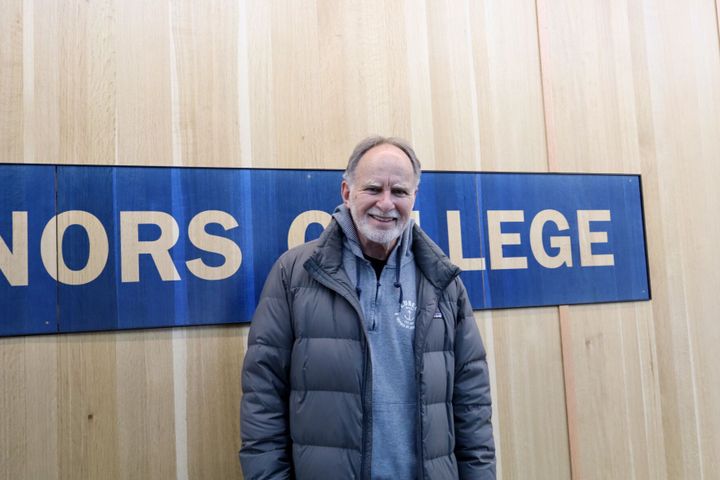
Similarly, John Robison, a freshman studying physics, when asked how often he uses the library responded “damn near every day,” highlighting his appreciation of the library.
Unfortunately, the University hasn’t announced any further construction projects to the library. Instead, the faculty uses carefully collected data to optimize a building that hasn't seen a major structural update since 1960 for a campus more than triple the size it was built for. Among so many new buildings and renovations that students have witnessed over the past five years, one wonders when a fully renovated library will be added to the list.
For Rossmann, the answer starts with the south entrance she described to me from the beginning. “My dream would be to have that entrance on the South Side come to fruition,” she said.

Comments ()