
Beyond Sunday: The new social media world for churches and other houses of worship
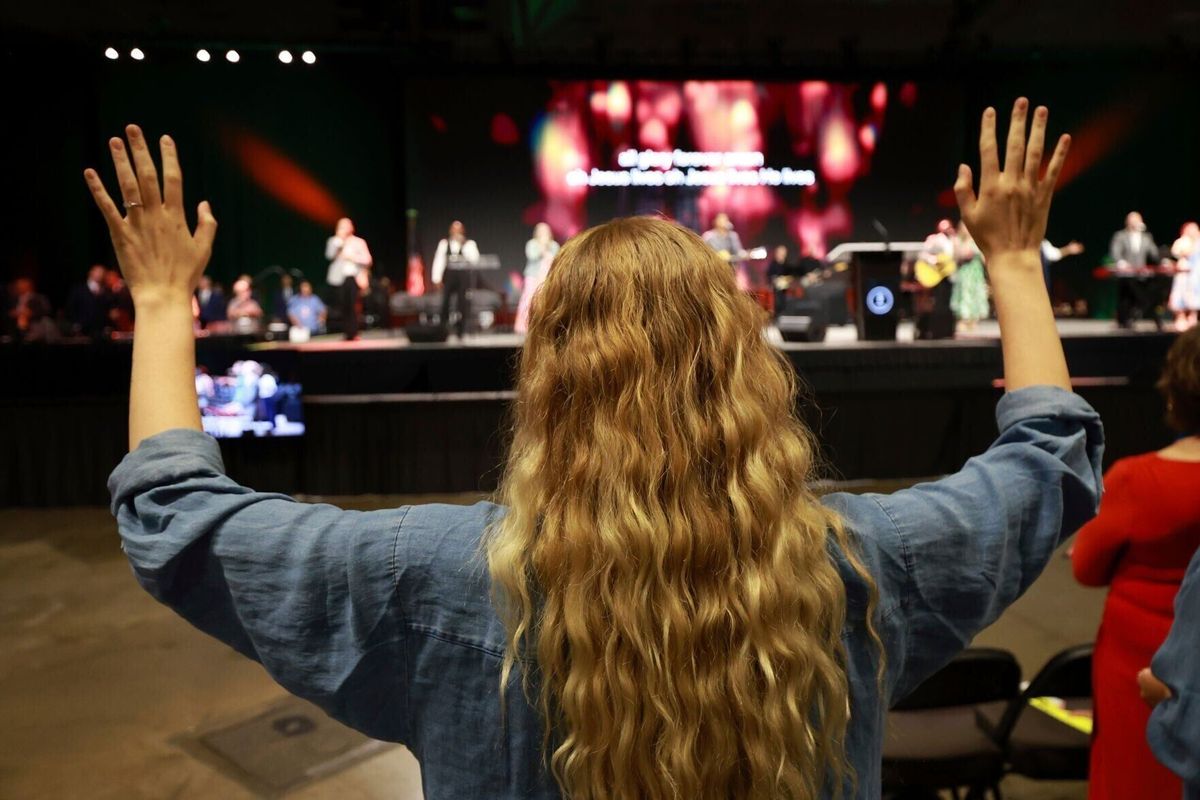
The world is changing fast for churches, other houses of worship and religious organizations.
Social media is shifting content creation, programming and fundraising for faith groups. It’s also changing how congregations and wider communities consume religious and spiritual content and connect with ministries and religious charities.
There are shifts in church attendance, including some stemming from more virtual options coming out of the pandemic closures and exponential growth in social media.
Faith communities, including churches, can also find themselves intersecting with social, cultural and geopolitical changes and frictions.
All that is impacting how churches, houses of worship and associated nonprofits engage with their members and wider communities. That includes community outreach and fundraising/giving trends.
‘THERE IS A CONNECTION’
A new national survey of more than 1,000 evangelical Christians by Arizona-based Grey Matter Research & Consulting and Pennsylvania-based Infinity Concepts found that in-person engagement (including volunteering and attending services) continues to be a prime driver of financial giving to churches.
“We know there is a connection between volunteering and giving,” said Grey Matter President Ron Sellers.
“Among evangelicals, there’s basically an almost 100% correlation between volunteering and giving. Only 2% of evangelicals who volunteer (at their church) give nothing,” Sellers said.
The need for community connections extends to other faith communities.
“Churches that are finding more resonance are ones that are practicing intentional incarnation — that is to say becoming deeply embedded in their local communities,” said Rev. Dr. Jonathan Page, director of the Lewis Center for Church Leadership in Washington, D.C.
“There is an increasing need for congregations to show alignment between their core beliefs and their core practices. This means there are growing strides in civic engagement and partnership development. While fundraising is a key element of congregational life, it comes most fruitfully in response to missional activity,” Page said.
‘TESTIMONY AS CONTENT’
The need for connections makes it imperative for churches and nonprofits to make sure their social media and fundraising strategies show results to members and donors.
Atdhe Trepça, founder and principal with Happy Productions, a Connecticut-based multimedia production firm that works with churches and nonprofits, said the key to giving is to show results and impacts.
“You need to show them through videos, through social media, through email newsletters where their donations are going and where they are having an impact,” Trepca said.
That’s the outreach strategy of major national nonprofits such as Shriners Hospital for Children and St. Jude Children's Research Hospital, who both highlight care for pediatric patients, and the International Fellowship of Christians and Jews, whose commercials show assistance for elderly women.
Trepça said social media videos showing testimonies and impacts work better than 1990s style stewardship letters and annual reports.
“The churches growing giving are the ones treating testimony as content, not liturgy,” Trepca said.
WIDER NETS
But the situation creates some conundrums.
Churches and nonprofits can cast wider nets and appeal to younger, broader audiences with digital and social media focus.
Trepca points to “Are You Happy”, viral social media content he created via Happy Productions.
“The videos reached over 10 million people in a span of a couple of weeks. There’s a lot of potential,” he said, noting that the cost of video and social media productions continues to decrease.
But a focus on more virtual outreach, fundraising and younger audiences runs up against some existing realities of church attendance — giving and engagement.
Sellers notes that it’s still older donors who tend to give more to religious and charitable causes.
“The older the person is, the more likely the person is to give,” he said.
Consequently, fundraising outreach frequently focuses on older, wealthier donors.
‘VAST MAJORITY’
Virtual church attendance jumped during government-mandated social restrictions imposed during the COVID-19 pandemic, and some attendees still prefer online attendance.
But are those virtual congregants giving?
The national survey of evangelicals found 84% of those who attend in-person weekly services also donate money to their church. For sporadic in-person church-goers, 69% also donate to those places of worship.
But the number drops precipitously for those who only view services virtually, with 17% also donating money to those churches and ministries, according to the Grey Matter/Insight Dynamics survey.
“The vast majority do not finance or support any church,” Sellers said, noting that virtual attendees will also watch content from out-of-market churches and national ministries such as Joel Osteen and Joyce Meyer.
SHIFTING CONTENT
Trepca said audience reach for livestreams of Sunday morning services and sermons has dropped, ”But short-form video published Monday through Friday is pulling in younger members who would never walk in cold. Churches that shifted 70% of content budget from livestream to weekday short-form are reporting two to three times more first-time visitors year-over-year,” he said.
Page said both existing congregations and broader communities want to see faith groups living their spirituality.
“There seems to be a growing desire for programming that can offer clarity to the core beliefs of the church, how those beliefs align with scriptural and theological grounding, and methodologies for practical application of those beliefs," Page said of congregations.
“In wider communities, there is a desire to see alignment between belief and practice. How is the church advocating for the community, especially for those who have been marginalized or forgotten,” he said.
UP NEXT: BELIEF AND BANDWIDTH
There is definitely will in the pews and from the pulpits to evolve with changing times and craft messaging and engagement for 21st-century audiences.
But for many churches and nonprofits across the country, the question is whether they have the bandwidth, staffing and finances to make that happen.



Comments ()