
Bollocks! Montana man admits to illegal sale of ram testicles
A few sets of contraband gonads have a Montana man facing possible prison time and a six-figure fine.
John Edward Lewton admitted Thursday to violating federal law when he took testicles off Montana bighorn sheep and sold them to a rancher in Vaughn, who used the semen from the testicles in a bigger scheme to supply illegal breeders nationwide with wild sheep sperm.
That same rancher, Arthur “Jack” Schubarth, was eventually sentenced for violating a slew of wildlife laws, most notably creating giant sheep hybrids from the genetic material of a central Asian species.
“I should have known,” Lewton said repeatedly during his appearance Thursday before U.S. District Judge Susan P. Watters. “I shouldn’t have listened to Schubarth, I guess.”
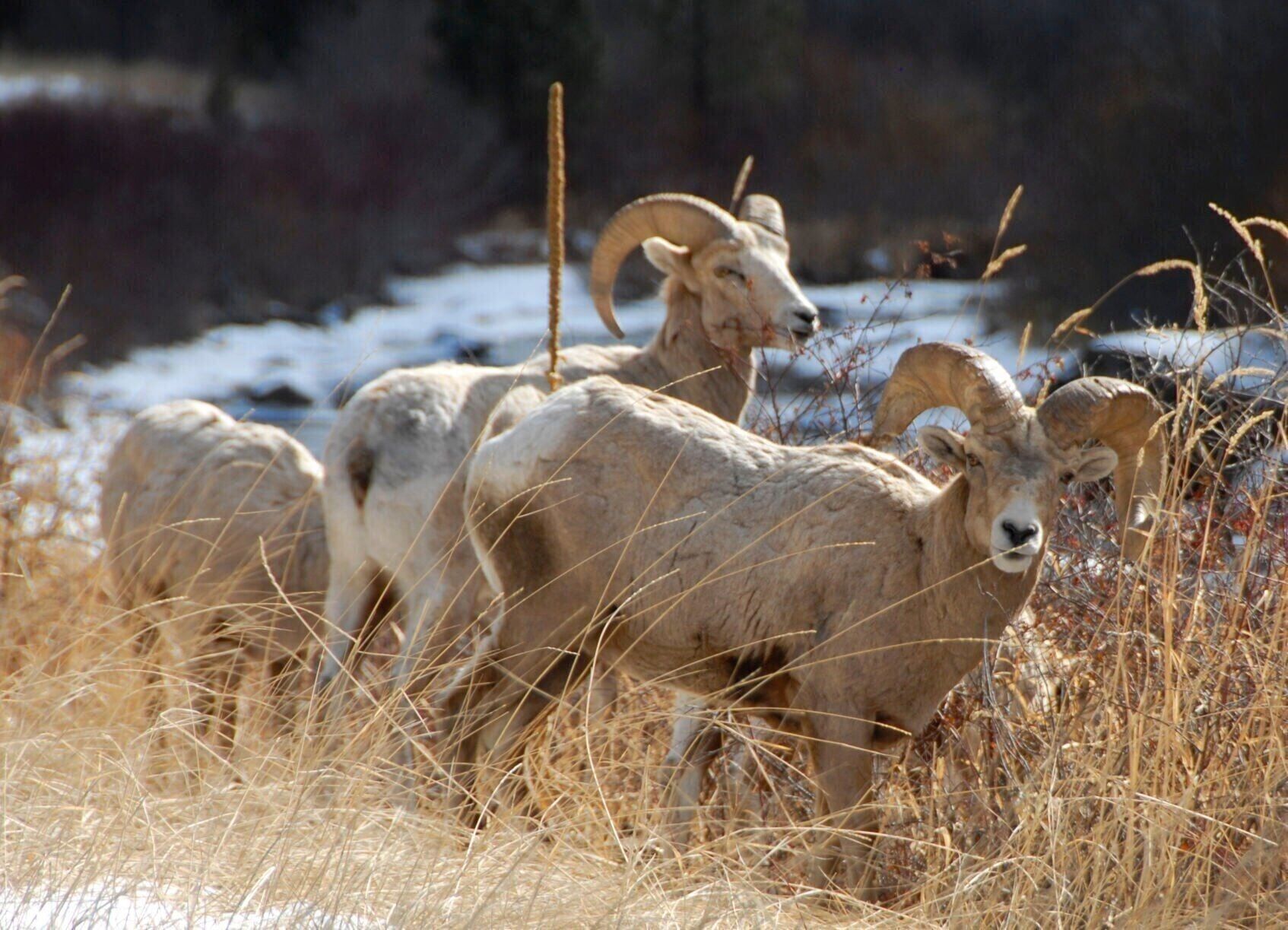
For decades, Schubarth operated an alternative game ranch in Cascade County where he raised sheep for breeding or selling to hunting ranches. To create more genetically robust specimens, Schubarth sourced the testicles from wild bighorn sheep shot during guided hunts, using them to artificially inseminate his ewes. Lewton was one of those sources.
In October 2019, Lewton, a licensed outfitter, joined a hunt for a trophy-sized Rocky Mountain bighorn sheep on public land in the Missouri River Breaks area of north-central Montana. The hunt ended with the ram dead and Lewton took off its scrotum. The next day, he sold it to Schubarth for $400.
“Lewton had conducted similar transactions with Schubarth for wild Rocky Mountain bighorn sheep testicles on multiple occasions prior to the Oct. 21, 2019 transaction,” federal prosecutors wrote in court documents. “In total, Schubarth paid Lewton at least $2,800 for the sheep parts.”
Schubarth, according to court documents, extracted the semen from the sheep testes and sold it to buyers in Texas. Federal investigators documented multiple conversations via email and social media between Lewton and Schubarth in which they discussed the best way to preserve gonads to keep their ejaculate fresh and exchanged information on rams harvested during Lewton’s hunts. Schubarth had bighorn sheep sperm customers in Alabama, Arkansas, Kansas, Minnesota, Missouri, Nebraska, Ohio, Oregon, South Dakota, Texas and West Virginia, court documents said.
Lewton’s making a profit off harvested ram scrota sold across state lines ran counter to the Lacey Act, an extensive federal conservation law meant to prevent trafficking of wildlife, or their parts harvested after a hunt.
“Between November 2017 and December 2020,” prosecutors wrote, “while Lewton was selling Rocky Mountain bighorn sheep testicles to Schubarth, it was not legally possible for Schubarth to sell semen or offspring produced therefrom within Montana. By selling Schubarth the bighorn sheep parts, Lewton aided and abetted Schubarth’s knowing sale and purchase of such bighorn sheep and parts thereof in interstate commerce.”
At his appearance in court, Lewton said he never met Schubarth in person and maintained that he is passionate about protecting the Rocky Mountain bighorn sheep population in Montana. Lewton’s attorney, Robert Lee Forkner, said the testicles were useless, typically tossed in the gut pile after an animal is cleaned, and his client was under the impression that Schubarth was preserving the semen in the ram’s testicles in the event of diseases like pneumonia killing off portions of Schubarth’s herd.
“I shouldn’t have believed the man,” Lewton said, referring to Schubarth. “I should have known he was a crook. I was stupid.”
While gathering and selling ram semen, Schubarth managed to clone a massive species of bighorn sheep native to Kyrgyzstan on his Montana ranch. Schubarth dubbed the genetic copy of the Marco Polo argali sheep the “Montana Mountain King,” and profited off selling more semen, this time from the invasive ram, and its offspring of hybrids to captive hunting operations.
In 2024, a federal judge sentenced Schubarth to six months in prison for conspiracy to violate the Lacey Act and substantively violating the Lacey Act. The judge also ordered Schubarth to pay nearly $25,000 in fines.
Judge Watters talked Lewton through all the elements of the charge against him, establishing that Lewton, with decades of experience as a hunter in Montana, should have known that the sale of the testicles was illegal. That conversation veered briefly into Watters specifying that it was the sale of the gonads, and not the semen in particular, that was illegal.
“I didn’t know that semen was considered to be meat,” Lewton said. “I guess some people think that semen’s consumable.”
“I’m just talking about the testicles,” Watters said.
Ultimately, Lewton pleaded guilty to the misdemeanor count of Lacey Act trafficking. Although the penalties come with up to a year in prison and a fine of up to $100,000, Assistant United States Attorney Julie Patten said in court that the prosecution will recommend a lighter sentence in exchange for his guilty plea. Lewton has a sentencing hearing scheduled in September.
This is not Lewton's first brush with hunting violations. In 2009, he was charged after guiding without a license. In that instance, FWP investigators sent an undercover officer to hunt with Lewton to make their case.
That undercover officer killed a ram, triggering felony charges against Lewton and raising questions about whether the agency had gone too far to catch Lewton in the act.
The ram the agent killed turned out to be a state record, and the agent had crossed private property with Lewton to reach the animal. Three men were charged as a result of that investigation, but by 2012 the cases evaporated without any convictions; all three men were acquitted at jury trials.
Reporter Seaborn Larson contributed to this report.



Comments ()