
Boom and bust: How trade, conflict and opportunity shaped Montana’s early economy
AMERICA 250
Editor's note: This story is part of America 250, a series that examines Montana through both a historical and modern day lens. As we celebrate America turning 250 this year, we in turn are celebrating the people, places and things that have shaped the Treasure State. Future stories will focus on railroad systems and rail towns, historical relations with the media, cowboy culture, national parks and tribal history.
Iconic Montana historian K. Ross Toole described the state’s economy as a system of resource extraction. From the rise of the Copper Kings to today's ballooning tourism economy, someone has always looked to take something out of Montana.
"The Montana pattern has been brief, explosive, frenetic, and often tragic,” Toole wrote in his book, “Montana: An Uncommon Land,” first published in 1959. “The economic picture has often been one of exploitation, overexpansion, boom-and-bust. The political scene has been equally extreme — from fiery, wide-open violence to apathetic resignation."
Some of the first white settlers traveling west to Montana did so to acquire highly sought-after furs and hides: beavers and, later, bison pelts. The initial colonial settlements were established under the idea of trading with Native American tribes and white fur trappers.
Before the first Europeans stepped foot on the land that would become Montana, intermountain tribes traded through hubs across the state for thousands of years, often near the confluences of key rivers and hunting grounds.
The emergence of European fur trappers, and later settlers, created conflicts between Indigenous people and colonizers, who sought to extract Montana’s critters for profit, leading to the near extinction of beavers and bison.
“Why did all this power and intrigue fasten on the lowly beaver in his mountain stream?,” Toole questioned in his book. “Because fur was of a vital importance in Europe in terms of apparel. Wool was common. But there were no synthetic dyes, and wool was drab except for the brilliance lent by indigo or cochineal … It is not too much to say that the first economic development of Montana was a consequence of fashion five-thousand miles away.”
While most of these trading hubs faded over 250 years of American history, including several before Montana became the 41st state in 1889, some evolved into modern towns, while other posts have been preserved as remote historic sites.
Indigenous people trade at buffalo jump
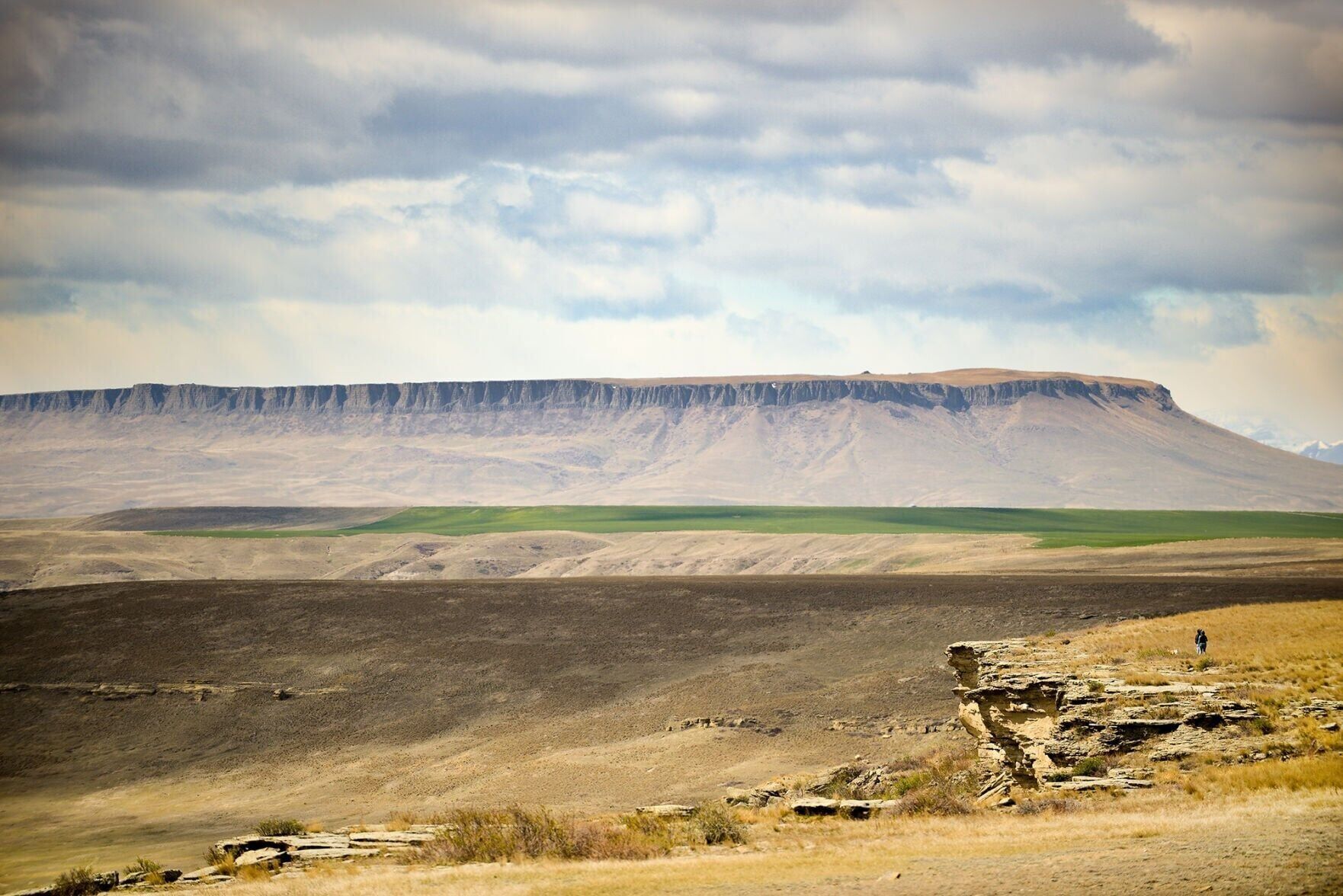
On cliffs outside Ulm, Montana, stands a reminder that for thousands of years Indigenous people strategically hunted bison through “buffalo jump” structures.
Historians argue the First Peoples Buffalo Jump is one of the longest continually used communal hunting and meeting sites in North America. The tribes used the landscape and bison behavior to accomplish much of the hunting.
Buffalo jumps feature the construction of rock barriers along the edges of plateaus in the Great Plains. The barriers, combined with the topography, allowed Indigenous hunters to drive herds toward cliffs, where bison became injured or were killed in the fall.
The space also needed ideal conditions to draw in a herd of bison and strategic hiding spots to surprise the animals and push them into drive lines.
More than 1,400 rock cairns still stand at First Peoples Buffalo Jump, forming 47 stone alignments in the area, according to the Montana Historical Society. Historians estimate tens of thousands of bison were processed by tribes in the area.
“They ate some of the meat right away, but cut most of it into thin strips, which they then air or smoke-dried on pole racks,” historian Martha Kohl wrote in “A History of Montana in 101 places,” a 2025 book published by the Montana Historical Society. “Portions of the preserved meat were made into pemmican by pounding it together with berries, fat and bone marrow. The meat not only nourished the hunters and their families but was also an important commodity in the trade between northern plains hunters and the Indigenous farming villages downriver along the Missouri.”
Tipi rings still stand at the site, along with pictographs and a large stone circle that historians hypothesize was used for ceremonies. Estimates pin the use of the site between 4,000 BC until around 1,700 AD.
Its use declined as more settlers expanded westward to colonize the Rocky Mountains and introduced horses to Indigenous tribes.
Bison also sharply declined with westward expansion. Historians estimate between 30 million to 50 million bison once roamed North American, but by the 1880s, only a few hundred remained.
Bison were a primary food supply for many Plains tribes, but increased harvesting of bison by white settlers and the U.S. Army led to starvation and weakening of the tribal nations.
Several treaties between the U.S. and Indigenous tribes led to the reservation system seen today, although initial agreements called for common hunting grounds for bison, like in the 1855 Blackfeet Treaty.
Decades later, Montana tribes like the Blackfeet, Sioux and Assiniboine have reestablished buffalo herds on their land.
Today, First Peoples Buffalo Jump sits within a state park, including a visitor center, interpretive trail and picnic tables, according to Montana Fish, Wildlife and Parks.
Fort Manuel Lisa brought boom, bust to the fur trade
With the return of Lewis and Clark in 1806, establishing new trading posts for the fur trade accelerated.
Fort Manuel Lisa or “Manuel’s Fort,” was established at the confluence of the Yellowstone and Big Horn rivers in 1807 by the Missouri Fur Trading Company, owned by Manuel Lisa. He employed help from members of Lewis and Clark’s exploratory party.
The settlement, reportedly just temporary living quarters and one two-room trading house with a loft, did not survive long. Settlers faced routine attacks from hostile tribes. The fur trade led to dozens of temporary forts that fizzled within a year or two.
Fort Manuel was abandoned by 1811, but the Missouri Fur Trading Company kept launching exploratory operations into Montana. Several fur trading companies from the United States and Canada quickly competed for sites and trading partners.
The boom and bust did not last, and as Toole noted, just one Montana fur trading post stood the test of time and grew into a larger town.
“Between 1808 and 1821 the Missouri Fur Company established four posts. All were abandoned,” Toole wrote. “Canadian fur companies between 1808 and 1846 constructed five posts in Montana. No settlements grew up around them. The Rocky Mountain Fur Company set up two posts, neither of which existed long. The great American Fur Company established Fort Benton in 1847 where Fort Benton is today. It alone of some eleven American Fur Company posts in Montana survived the end of the trade.”
Fort Benton bridged trading post to larger commerce hub
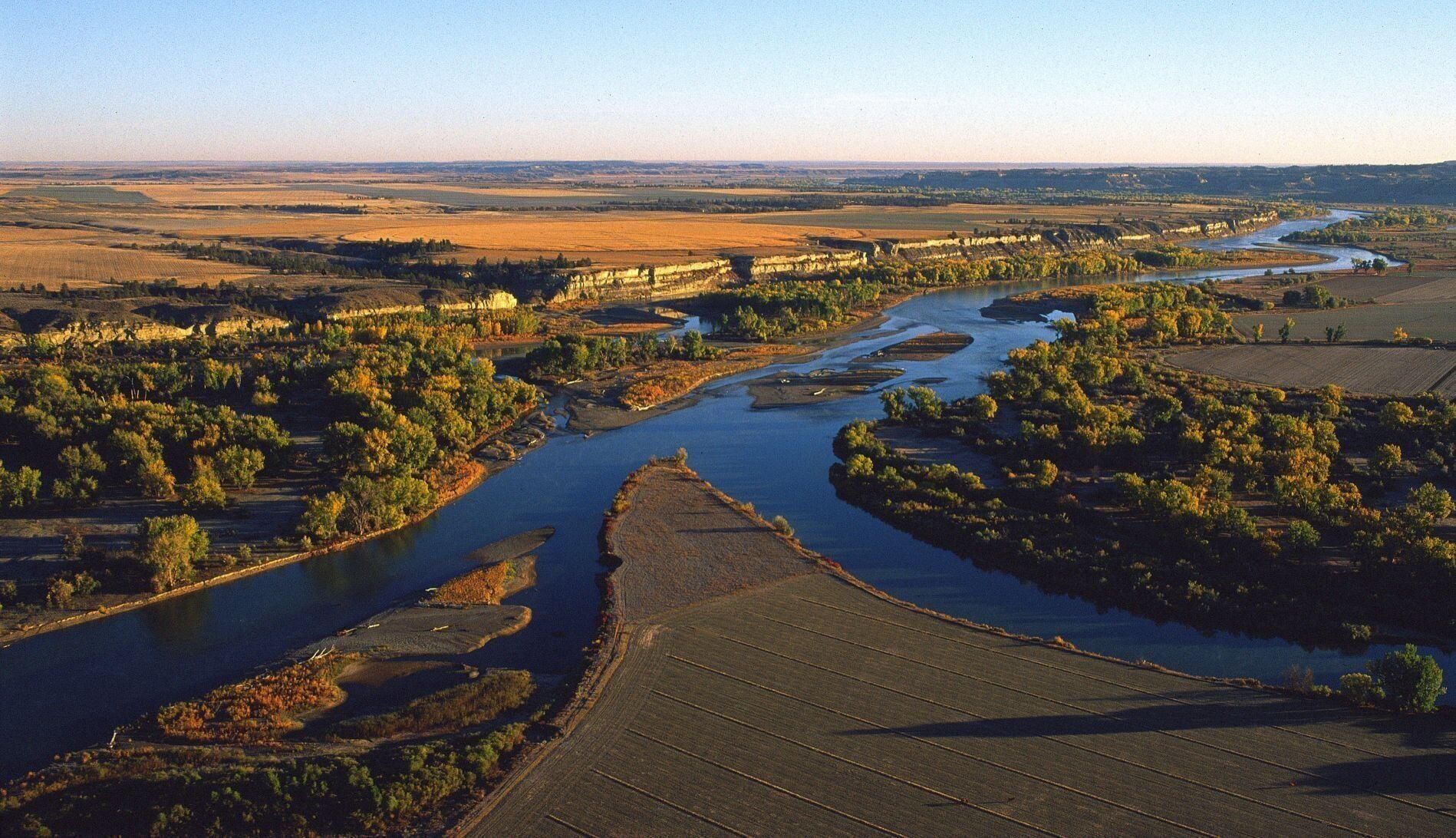
Next to the Missouri River that cuts at the plateaus of central Montana, the town of Fort Benton is still considered the “birthplace of Montana,” where trading was a center point.
The fort was established in 1846 as a robe trading post for the American Fur Company, but had the unique ability to transport materials using the Missouri River. Fort Benton was often the last navigable town along the meandering river.
Its location was key for trade and the expanding transportation network for settlers in the area. The Mullan Trail starts in Fort Benton and crosses the Rocky Mountains before reaching Walla Walla, Washington.
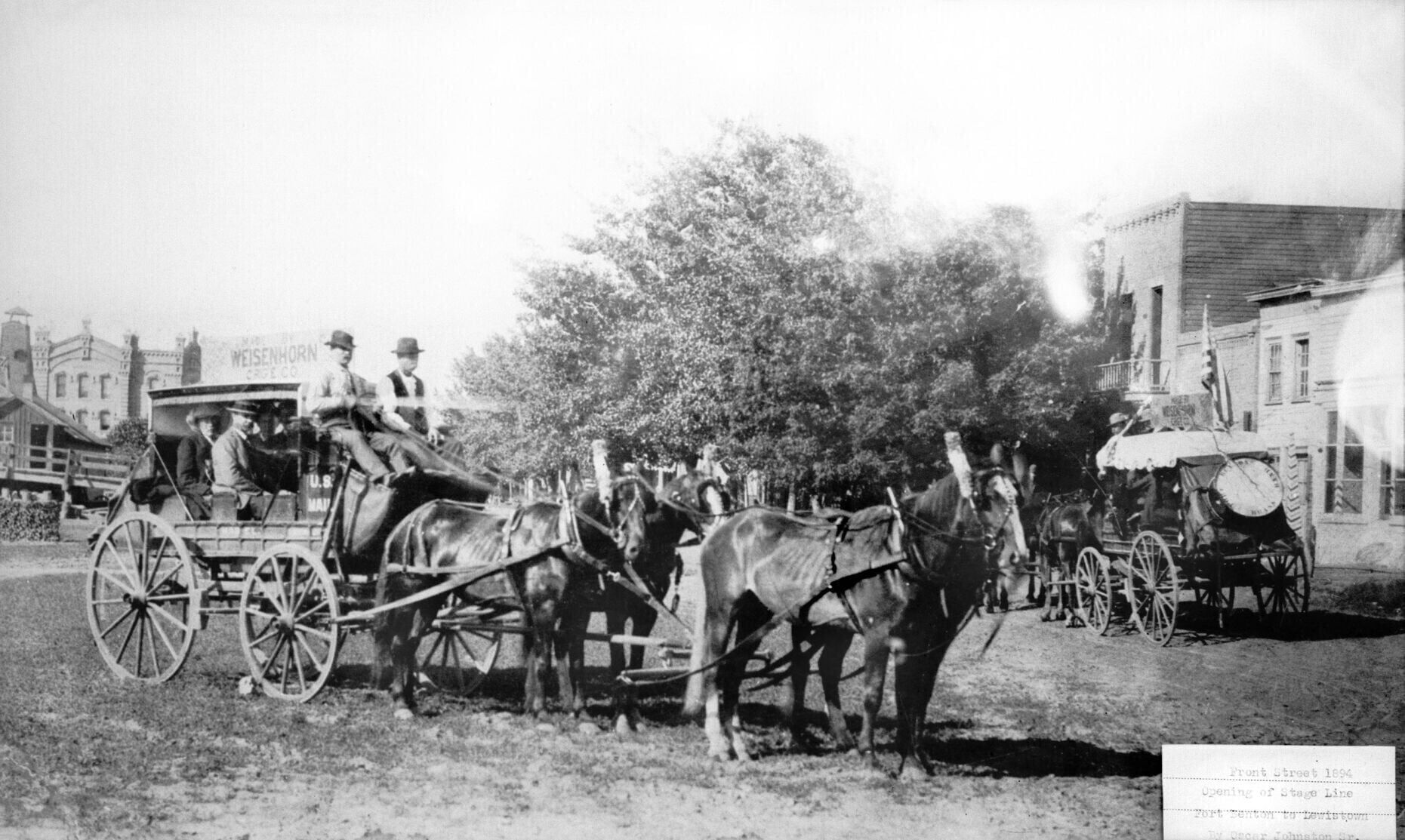
“Steamboats plied the Missouri River to Fort Benton for thirty years, until the railroad signaled an end to this towns’ prominence as the ‘Worlds Innermost Port,’ the modern town’s website reads. “This once feisty outpost played such a vital role in the expansion of the West, that it is now registered as a National Historic Landmark.”
At times, settlers in the fort clashed with members of the Blackfeet Tribe, including the killing of a chief’s brother and son in 1869. Ten more members of the tribe were killed by Fort Benton settlers and soldiers in 1870 for alleged cattle raiding. No charges were brought by local officials.
While the site first stood as a fur trading post, the innermost port reinvented itself for other commodities, including the gold rush, which hit Montana in the mid-19th century.
“The first steamboat had reached Fort Benton on the high waters of the spring of 1860,” Toole wrote. “Thus the mountain region of Montana was accessible for the first time. All of this brought prospectors almost by droves in the early 1860s
Today, Fort Benton has roughly 1,500 residents and is situated within Montana’s “golden triangle” known for its sizable wheat production.
Fort Connah boasts Montana’s oldest standing building
While the Hudson’s Bay Company of Canada was effectively shut out of fur trapping in the United States with the Oregon Treaty of 1846, Fort Connah just barely squeaked by, since it was under construction at the time.
First named Fort Conoh, the site was the last trading post launched by the Hudson’s Bay Company in the Mission Valley between St. Ignatius and Pablo. It was one of the only trading posts in the area with a large selection of goods, the Montana Historical Society wrote.
“Fort Connah was an important trading post for tribes on either side of the Rocky Mountains. Furs were the main commodity, but buffalo meat, pemmican, saddle blankets, rawhide, and rope were the other key trade items, as the Hudson’s Bay Company could not obtain them at its posts farther west,” said Montana Historical Society wrote.
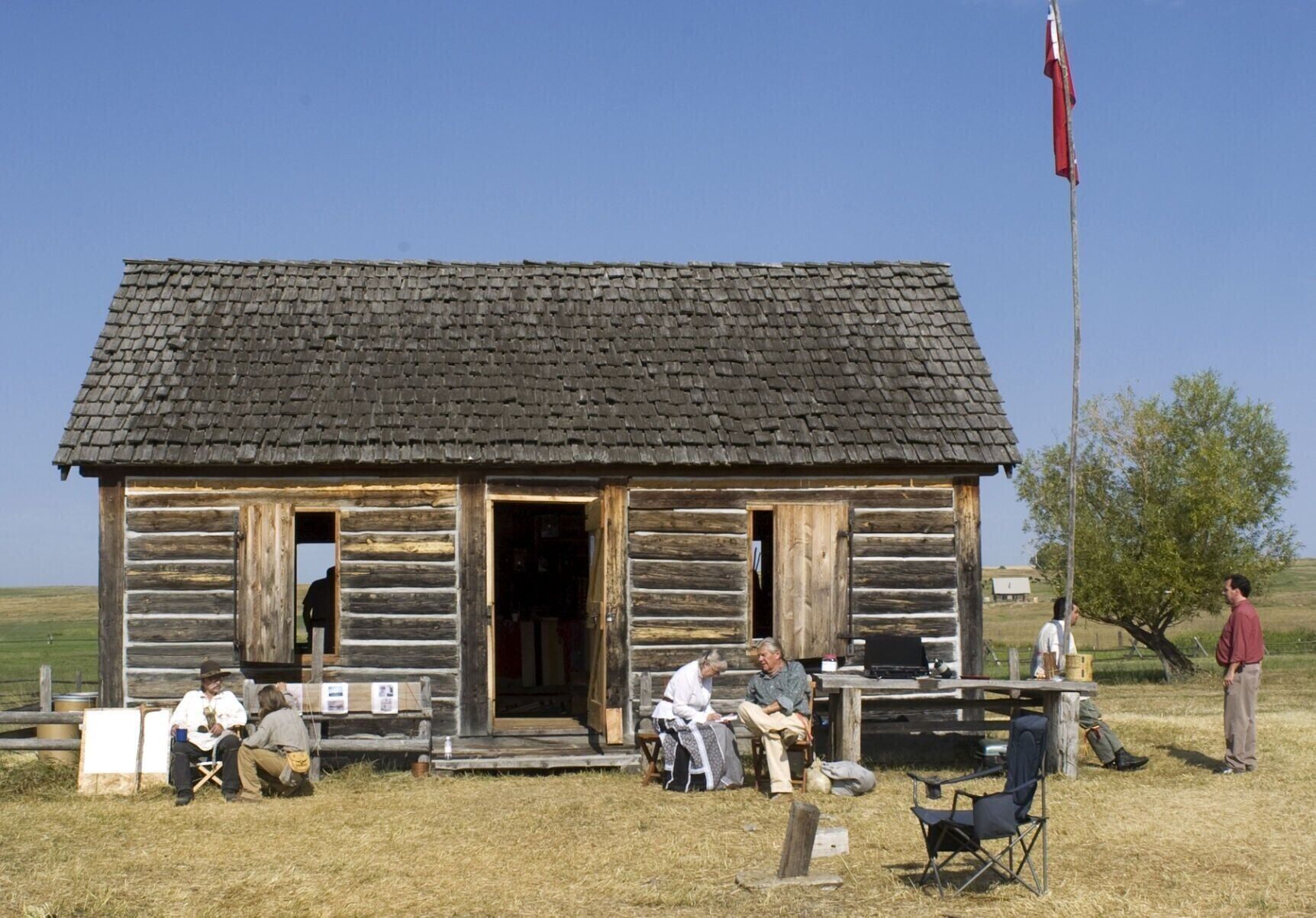
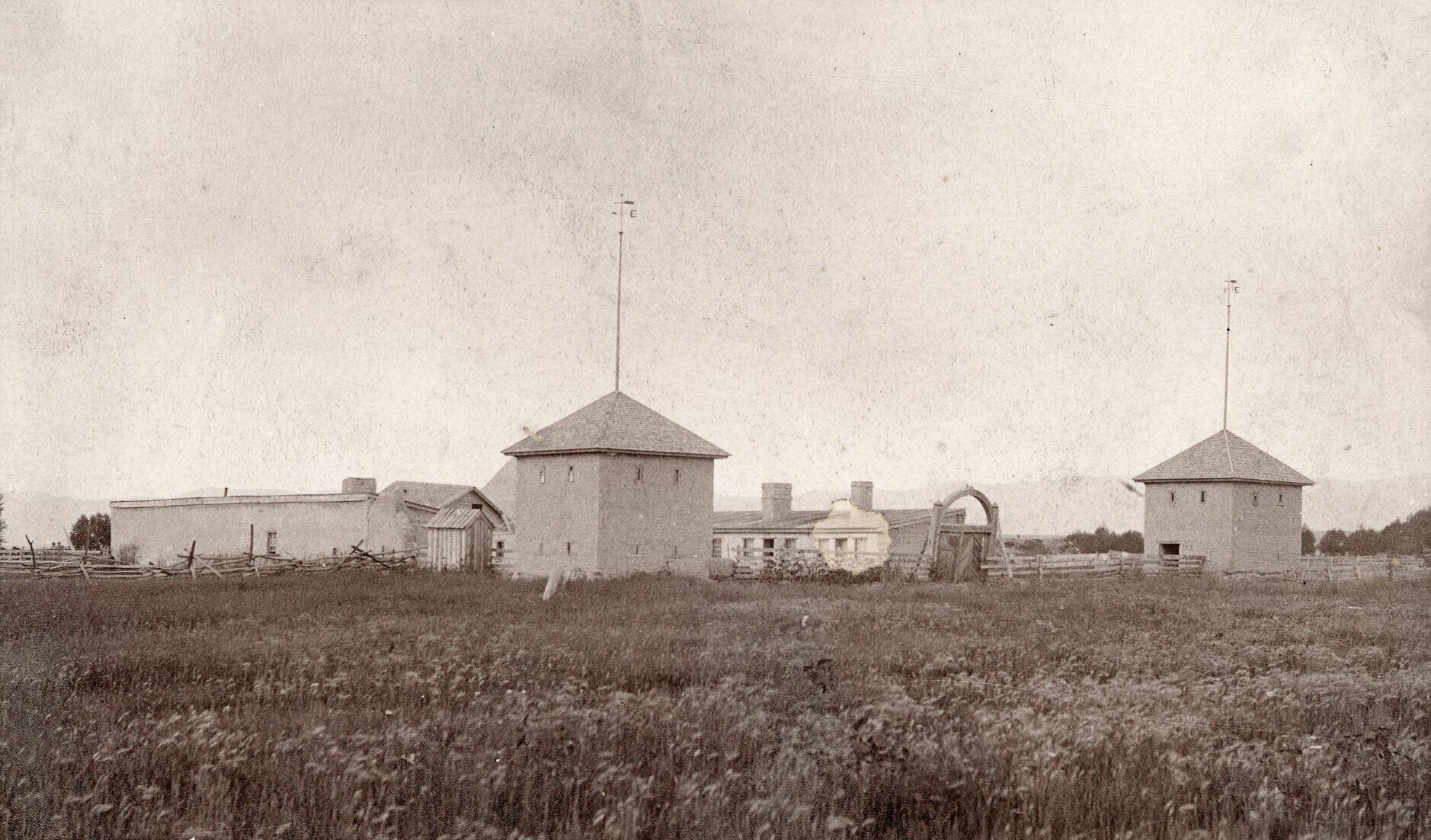
The original fort layout included a wooden bastion, or defensive wall, several storerooms, a home and a corral. The last remaining building on the site was estimated to be constructed in 1846 or 1847, likely making the structure the oldest standing building in Montana.
After the fort was decommissioned by the Hudson’s Bay Company, its original operator, Angus McDonald, acquired the land. He later died at the site in 1899. Today, the site is under care by the Fort Connah Historic Restoration Society, and the original building can be seen from Highway 93.
Fort Union had large trading draw
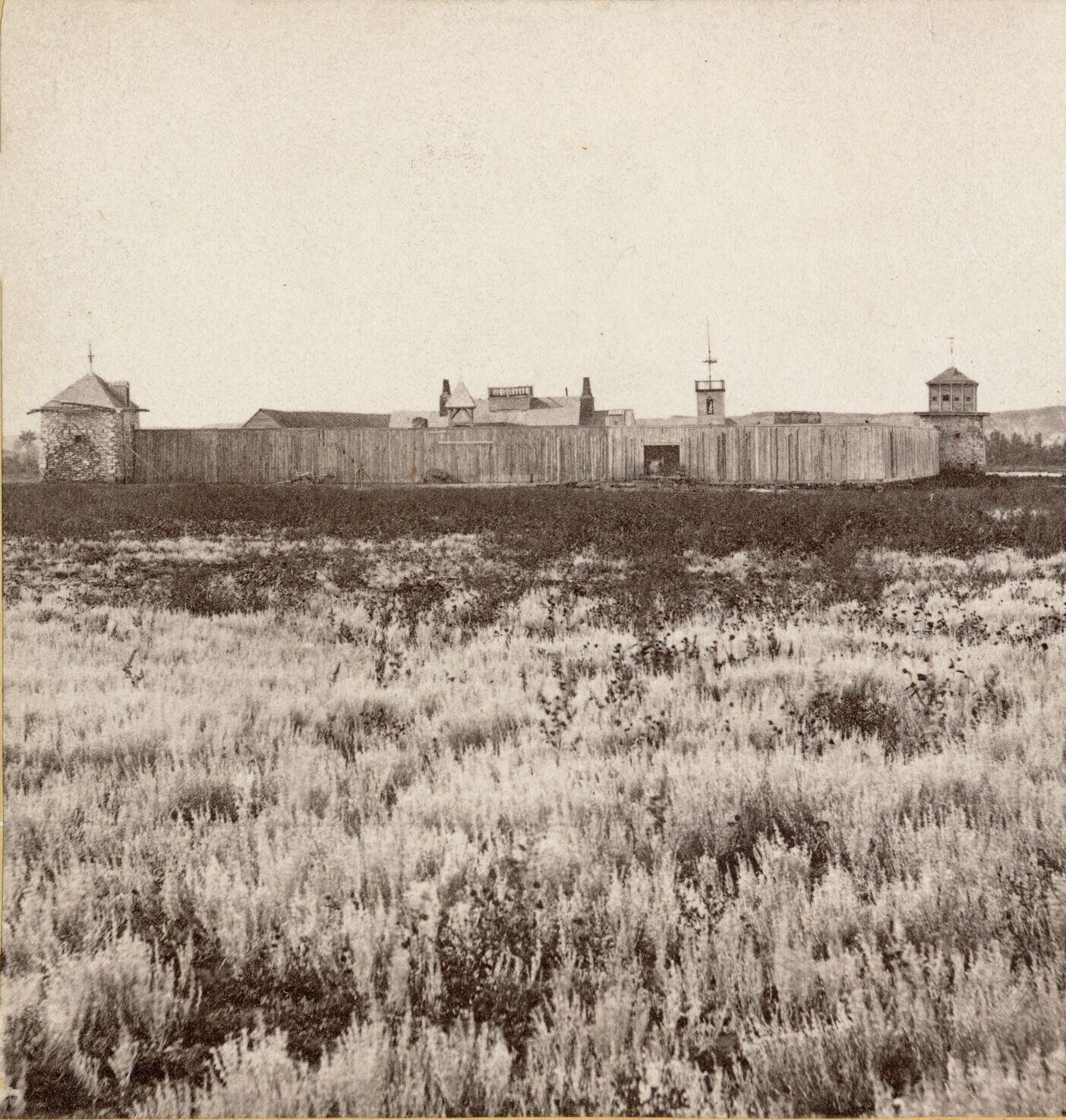
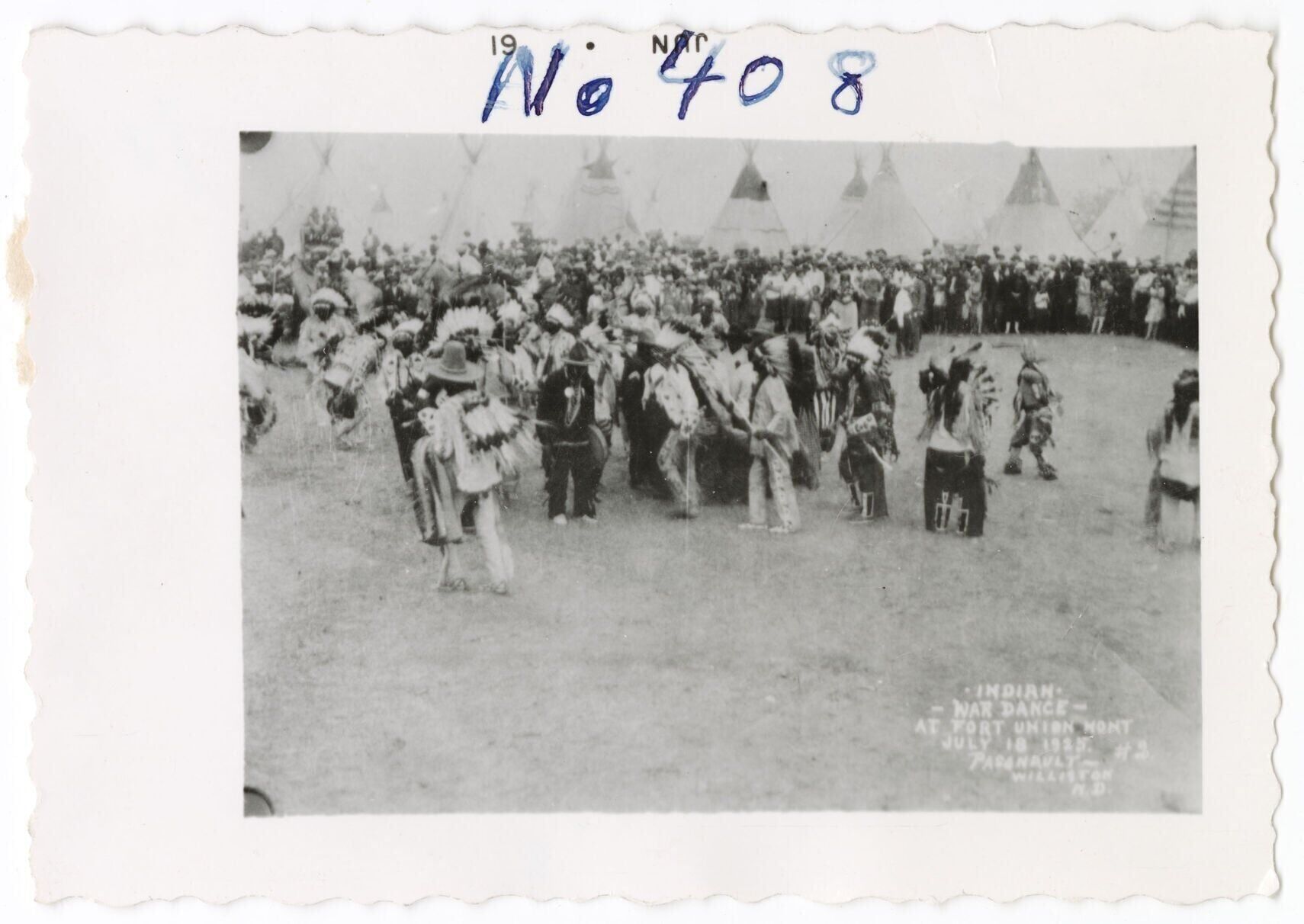
Fort Union, located just east of the Montana border, in North Dakota, was an important hub in the region’s fur trade from 1828 to 1867, according to the Montana Historical Society.
“The Northern Plains tribes, mostly Assiniboine, but including Cree, Blackfeet, Chippewa, Mandan, Hidatsa, Arikara and Sioux, delivered beaver pelts and brain-tanned buffalo hides for shipment downriver to St. Louis,” the society’s page about Fort Union says.
Fort Owen remains in Bitterroot
Fort Owen was established in 1852 in the Bitterroot Valley by John Owen, a trader who carried goods and supplies for the U.S. Army, according to the Montana Historical Society.
The area was and still is the homeland of the Bitterroot Salish Tribe, who were forcibly removed from the Bitterroot Valley in 1891.
Fort Owen was Montana’s first European-style settlement, and it also served as a trading post, a grist mill, a school and an agricultural center.
It’s believed that Fort Owen played host to Montana’s first sawmill, first European-style irrigation system and first cattle herd.
Owen sold supplies to trappers, military surveyors, Native Americans, prospectors and traders. The site served as a community gathering place, and St. Mary’s Mission nearby later turned into the town of Stevensville.
The site is now called Fort Owen State Park and is listed on the National Register of Historic Places.



Comments ()