
Busse, Cleveland accuse Forstag of data center influence; Forstag attacks competitors' wealth
Campaign funding took center stage at a 1st Congressional District candidate housing debate hosted by Bozeman Tenants United on Monday.
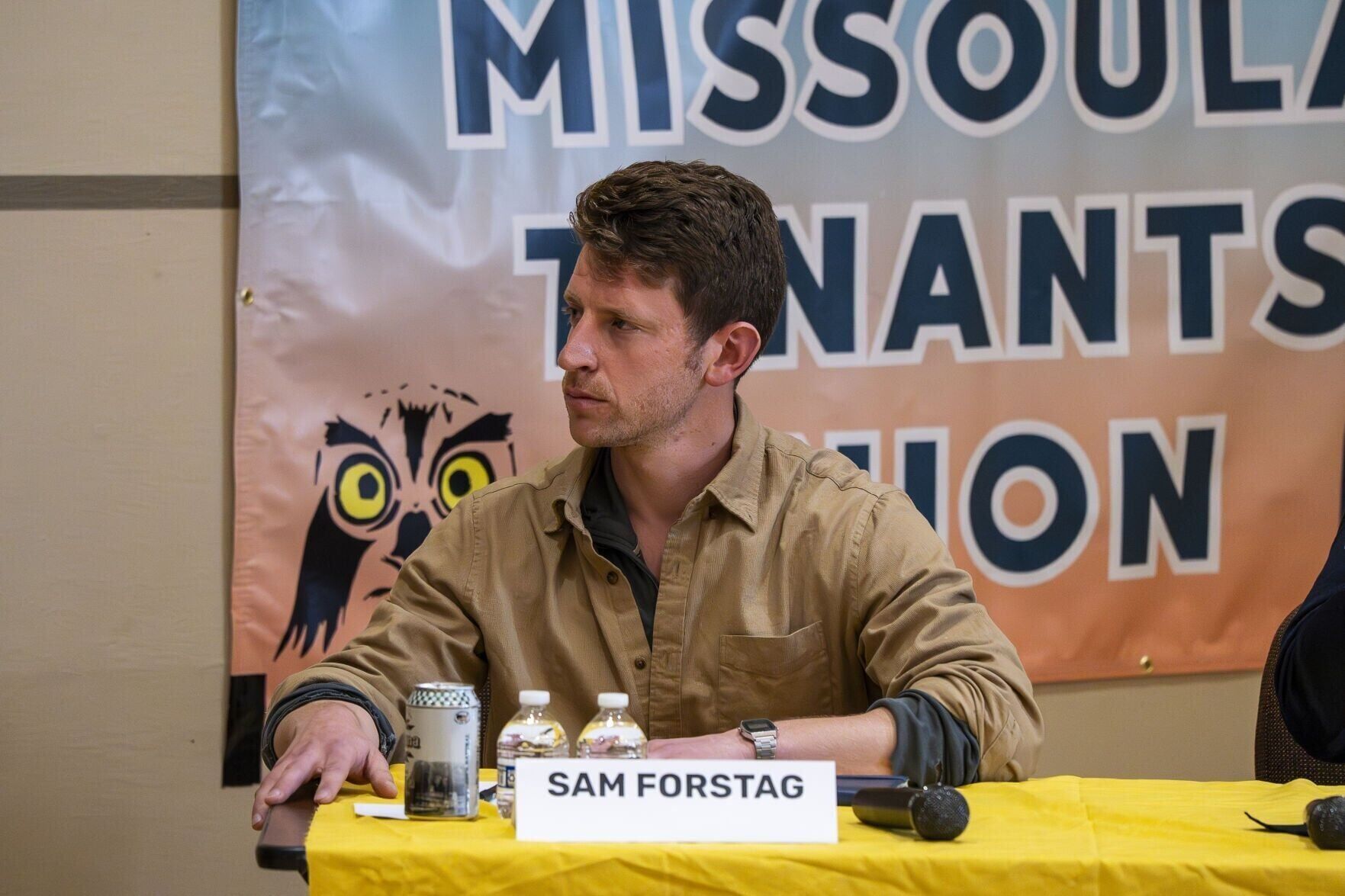
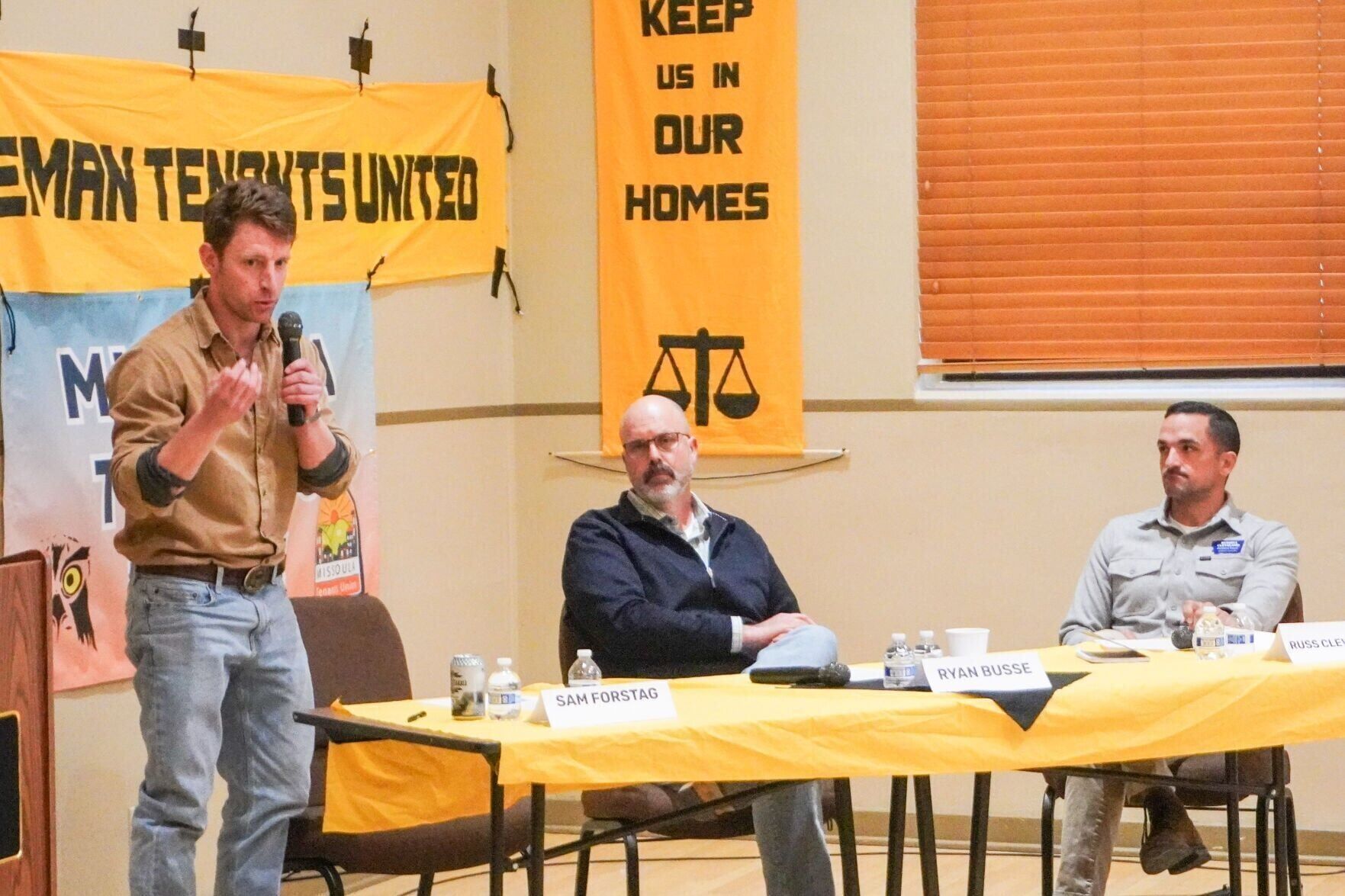
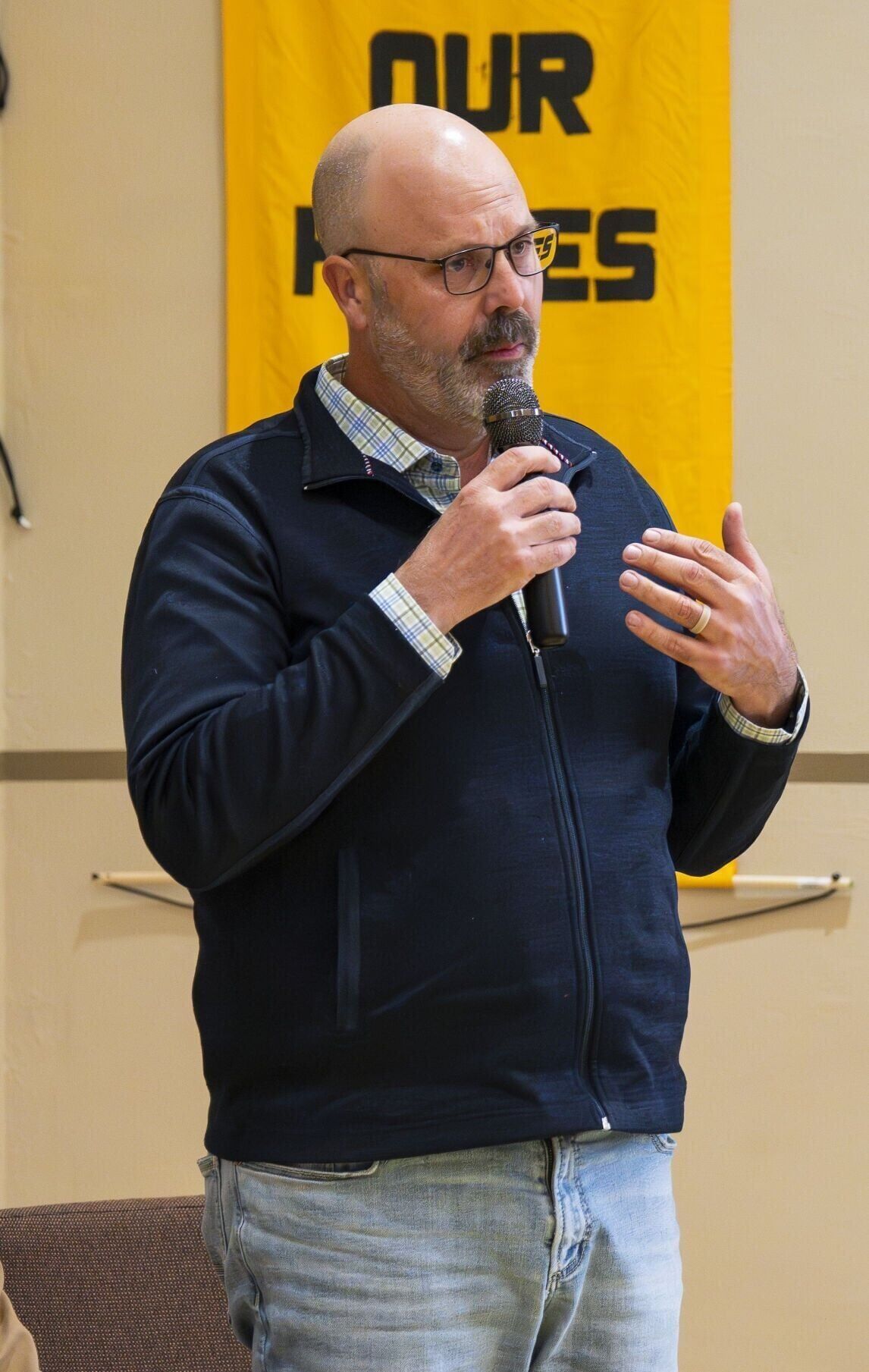
Democratic candidates Ryan Busse, the former firearms executive, author and 2024 gubernatorial candidate, and Russell Cleveland, a rancher, Navy veteran and former Colorado childcare owner, cross-examined smokejumper and union leader Sam Forstag on his backers.
Forstag fired back at the personal wealth of both Busse and Cleveland at the Bozeman Event Space.
The forum was hosted by Bozeman Tenants United in collaboration with the Missoula Tenants Union.
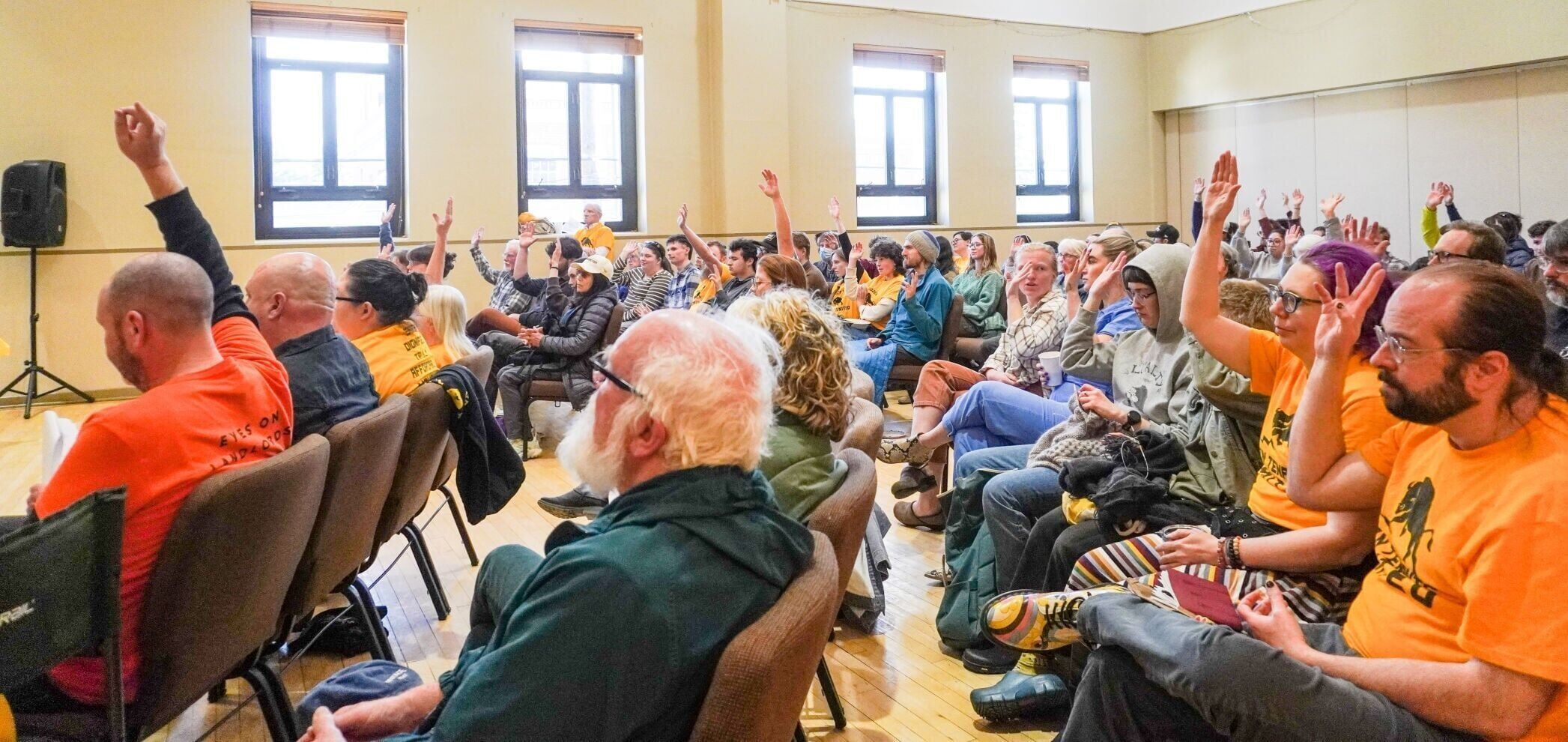
Republican contenders were invited but none showed. The fourth Democrat candidate, Simms resident Matt Rains, an Army veteran, photographer and rancher, was also absent from an event attended by approximately 100 patrons.
Forstag asked the first incendiary question, inferring Cleveland is alienating union voters. “After (you spent) most of last month villainizing unions, groups like the American Federation of Labor and Congress of Industrial Organizations, how if you were to make it through the primary, (would you) bring union members back?”, Forstag asked.
One audience member booed.
“I haven’t once villainized union members,” Cleveland responded.
“My question was to union leadership who asked the Democrat Party not to speak negatively about data centers, because those folks asking, specifically the AFL-CIO, knew they stood to gain financially from short-term labor (to build data centers).
“Seventy-six percent of Montanans spoke. They do not want data centers in this state. I am standing with them and asking the (AFL-CIO) to roll back its request of the Democrat Party.”
Replied Forstag: “My position has been the same since the beginning of this campaign. We need legislation saying Artificial Intelligence cannot be in (new) data centers until or unless we have guarantees they are not going to suck up our power, our water, come in and use cheap labor, denigrate our open spaces.”
Busse also questioned Forstag’s funding influences before giving the crowd a warning.
“There’s several billionaires funding Sam Forstag’s campaign,” Busse said. “You should trust who you elect.
“A big story came out over the weekend. This big billionaire-funded Washington, D.C., dark money organization is funding several campaigns including Sam’s. Guess what? They are very pro data center. Do you stand with pro-data-center billionaires who are funding your campaign, or do you stand with what your website says, that you are not funded by billionaires?”
On the defense, Forstag turned the attention toward his rivals’ personal wealth.
“It’s not going to take another multimillionaire’s talking points,” he said. “It’s going to take one of us who’s actually showing we care about the issues because we’ve lived them.”
Busse kept hammering.
“I just want to go back to (your) website that says ‘not funded by billionaires’, and your Federal Elections Commission report saying, ‘funded by billionaires’,” Busse said.
“If forced to choose, would you stand with the union and laborers who could benefit from these short-term (data center building jobs), or would you go against 76% of Montanans?”
Said Cleveland: “We need education programs that prepare our students to live in an AI world, workforce retraining programs for the massive jobs to be lost when AI takes over, new safeguards for our environment. That’s why I want a clear answer.”
“This is a mischaracterization of what the union’s position is,” Forstag countered. “This is precisely the problem with the Democratic Party. Mr. Cleveland’s worth more than $20 million. We should not accept politicians who a month ago were interviewing for AFL-CIO endorsement.”
Replied Cleveland: “The attacks on my personal wealth have continued. The only reason I was able to buy my first home was because I had a VA loan with $0 down. The only reason I was able to go out and get an education is because the GI bill gave me a free (degree). The only reason I was able to start a child-care company that grew to serve more than 9,000 families was because I did not have lifelong debt from student (loans) or housing.”
Candidates answered the following questions. Their responses are edited for clarity and brevity.
How could you solve the Montana Housing crisis?
Busse: “Housing is a complex issue. We need someone who understands the complexity. These corporations have lobbyists, they have money to pay off lawmakers, they can rig the rules, the tax system for their own benefits.”
Cleveland: “Montana has a history of being a working-class state. Right now the working class are being pushed out. Without the working class this becomes truly a billionaires playground.
“We’ve got to look at wages first. We have not seen a wage increase in line with productivity and inflation since 1968. Bozeman, housing all over, but it is $900,000 homes no one can afford. It must be affordable housing.”
Forstag: “I’ve been doing the work on this issue for the past decade in this state. For the last 10 years between fire seasons, I’ve been fighting as an organizer and advocate working with the state Legislature to fight for renters rights. I did not see a lot of people in the halls of power who knew what it’s like to be at the wrong end of a broken housing system.
“I’m the best person because I know what it’s like to work two or three jobs and still end up paying the rent on a credit card. People should not be going through that. We need large-scale investment to build housing, to build permanently affordable rentals.”
What can the federal government do?
Busse: “The federal government can do what it started with the American Rescue Plan Act of 2021, which is make housing more affordable by increasing the supply for everyone who needs a rental home.”
“We could redirect funds to help with water and sewer development so developers can build affordable housing faster. Oftentimes it is water and sewer (regulations) at the municipal level that keeps the developer from being able to build a home. The federal government can step in and do that. This is a supply issue.”
Cleveland: “The federal government can create pathways to pass funding down to municipalities for affordable housing. When that funding comes through, it needs to have conditions on it, which means we cannot have predatory practices.
“It can’t be used to exploit renters like we’re seeing. We should ban corporate ownership of residential homes so that we don’t have massive corporations buying entire housing sections. They sell a portion to a shell company for an inflated price, and it drives the entire market share (price) up for residential homes. That is predatory selling.”
Forstag: “We have seen the cost of housing double or triple in a lot of communities in this part of the state. We’ve got people living in the backs of their trucks, in trailers, or on the streets in record numbers. The government, the market is not meeting that need.
“We have programs like permanent supportive housing, transitional housing programs that need resources. We are just spending those resources on tax cuts for the richest people, for the corporations. That is not where the need is. That is what happens when the halls of power are exclusively populated by the wealthiest people in this country.
“If we’re going to be spending federal dollars, there need to be requirements on what the rent is going to be, and we should ban large-scale corporations from owning homes at a large scale.”
Could you enable first right of refusal for tenants to purchase mobile home parks?
Busse: “We should have U.S. Department of Housing and Urban Development programs that help with the infrastructure in mobile home parks, so we do not get in a situation where (the parks) are easily sold and there are excuses to sell. There should also be Fannie Mae, Federal National Mortgage Association (funding) for tenants, for (housing) unions.
“Oftentimes the tenants get outbid. Why don’t we mandate capital gains tax is waived for the seller if the tenants buy the property?”
Cleveland: “That still doesn’t fix the problem that there’s limited if not zero opportunities for any of these people to find any funding to buy property in the first place. One of the hardest loans to get in this country is a land loan because it’s the highest risk to a bank.
“What we need to do is create opportunities where there’s these loans available for mobile home parks or for people that are buying land they intend to build on, so we have more options available in these places where there’s land available.”
Forstag: “I will fight to make sure (the U.S. is) expanding and paying for HUD grants to help with residents purchasing (their mobile) communities. I will fight to make sure if we are passing an appropriations bill that we are including basic protections for renters and tenants that includes the right of first refusal specifically for people living in mobile homes.
“We must raise the corporate tax rate, the top income tax rate of minimum effective income tax at 30% for incomes of $1 million annually or more. I cannot wait to be an ally to the tenant union.”
How could you increase affordable housing?
Busse: “Community land trusts are a fantastic idea. Voters should ask that federal officials be creative about this.”
Cleveland: “Housing supply is impacted by many things. Raw materials that are now tariffed by the Trump administration. We could start by removing those.
“Labor supply shortages are driving up the cost of building these places. We should create training programs for more laborers. Lending is boxing people out of having an opportunity to buy homes.”
Forstag: “I support investing resources to build de-commodified housing. That is the only way out in some parts of our state, like Gallatin, Flathead County. You should not have to live in Belgrade or Manhattan to be able to work in Bozeman.”
How could you support tenants unionizing apartments or mobile home parks?
Busse: “I will fight for you. My sons are in this boat. You deserve affordable housing and a representative who will fight for it.”
Cleveland: “I’ve been traveling all over this state for more than a year now. Housing is the number one issue that comes up in Eureka, Bozeman, Dillon, Missoula or St. Regis. It’s about continuing to show up and listening to the issues.”
Forstag: “If we have landlords engaging in extortionary practices, raising the rents at levels that people cannot keep up with, I would be glad to stand on the picket line with renters who voted for a rent strike. I’m the only union member (candidate).
How could you fight for affordable healthcare?
Busse: “We must roll back these Medicaid cuts, the tax credit cuts immediately, and you need someone to fight for universal healthcare. We must get the health insurance companies out of it. We need a single-payer system that provides everyone the same equal high level of healthcare.”
Cleveland: “Healthcare is essential to my campaign; it’s the whole reason I’m running. I was that dad sitting in a hospital room who lost his little girl to leukemia while we were paying $300,000 bills monthly after insurance just to keep her alive.”
“I wouldn’t be running in this race if I didn’t know how that felt, to push back for that and finally get Medicare for all in this country, including dental, vision, hearing, rural transport and end-of-life services.”
Forstag: “I will be fighting to expand Medicare, to make sure it is covering things like vision, hearing and dental. It’s going to take a lot of money, but we can afford to do that.
“I don’t want to give Aaron Flint when I’m running against him in the general election the chance for him to say we’re forcing anyone into government-run healthcare, because I’m being forced into private health insurance. We don’t have to accept that.”
Do you support funding Israel or the war in Iran?
Busse: “I think we should support liberal democracies. I don’t think Israel is a liberal democracy right now. We need to focus on ourselves, on making things affordable here, and that means re-centering foreign aid.”
Cleveland: “We are too tied to Israel, sending armaments for them to fight their war. What we see overseas is a genocide happening. We need to cut the cord, get back to doing things in America for Americans.”
Forstag: “I will not vote for a budget including funding subsidizing a genocide, chaos, cruelty overseas in Iran, when people cannot afford their basic needs — housing, healthcare or a dignified retirement in this country. We are cutting our public lands, Veteran Affairs. We are told the country cannot afford it. That is a lie and it is only true if we believe it.”
Do you support Immigration and Customs Enforcement?
Busse: “Do not let anyone tell you that you can’t have housing assistance or healthcare when we are spending on masked ICE agents terrorizing our streets, killing American citizens, zip-tying kids in classes. That needs to stop and we need to spend money on stuff that matters.”
Cleveland: “We need to end ICE. I am a big proponent of that. This money should be invested in education, childcare, housing, and healthcare. All of those things are interrelated. When people’s childcare costs reduce, they can afford more housing, when their healthcare costs reduce, they can afford more housing.”
Forstag: “Spending on federal agents who are bringing chaos and cruelty is an embarrassment of riches. We need to draw down that funding. We should not be wasting our money on that sort of chaos and a paramilitary force in our streets, when people cannot meet their basic needs. I refuse to vote for a budget including that.”
How could you enable more livable wages?
Busse: “Our minimum wage in this country is a joke. It needs to be adjusted to a living wage and then adjusted for inflation annually. We must fix our tax system. It is not taxing the wealthiest people in this country. All the tax burden is piled on working people. That must stop.”
Cleveland: “I propose a 50:1 ratio cap on executive to frontline worker wages. What that means is you don’t have CEOs making $92 million at Starbucks while their baristas are making $10 per hour. That pushes the wages back down into the working class, then corporations spend laterally in communities, small businesses as well. That’s the best way to start pulling those wages out of the top 1% and putting them back where they belong with the people doing the work.
“Then we can ease into increasing the federal minimum wage so we’re not forcing small businesses to close overnight by jacking up the minimum wage too fast.”
Forstag: “I will fight to raise the federal minimum wage to $15 per hour at a minimum and peg that to inflation. Here in Montana our state minimum wage is pegged to inflation, but it’s too damn low; $10 and change is not enough to get by in places like Bozeman, Missoula, or Flathead County.
“If we are doing federal projects, I will fight to lower the cap to make sure we are using good union labor wherever that is happening. If we are using tax dollars, we’d better not be hiring low-end workers who are trying to come in here and undercut wages.”
How can you address political division?
Busse: “I ran for the governor’s office a couple years ago. It seemed like there was this big partisan divide. I don’t think there is one anymore.
“The people I talk to on the Republican side of the aisle, swing voters, they’re worried about healthcare, how much it costs. Everyone hates this idea of data centers jacking up electricity rates, poisoning water, and making billionaires into trillionaires. Our lived experience is common.”
Cleveland: “Democrats cannot win this election without bringing independents and moderate conservatives into our tent in November. My entire goal is to connect rural Montana with cities like Bozeman and Missoula.”
Forstag: “I intend to reach across the aisle and bridge divisions. When I have coworkers making $19 per hour jumping out of airplanes for the U.S. Forest Service and they voted for Republicans, they did not do that because they are terrible racists and xenophobes; they did that because their lives were getting materially worse year after year even with the Democratic Party in control.”






Comments ()