
Butte laments the loss of Pekin Noodle Parlor, a symbol of the city's Chinese history
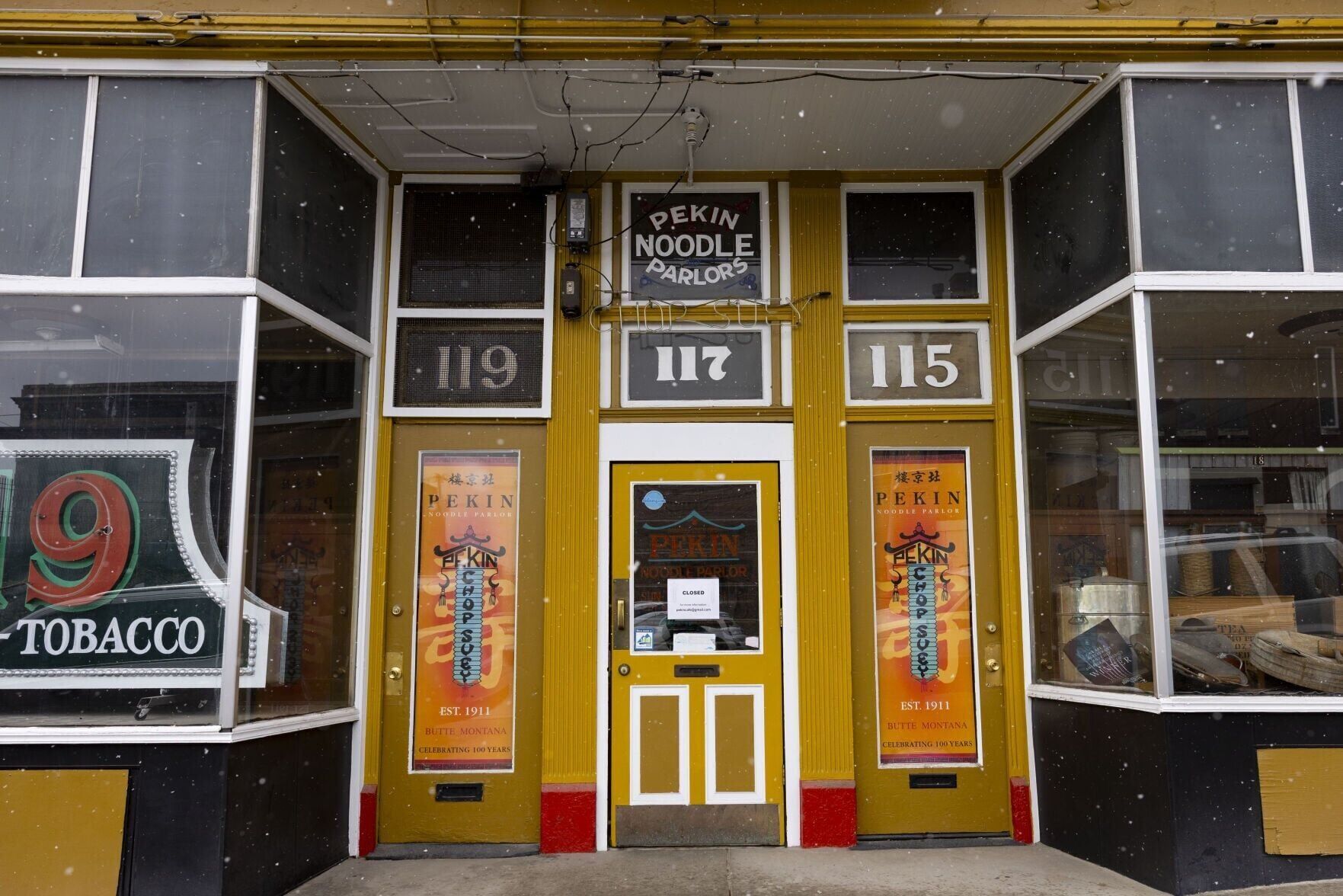
The Pekin Noodle Parlor was the talk of the town on Thursday.
Word spread quickly when Jerry Tam, owner of the Pekin Noodle Parlor, announced early in the afternoon on Facebook that the restaurant had closed.
In a released statement, Tam explained family and people just stopped coming, while even more online orders flowed in.
“Chinese takeout was part of our equation, but online food delivery was not the answer,” said Tam. “The negative attitudes of dining out overwhelmed our staff and the countless dinedash never ended.”
Tam said his father, Danny Wong, aka Ding Kuen Tam, knew how difficult this line of work was.
“My father gave me the Pekin to make a decision he could not make for himself or have his beloved daughters do ... someday having to close the restaurant,” said Tam.
Wong, who ran the Pekin for decades, died in 2020.
“He never wanted this life for his family, including me and passed knowing he left a better life for his children, and I would make the right decision,” Tam said.
A piece of history gone
Butte-Silver Bow Chief Executive J.P. Gallagher said he was shocked and saddened when he heard about the closure.
“The news was like losing a member of the family,” said Gallagher. “For Butte, it wasn’t just a business, it was a thread in the tapestry of who we are, stitched into our community’s story for 115 years.”
Gallagher shared a personal memory from when his father Tom died on Christmas Day 2012.
“Danny Wong welcomed my entire family into the Pekin and fed us in our time of grief,” said Gallagher. “That act of compassion is something I will never forget.”
Customers past and present lamented the news, too, with many thanking the Tam family for giving them not just wonderful memories, but great food, too.
“Butte is losing an icon,” posted one Butte native, while another wrote, “A piece of our history is going away.”
A symbol of Butte
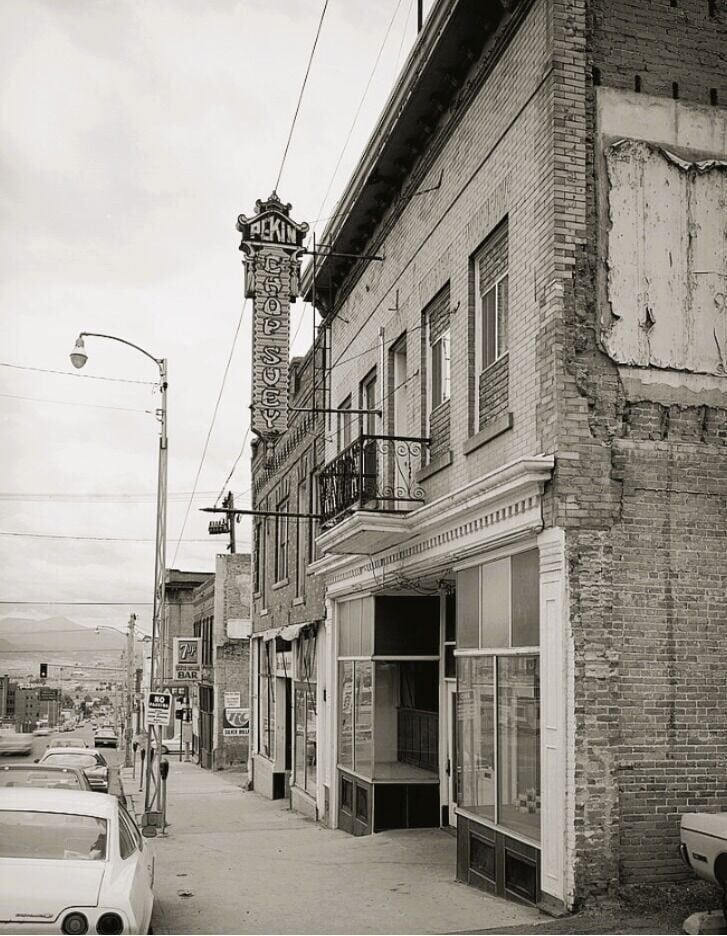
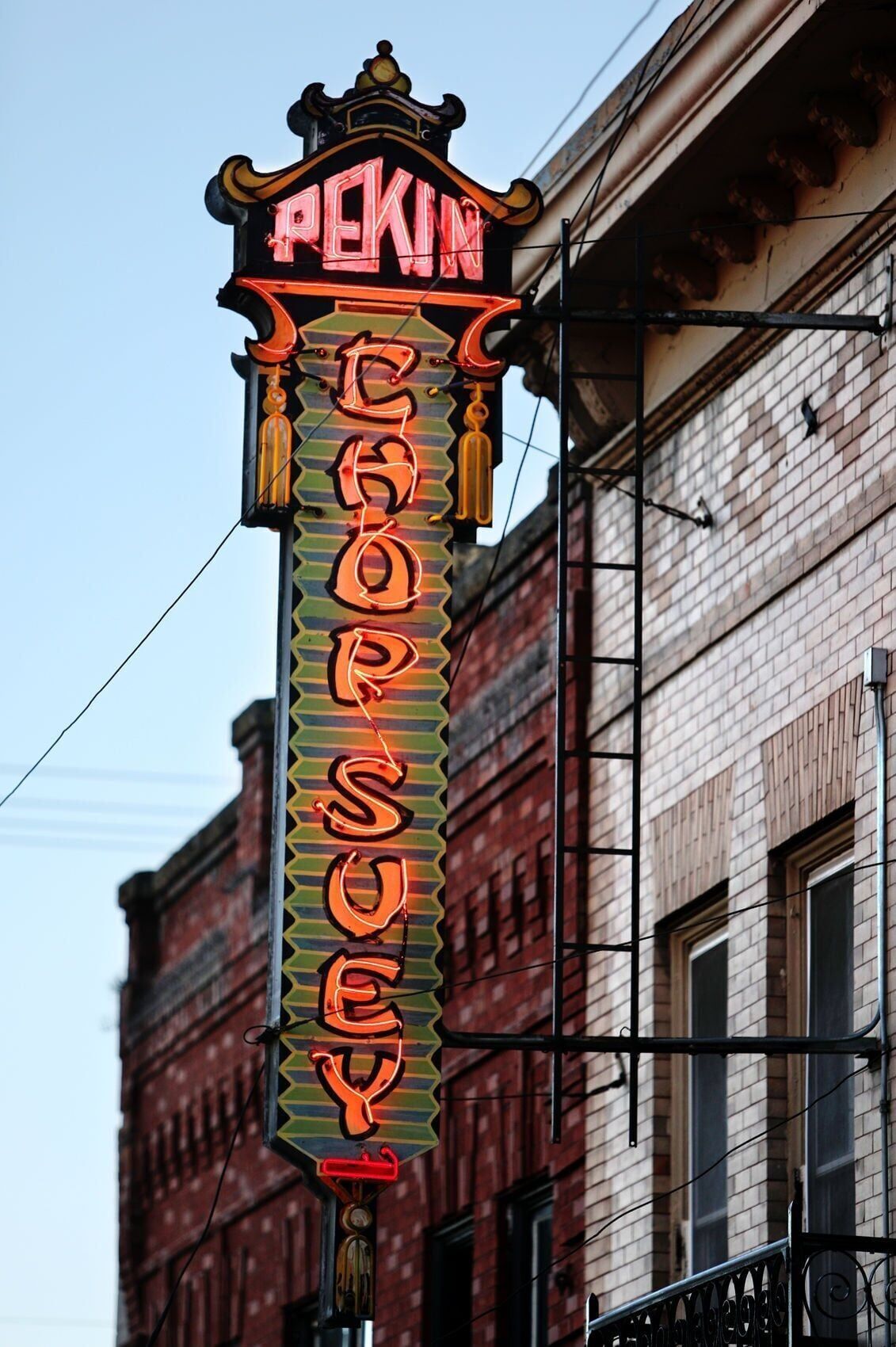
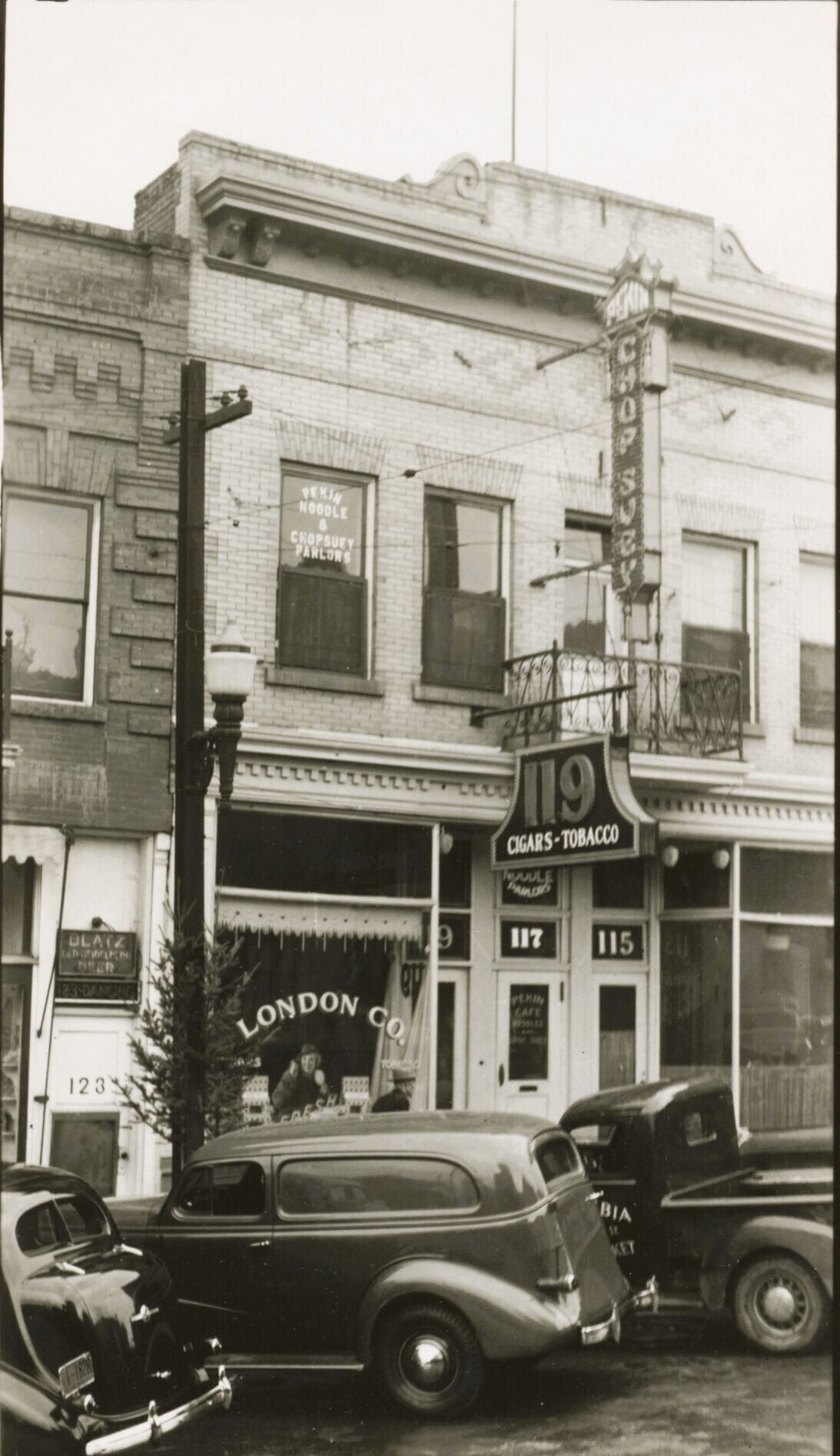
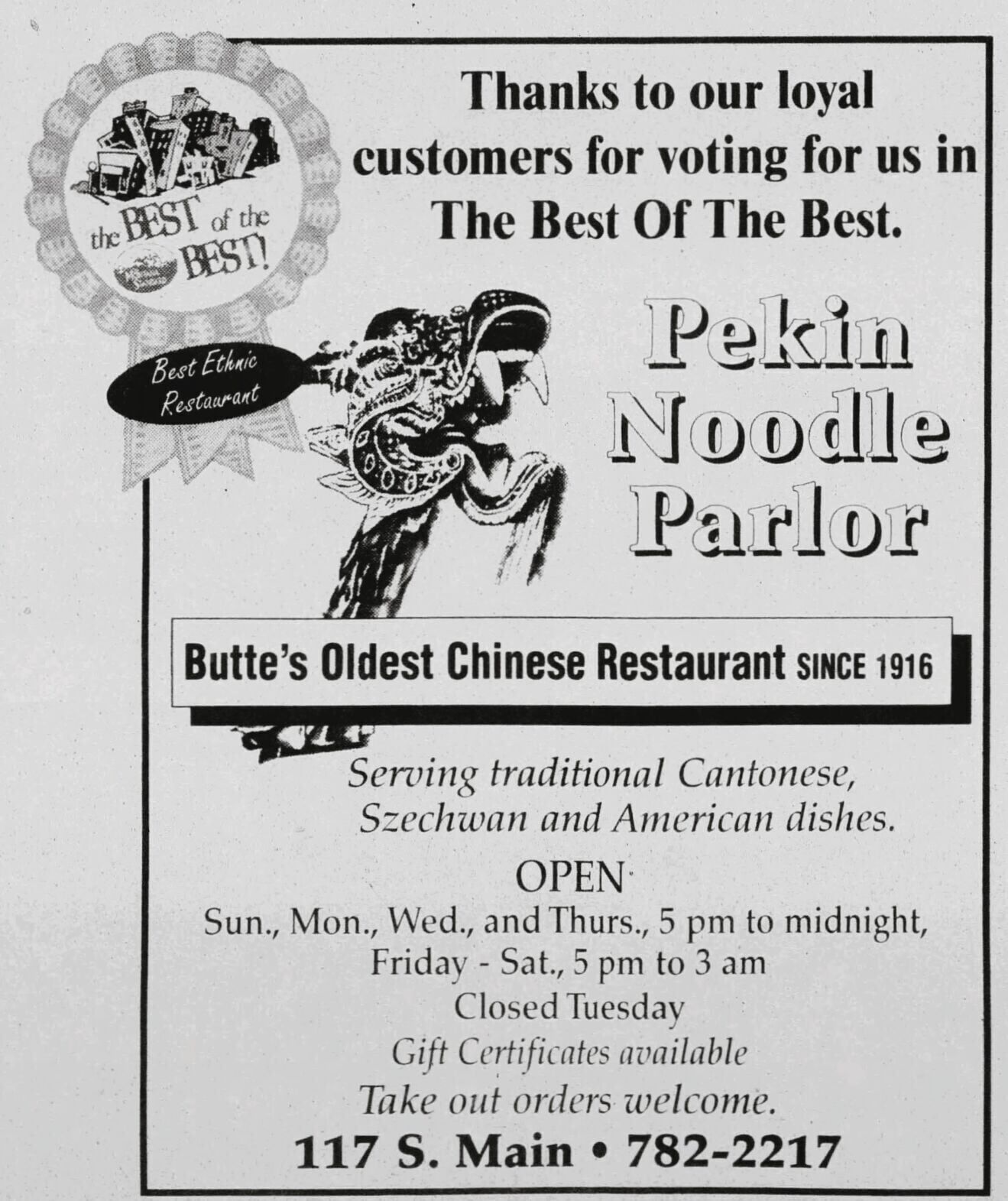
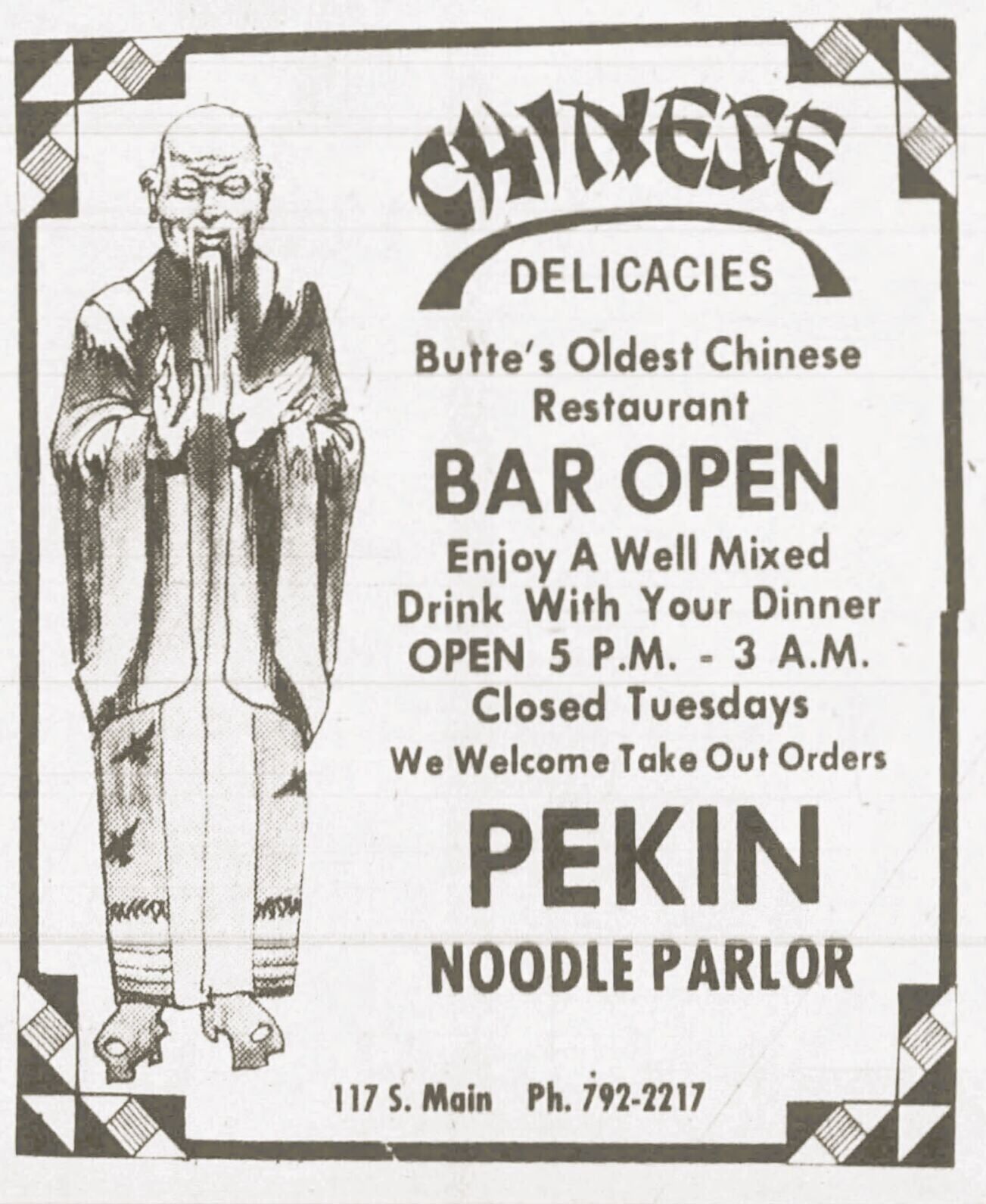
The Pekin, long viewed as a major symbol of Uptown Butte, was an established business for at least 115 years and was reputed to be the oldest Chinese restaurant in America.
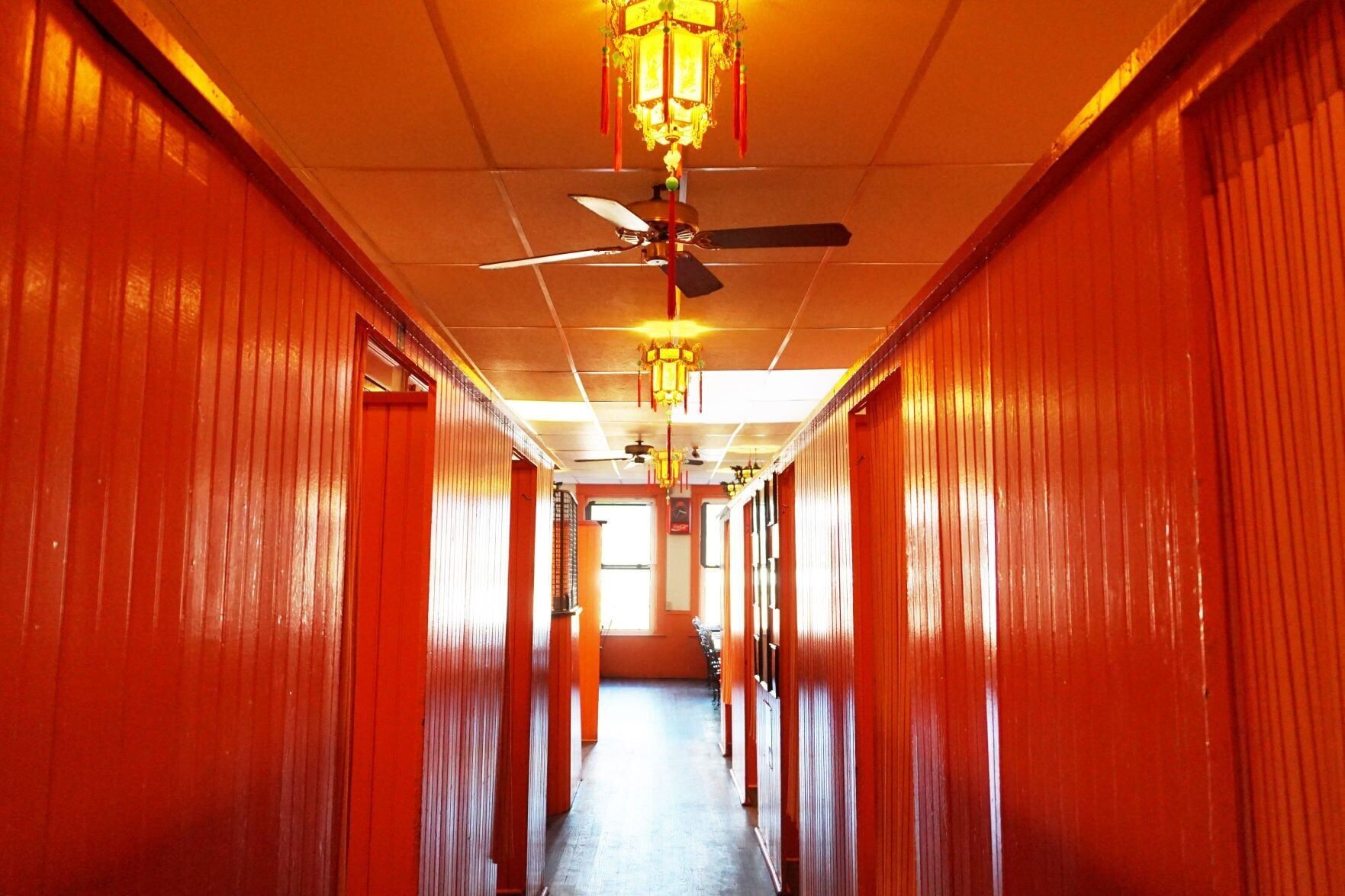
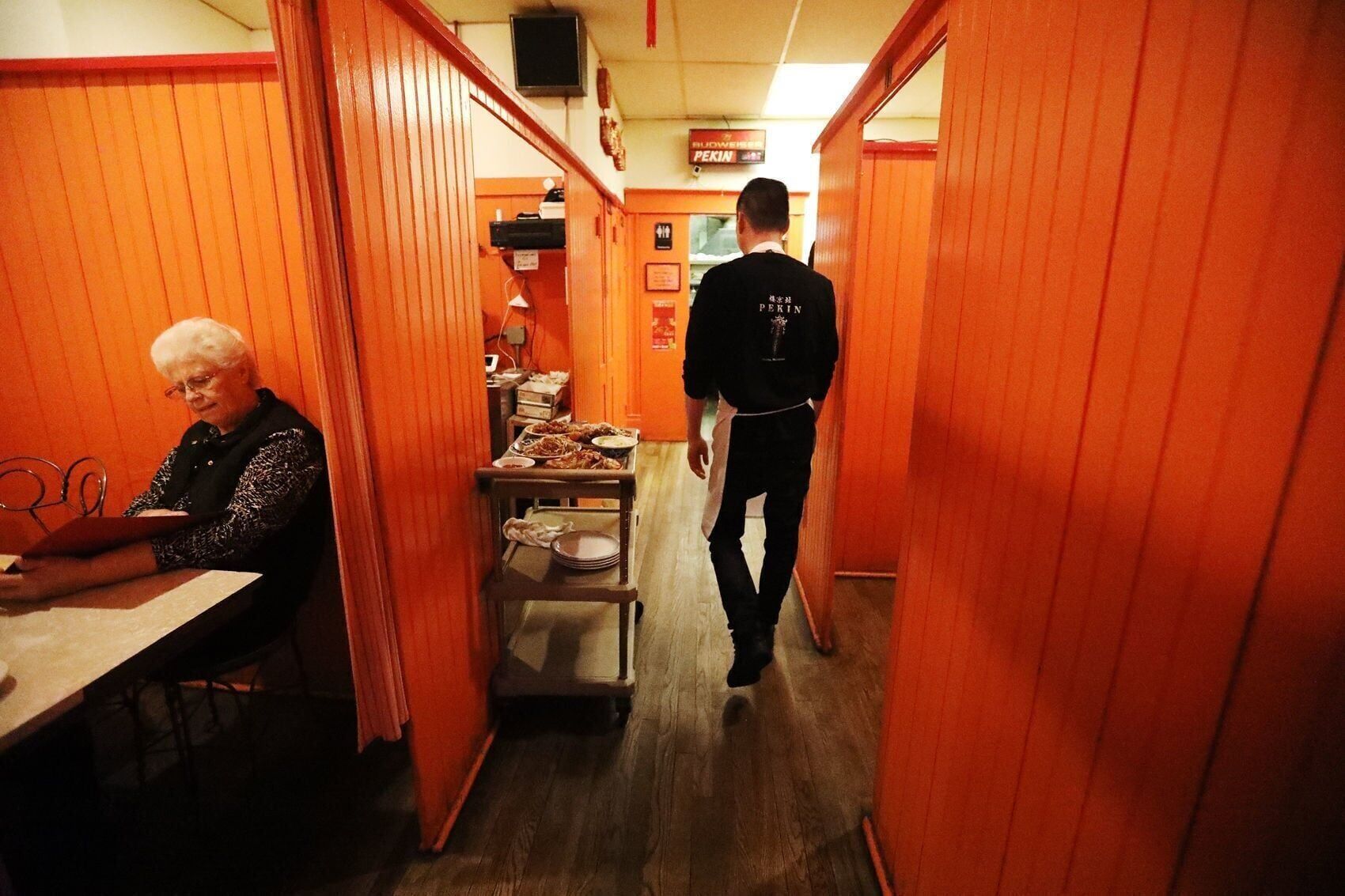
Generations of customers climbed up its long, narrow stairs, opened a curtain and slipped into a booth, all the while checking out the menu, deciding what to order.
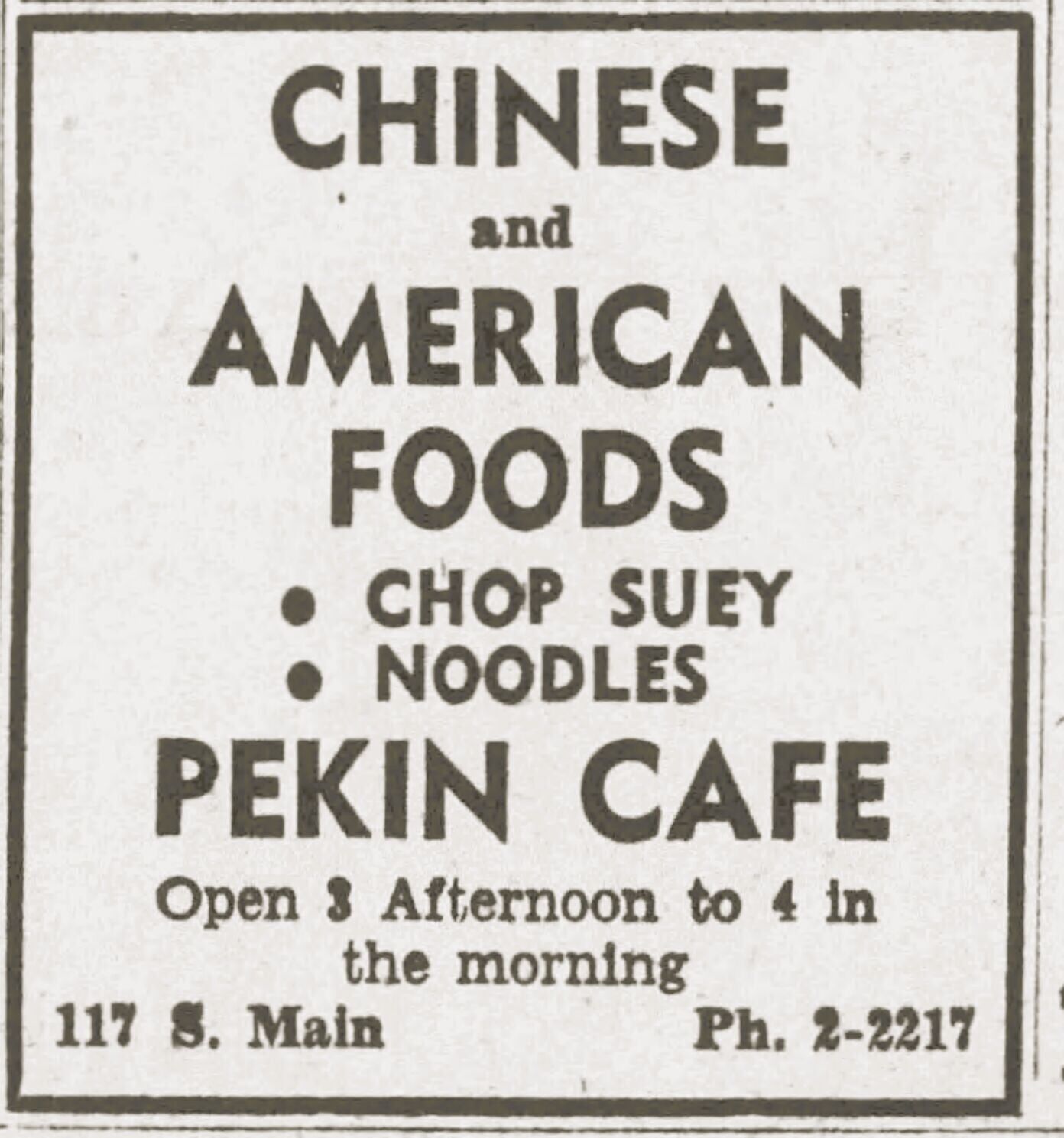
There was plenty to choose from, including egg foo young, fried won tons, sweet and sour pork, an assortment of fried rice and chow mein dishes, along with varying types of noodles.
An entire column on the menu was also devoted to American food, so if your palate craved a steak instead of sweet and sour spareribs, the Pekin had you covered.
“Its menu reflected a unique blending of Chinese and American cuisines, shaped by the need to serve both the local Chinese community and the city’s diverse immigrant population,” said Aubrey Jaap, director of the Butte-Silver Bow Archives.
In its July 1994 edition, Gourmet magazine described the Pekin’s menu as a “vista of food the likes of which most devotees of big city Asian cookery forgot about forty years ago.”
Jaap said the Pekin had been a culinary staple in Butte for 115 years, operated by generations of the same family.
“It was one of the last establishments of its kind — not just in Butte, but in the nation,” said Jaap.
End of an era
Pat Munday, a professor emeritus at Montana Technological University, has long been involved in the preservation of Chinese American history in Butte through the Mai Wah Museum and other avenues.
Munday reacted Friday to news of the Pekin’s closing.
“Sympathy for Jerry Tam,” he said. “It can’t be an easy decision for him. It’s not completely unexpected, but is still certainly sad after so many generations of the Pekin having been such an important part and contributor to Butte’s culture.”
During the 1900s and 1920s, Butte had a half dozen or more Chinese restaurants to feed the miners, who also depended on Chinese laundries to handle their clothes, Munday said.
The Pekin’s closing is an end to an era, he said.
“It’s the last of the original Chinese American families who operated restaurants in Butte,” Munday said.
He noted that the Pekin once included a mercantile and offered access to a Chinese medicine herbal doctor.
Munday said he hopes the Mai Wah Museum will create an exhibit to honor the Pekin.
George Everett, director of Mainstreet Uptown Butte, called the closure a big loss to the Uptown community.
Everett said Butte was built by immigrants that came from all over the world, including the Chinese.
“Food is a living culture and customers understood that the Pekin was a living history of Butte’s Chinese connection,” he said.
Jaap said the Pekin was more than a restaurant. It also embodied Butte’s cultural heritage.
“It speaks to the intertwined histories of food, gambling, and fraternal organizations in Butte, and stands as one of the last living connections to the city’s historic Chinatown,” she said.
Everett said the Pekin was not just the center of Butte’s Chinatown, but it was also a great place to gather, and he will miss it.
“We thank Jerry for the contributions he made to the Butte community, and we wish him well,” said Everett.
Gallagher hopes someone will step forward and work with the Tam family to reopen the Pekin and continue the legacy that has meant so much to so many.
“The local government and my office are here to help preserve this historic landmark for our community,” he said.



Comments ()