
Community Medical to use telehealth doctors for pediatric ICU, nurses voice opposition
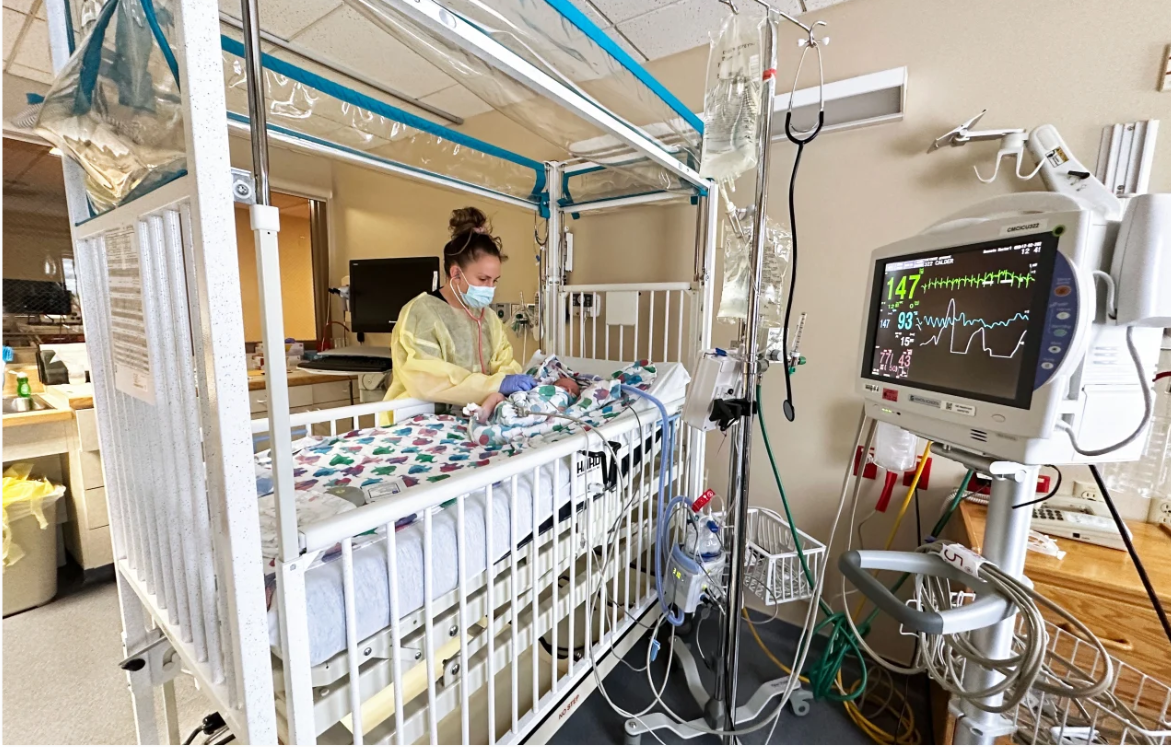
A group of pediatric nurses and respiratory therapists at Community Medical Center in Missoula recently sent an open letter to the management expressing “deep concern and disappointment” regarding a decision to discontinue in-house Pediatric Intensive Care Unit physicians at the hospital and instead proceed with telemedicine coverage in their place.
They say that there's a risk of delays in care without on-site physicians, and they believe that doctors can't care as well for patients through an iPad.
The letter was sent on June 11, circulated widely online on social media and was signed by several dozen staff members of Community, which is owned by Tennessee-based LifePoint Health, a for-profit healthcare company that owns hospitals in multiple states.
“Telemedicine physicians cannot physically perform procedures or provide bedside assessment and intervention during rapidly evolving emergencies,” the letter states. “This decision represents far more than a reduction in services, it is a significant loss that may increase risk during pediatric emergencies requiring immediate critical care expertise.”
In the letter, the nurses and providers acknowledge that the pediatric program apparently operates at a financial loss. But they argue that it's still worth it.
“We have seen firsthand the necessity of having a board certified pediatric care physician at the bedside to save a child’s life,” they said. “We urge the decision-makers to reconsider the long-term consequences of this decision and to explore every possible avenue to restore these critical services. Our children deserve better. Our families deserve better. And our community cannot afford to lose such an essential resource.”
Megan Condra, the director of marketing and community relations at Community, sent an email to the Missoulian expressing the views of the leadership team at the hospital.
“Community Medical Center is not eliminating pediatric critical care, we are changing how that care is delivered,” she said. “Over the past several years, declining PICU volumes, a trend reflected nationally, have made it increasingly difficult to sustain a traditional, onsite-only staffing model, despite ongoing efforts to recruit pediatric intensivists. Rather than eliminate these services, we have chosen a different path to ensure pediatric critical care remains available to our community while also preserving roles for the dedicated caregivers who provide this care every day.”
Community says the transition to a telehealth model “reflects a sustainable, patient-focused model for providing safe, dependable pediatric critical care while maintaining continuity for both our patients and care teams.”
“Our exceptional team of pediatric specialists, nurses, and clinical support staff will continue caring for acutely ill children at Community," Condra continued. "For patients whose conditions can be safely managed locally, care will be supported onsite by board-certified pediatric hospitalists and by pediatric critical care physicians available 24/7 via telehealth. When a child’s condition requires a higher level of care, our team will facilitate transfer to a dedicated children’s hospital — as has always been our practice.”
The letter from the PICU staff said the unit has operated for over 20 years as a crucial lifeline. They said parents may now have to face not only the trauma of a critically ill child but also the financial and logistic strain of having to travel to a different hospital, meaning missed work and separation from support systems.
“Additionally, because CMC currently lacks a contract with the Missoula Anesthesiology, P.C. group to provide 24/7 pediatric anesthesia coverage, there have been numerous instances where a PICU physician has been required to provide deep sedation services to complete a critical and time-sensitive lumbar puncture, MRI, chest tube or other surgical drain placement for admitted patients in order to provide proper diagnoses and treatment,” the letter said. “Without an on-site PICU MD, there is an increased risk of delays in care.”
The unit will still be staffed by in-person hospitalists. The letter from the nurses and other healthcare providers said they acknowledge that the pediatric hospitalists are “profoundly intelligent, skillful and dedicated.”
Apparently, the change is set to take place on Oct. 1 of this year. Community’s pediatric unit has 16 beds. There is a pediatric intensive care unit at Logan Health Children’s in Kalispell, one at Sacred Heart Children’s Hospital in Spokane and one at St. Vincent Healthcare in Billings.
In the letter, the nurses said that rural communities already face significant healthcare disparities.
“And this closure only deepens that divide,” they wrote. “Children in Montana deserve the same access to specialized care as those in larger metropolitan areas, real care at the bedside, not through an iPad and not by placing the responsibility on physicians whose primary training and board certification are in other specialties. Removing locally based pediatric intensive care capacity sends a troubling message about the value placed on the health of our youngest and most vulnerable residents.”
A 2024 Missoulian investigation found that many staff members had serious concerns about the management of LifePoint Health since it acquired the hospital in 2018. Former CEO Bob Gomes resigned in June of 2024, and current CEO Greg Cook took over that November.
In 2025, the hospital invested nearly $14 million into new capital improvements, according to Cook. That includes a second surgical robot, the addition of a sixth operating room and the expansion of obstetrics services. The hospital donated over $18.7 million to people who didn't have the ability to pay, and paid over $14.4 million in taxes. The hospital has about 920 employees with a payroll of over $94 million a year.



Comments ()