
Conservation initiative hosts educational discussion on wildlife crossings
Every year, Montana road maintenance crews collect 6,000 to 7,000 animal carcasses from the sides of roads, most of which are the result of wildlife-vehicle collisions, according to Montana Fish, Wildlife and Parks.
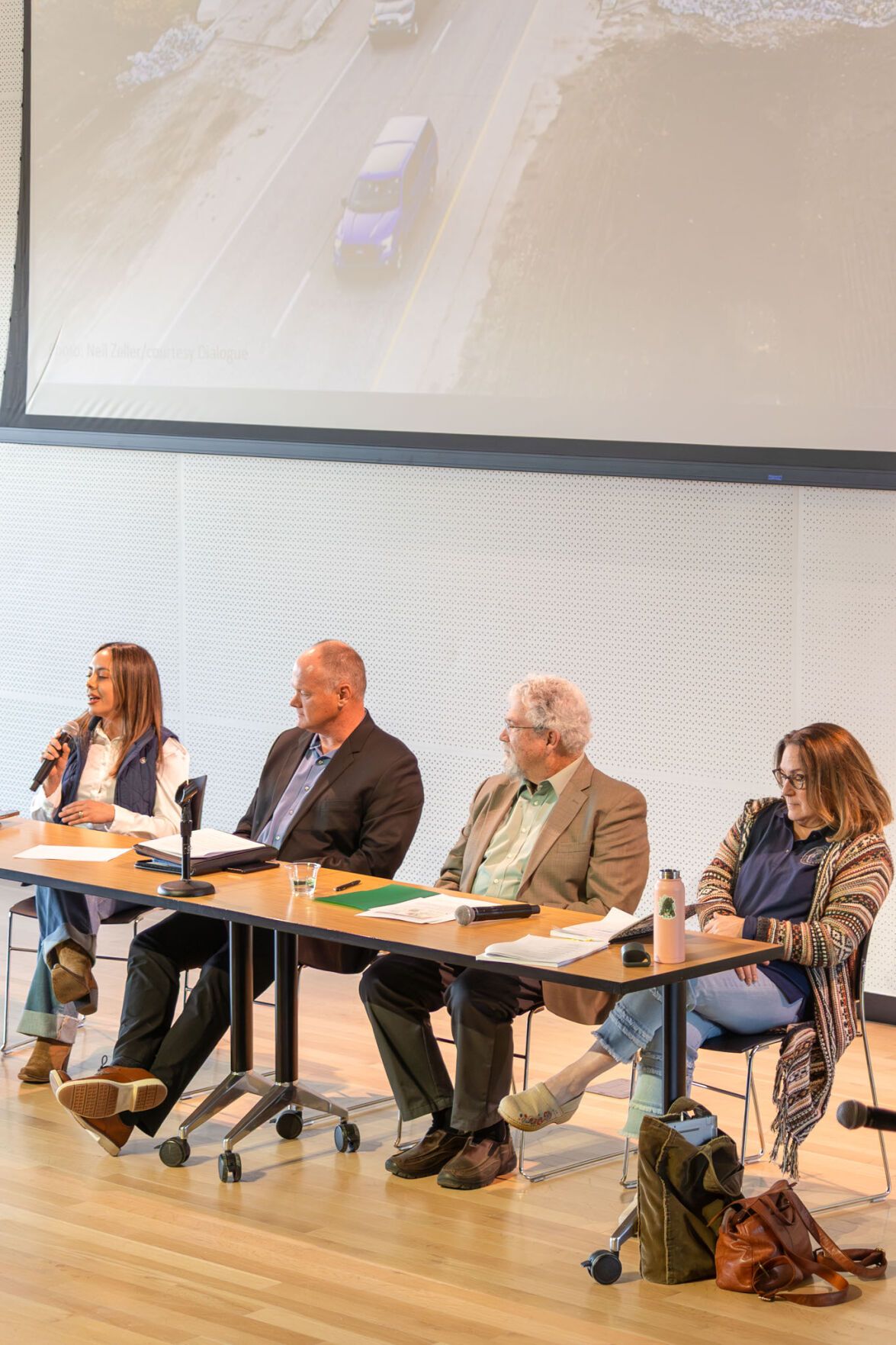
Currently, Montana has the second highest likelihood of wildlife-vehicle collisions in the country, according to the Yellowstone to Yukon (Y2Y) Conservation Initiative. Last Saturday, Y2Y co-hosted a panel with MSU’s Office of Sustainability to address the issue and answer questions about wildlife crossings posed by students and community members.
Y2Y is a North American organization that works to connect and protect wildlife habitat from Yellowstone to the Yukon, according to its website. According to Y2Y, solutions to collisions, such as wildlife crossings — bridges and tunnels that allow animals to safely cross — have reduced collisions by up to 97 percent.
According to panelist Deb Wambach, a representative of Montana Fish, Wildlife and Parks, taking preventative measures against wildlife-vehicle collisions is a matter that should have been addressed long ago. “[Preventative action] is never going to be soon enough,” she said.
According to Y2Y, wildlife crossings also support animal movement and migration patterns. Giving animals space to roam can help maintain genetic diversity, which strengthens populations. According to the panelists, wildlife crossings are not exclusive to deer, elk and other similar mammals. Crossings can also be designed for fish, carnivores and other non-game species.
Panelists at the event included Wambach, Vice President of Wyoming-based WYldlife Fund Breanna Ball, Chief Engineer at Montana Department of Transportation Dustin Rouse and Director of the Western Transportation Institute Lee Spangler.
The discussion focused on solutions to wildlife-vehicle collisions like crossings, fencing and signage and challenges like securing federal funding and repairing aging infrastructure. According to the panelists, while wildlife crossings are very important, they are also expensive, and several states — like Montana and Wyoming — have to compete for federal funding to finance the projects.
According to Y2Y, Montana is leading the charge for solutions to wildlife-vehicle collisions through bipartisan action. Republican legislators established Montana’s first dedicated wildlife crossing fund in 2025, enabling a federal funding match with state funds for safer roads.
One major focus of the discussion was collaboration between departments and organizations.
“It’s incredible how much engineers and wildlife experts work together,” said MSU civil engineering major and panel attendee Jackson Queneau. “None of these big projects — highway overpasses, underpasses for wildlife — would be possible without interdisciplinary work.”
According to Daniel Anderson, senior outreach specialist for wildlife passage at Y2Y, Montana is situated at a pivotal moment for wildlife conservation and road safety. “As the state considers expanding wildlife crossing infrastructure, local voices across communities are driving practical solutions,” he said.
Bozeman resident and panel attendee Ashley Siana expressed concern about how Montana's growing population could affect wildlife-vehicle collisions.
“There’s a lot more people here in a place that was relatively low-populated previously,” she said. “[My] concerns are more over safe driving in general, and also animal populations and endangered species.”
According to local and panel attendee Ted James, Montana should lead the charge to expand wildlife crossings and other preventive measures.
“I think it would be really cool if Montana could have the bull by the horns approach to lead on this issue and educate a lot of people,” he said. “We have so many visitors, especially in the summer, and I think panels like this really highlight the opportunity [to learn about these issues].”
To learn more about the Y2Y Conservation Initiative, visit y2y.net.

Comments ()